
The moral cost of celebrity gossip:
from Princess Diana to Harry and Meghan

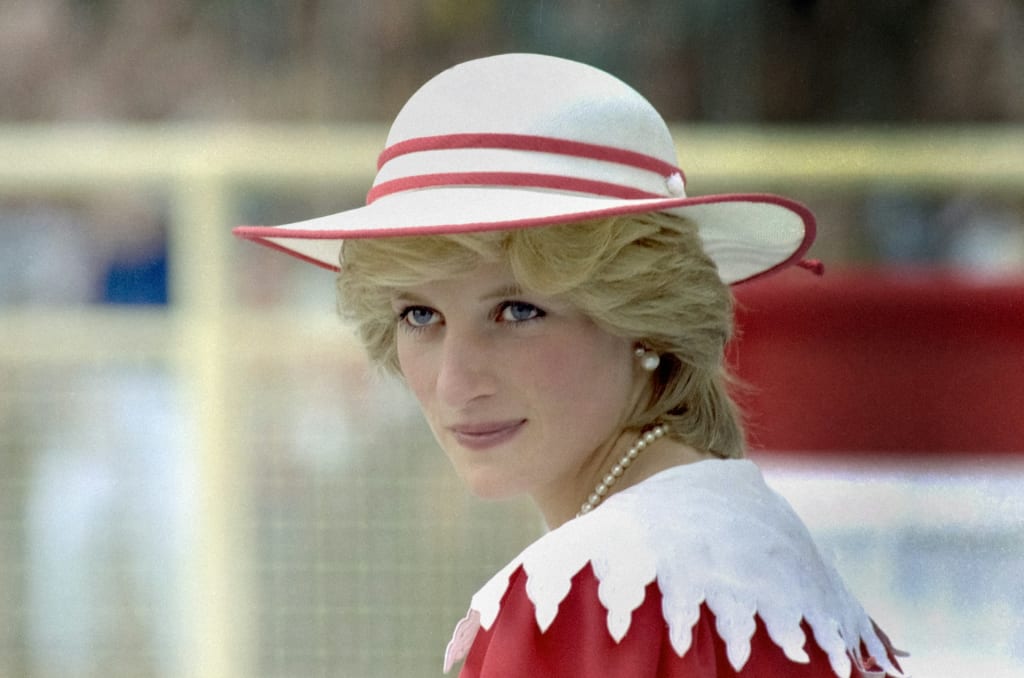
Gossip about celebrities is often framed as harmless entertainment—a sugar rush for the bored, a brief escape from our own routines. But entertainment that depends on violating dignity, amplifying cruelty, and monetizing pain is not harmless. It’s morally corrosive. It distorts our empathy, rewards dehumanization, and, at its worst, puts real people in danger. The story of Princess Diana remains the clearest warning. And the relentless hostility toward Harry and Meghan—and so many Hollywood figures—shows that we haven’t learned nearly enough.
Princess Diana is often remembered as “the People’s Princess,” a devoted mother and a force for compassion. She’s also remembered for the camera chase that preceded her death. While official investigations cited the driver’s intoxication and speed, paparazzi pursuit was a contributing factor and a symbol: a market that had been trained to treat a young woman as a 24/7 commodity, regardless of risk. Diana had spoken openly about the claustrophobia of tabloid scrutiny and felt hunted in the years leading up to her death. Her life—and the manner of her death—exposed the ethical failure not only of individual paparazzi or editors, but of a system fueled by public appetite. We can blame the photographers, but the market they served was ours.
That market did not vanish. It evolved into an always-on, algorithmically amplified ecosystem that incentivizes outrage, rewards the sharpest cruelty, and spreads rumors at the speed of a click. This is the climate that Harry and Meghan inherited—along with the institutional dynamics Diana knew too well. The couple has spoken about racist coverage, dehumanizing narratives, and the toll on their mental health. Meghan shared that she experienced suicidal thoughts. Whether one agrees with every choice they’ve made is beside the point. They are human beings describing harm, and a moral culture listens before it judges.
The tenor of the discourse around them—slurs, conspiracies, obsessive nitpicking, pile-ons—illustrates how celebrity gossip metastasizes into hatred. What begins as “Who wore what?” morphs into “She’s lying,” “He’s weak,” “They deserve what they get.” The line between curiosity and cruelty is crossed when clicks depend on contempt. And contempt is contagious. It diversifies into dog whistles, sexist caricatures, and coordinated harassment. The targets might be insulated by wealth, but money can’t shield a person from panic, isolation, or despair. Nor can status prevent physical danger when harassment spills into the street or the chase resumes.
Hollywood offers parallel cautionary tales. Britney Spears was ridiculed and hounded during mental health crises; only later did the public reckon with how our consumption enabled that treatment. Selena Gomez has spoken about health challenges and online abuse that trivializes her illness. Chadwick Boseman, thin from cancer treatments unknown to the public, was mocked for his appearance before his death revealed the truth. Each time, gossip’s easy thrill turned out to be a failure of compassion—and sometimes a wound that couldn’t be undone.
What makes celebrity gossip morally corrupt?
- It dehumanizes. Gossip converts a person into a product. The more intimate the detail, the better it sells. But intimacy without consent is exploitation, not insight.
- It rewards harm. Outrage generates traffic; traffic buys ads; ads pay for more intrusion. When suffering is profitable, cruelty becomes a business model.
- It normalizes contempt. Mockery becomes a bonding ritual. We learn to treat strangers’ pain as entertainment, and that habit seeps into how we talk about neighbors, colleagues, even ourselves.
- It spreads misinformation. Rumors outpace corrections. A lie can damage reputations, relationships, and careers in minutes. Apologies, if they come, seldom reach as far as the smear.
- It undermines autonomy. People deserve some zone of privacy and the freedom to narrate their own lives. Gossip strips that away, substituting a fiction someone else can monetize.
- It inflames prejudice. Targets are often women, people of color, and those who disrupt traditional roles. Racist, sexist, and xenophobic tropes hide behind “just asking questions.”
- It creates real risk. Aggressive pursuit, stalking, and doxxing are not abstractions. Diana’s story is a permanent warning sign that intrusion can escalate into tragedy.
- It corrodes us. The point isn’t only what gossip does to them; it’s what it does to us. Cynicism grows. Empathy shrinks. We become spectators to harm.
Free speech is often invoked to defend gossip. But a right to speak doesn’t absolve us of responsibility for what we choose to say, share, or fund with our attention. A moral society distinguishes between scrutiny that serves the public interest (investigating abuse, corruption, or harm) and attention that only feeds voyeurism. There’s a difference between journalism that holds power accountable and coverage that treats human vulnerability as a carnival.
Diana’s legacy offers a moral test. We know, now, how much the spotlight can burn. We know the market for access can lead institutions and individuals to cut corners, to manipulate, to deceive. We know, too, how easily gossip can crowd out the truth of a person’s life: their work, their kindness, their relationships, their growth. If we know all of this and continue to click, to share, to joke—what are we saying about our values?
The fix isn’t about becoming puritans or ignoring culture. It’s about moving from curiosity to care. Here are practical steps:
- Stop clicking on dehumanizing content. Attention is the currency. Don’t pay for cruelty.
- Choose outlets with ethical standards. Support journalism that distinguishes between public interest and private exploitation.
- Don’t share rumors. If a post fuels mockery or invades privacy, skip it. If you already shared, delete and correct.
- Speak up, gently. When friends ridicule someone’s appearance or spin conspiracy theories about a pregnancy or a grief, ask: “How would we feel if this were about us?”
- Remember the unseen. You never know the health struggles, trauma, or grief someone carries. Err on the side of compassion.
- Back policy changes. Reasonable limits on harassment, doxxing, stalking, and predatory photography protect everyone, not just the famous.
- Curate your feeds. Mute outrage accounts and follow voices that humanize rather than humiliate.
- Teach media literacy. Help young people understand how algorithms amplify extremes and how to resist the lure of pile-ons.
Harry and Meghan are not symbols; they are people who have asked to be seen as such. Diana was not a myth; she was a mother who did not make it home that night. Celebrities, for all their privileges, are also workers in a precarious industry where the product is often their own persona. None of that requires us to worship them. It does require us to resist the cheap thrill of treating their pain as public property.
If our culture must have celebrities, we can at least choose to be the kind of audience that refuses to buy cruelty. We can decide that someone’s humanity matters more than our curiosity. We can honor grief and privacy even when the subject is famous. We can remember that gossip isn’t a spectator sport; it’s a habit that shapes us, our communities, and the incentives of the media we fund.
Princess Diana’s story asked us to learn this once. The continuing storms around Harry and Meghan, and the many Hollywood figures swallowed by the same vortex, ask us again. Let’s answer with decency. Let’s make the spotlight safer—or, where it cannot be safe, let’s be the ones who look away.
About the Creator
Julie O'Hara - Author, Poet and Spiritual Warrior
Thank you for reading my work. Feel free to contact me with your thoughts or if you want to chat. [email protected]
Keep reading
More stories from Julie O'Hara - Author, Poet and Spiritual Warrior and writers in Humans and other communities.
The spiritual anatomy of slander and gossip:
Spiritual traditions, old and new, converge on a simple truth: speech is sacred. Words shape minds, moods, and worlds; they can heal, or they can harm. Slander and gossip—speech that injures reputation or circulates what should be kept private—are treated not as harmless social glue but as ethical hazards with spiritual consequences. Across scriptures and schools, the guidance is consistent: restrain the tongue, refine the heart, and speak to bless.
By Julie O'Hara - Author, Poet and Spiritual Warrior4 months ago in Humans
Autonomy Is The Real Privilege
Good morning, freedom-seekers! Today we’re gonna be looking at autonomy. A strange word, I know; one many would probably look at blankly and run away from on sight. We’re gonna figure out what it actually means, consider how it’s achieved, and decipher just how deeply most of us are tangled up in dependence without realising it.
By That ‘Freedom’ Guy4 days ago in Humans



Comments
There are no comments for this story
Be the first to respond and start the conversation.