
The Man Who Built Freedom from the Ruins
How One Refugee’s Journey Became a Global Symbol of Hope and Human Dignity

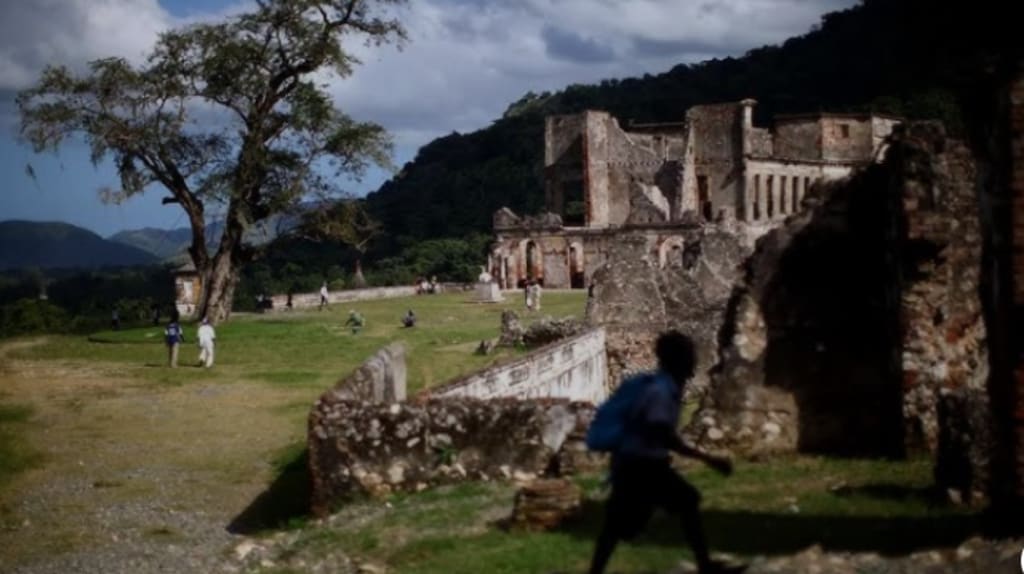
It was dawn when the bombs began to fall.
The ground shook, the air filled with smoke, and in a matter of minutes, everything Omar had known was reduced to dust. His home. His school. His dreams.
He was seventeen—old enough to understand war, but too young to accept that it could destroy everything he loved. His mother pushed him toward the truck that was taking people out of the city. “Go,” she said, “and don’t look back.” Those were the last words he ever heard from her.
That morning, Omar became a refugee—not just in another country, but in another life.
The Weight of a Lost Identity
Crossing the border was only the beginning. For months, Omar moved from camp to camp, surviving on shared bread and uncertain promises. Every checkpoint meant questions, every question meant fear.
He had no documents, no money, and no idea if his family was alive.
But what hurt most wasn’t hunger or exhaustion—it was invisibility.
In the refugee camp, people weren’t names. They were numbers printed on plastic cards. They weren’t citizens; they were “displaced persons.” Even dreams were rationed there.
Yet amid the hopelessness, Omar noticed something others overlooked. Children ran barefoot through the mud, chasing empty bottles as if they were toys. They laughed, even when their stomachs growled. And he realized: if they can still find joy, maybe hope isn’t dead yet.
The School of the Forgotten
Omar decided he would build something—anything—that gave those children a sense of normal life.
So, with scraps of wood, cardboard boxes, and chalk borrowed from an aid worker, he started a small outdoor classroom.
At first, only five kids came. Then ten. Then fifty. Within weeks, parents were bringing their children from other parts of the camp.
He taught them letters, numbers, and simple English words. But more importantly, he taught them that their lives still had value. “You are not refugees,” he said. “You are the future.”
Word spread quickly. Volunteers joined him. NGOs heard about “The Camp School,” and soon, organizations began sending supplies—books, pencils, tents, and even small solar lights.
For the first time in years, the camp felt alive. The laughter of children echoed again—not as a memory of the past, but as a promise of tomorrow.
One Story, One World
When a journalist visited the camp to cover the refugee crisis, Omar’s school became the heart of her story. Photos of him teaching under a torn tarpaulin went viral. Headlines called him “The Teacher Without Borders.”
Donations flooded in. Activists and human rights advocates saw in Omar a living example of resilience—the human capacity to create light in the darkest places.
Soon, he was invited to speak at international forums, sharing his journey not as a victim of war but as a builder of peace. Standing on stage in Geneva, his voice was steady:
“I lost my home, but not my humanity. You can take away our land, but not our will to learn, to love, and to rebuild.”
Those words would be quoted in newspapers, repeated in classrooms, and carved into the walls of refugee education centers worldwide.
A Movement Takes Shape
With international support, Omar founded “The Freedom Classrooms Initiative,” a nonprofit organization that builds makeshift schools in conflict zones and refugee camps.
The project started with three tents. Within five years, it had built over 150 schools across the Middle East and Africa. Thousands of children who once had no access to education were now learning under his program.
But Omar didn’t stop there. He trained young refugees to become teachers themselves. “No one understands hope better than those who’ve lost everything,” he said.
His philosophy was simple: You don’t rebuild a nation with weapons. You rebuild it with wisdom.
The Return
A decade later, Omar returned to his homeland. The war had ended, but the city was still scarred. Buildings lay in ruins, streets silent except for the wind. He walked through the wreckage until he found the spot where his house once stood.
There, beneath the rubble, he planted a small olive tree. “For my mother,” he whispered, “and for every child who still believes in tomorrow.”
When locals recognized him, crowds began to gather. They remembered the teenager who had once fled with nothing—and now returned as a symbol of rebirth. Together, they built the first permanent school in the city since the war. They named it The School of Freedom.
On its gate, engraved in metal, were the words:
“Education is not a privilege. It is a right—one that no war can destroy.”
Legacy of a Survivor
Today, Omar’s foundation operates in 23 countries, providing education, shelter, and mental health support to displaced children. His story is taught in universities as an example of how one person can transform tragedy into change.
He never saw his mother again, but he carries her voice in every speech, every classroom, every new school that rises from the dust.
When asked what kept him going, he always replies the same way:
“Because no one is truly free until every child has the right to learn, to dream, and to live without fear.”
Conclusion
Omar’s journey is not just a refugee story—it is the human story. A story of loss, resilience, and the refusal to surrender to despair.
It reminds us that human rights are not abstract ideals written in documents; they are living truths written in the hearts of people who fight, build, and believe when the world turns away.
From the ashes of war, Omar built a legacy that outlived destruction. His message endures:
Even in ruins, freedom can take root—and grow strong enough to shelter generations.
About the Creator
Alexander Mind
Latest Stories
Keep reading
More stories from Alexander Mind and writers in Humans and other communities.
The Girl Who Refused to Disappear
It began in a small, forgotten village surrounded by dust and silence. A place where the cries of injustice were muffled by fear and where human rights existed only in speeches, never in reality. Yet from that very silence, a young girl named Aisha dared to speak—and her voice would echo across continents.
By Alexander Mind5 months ago in Humans
The Therian Movement
In recent years, online spaces like TikTok, YouTube, and Reddit have helped bring attention to a niche but growing subculture known as the *therian movement*. While the idea may seem unusual at first glance, the movement reflects broader cultural trends around identity exploration, online communities, and how young people interpret their place in the world. Understanding what is behind the therian movement—and how it may influence younger generations—requires looking beyond the surface to the psychological, social, and digital factors that sustain it.
By AnthonyBTV6 days ago in Humans


Comments
There are no comments for this story
Be the first to respond and start the conversation.