


In the corner of a bustling city, there was a small café that most people passed by without noticing. Its windows were fogged from the warmth inside, and the bell above the door rang softly whenever someone entered.
Lena worked there. She was young, quiet, and observant. Every day, she served coffee to people rushing through their lives, carrying newspapers, laptops, or worries she couldn’t name. She saw tired faces, impatient gestures, and the kind of exhaustion that comes not from work alone, but from living too fast.
She, too, felt the weight of the world pressing down on her. Days blurred together — orders, complaints, small smiles that felt like a drop of water in a desert.
One morning, as sunlight filtered through the café windows, Lena noticed a man sitting alone at a table, staring at his cup as if it held answers. His coat was worn, his shoes dusty, and his eyes were tired. She poured him coffee without asking, placing it in front of him with a gentle, “Here, take your time.”
The man looked up, surprised, and nodded. For a moment, there was no rush. No deadlines. No noise. Just the simple act of one person noticing another.
Days turned into weeks. The man — whose name was Daniel — returned regularly. They never spoke much at first. He just sat, sipping coffee slowly, letting the café’s warmth settle over him. Lena watched him, and slowly, she realized something: peace could live in a simple cup of coffee, a quiet corner, a shared presence.
She began noticing small details she had overlooked before: the way sunlight caught the edges of the table, the soft hum of conversation that didn’t demand attention, the rhythm of steam rising from hot drinks.
Daniel eventually spoke. “I like this place,” he said one morning. “It feels like the world slows down here.”
Lena smiled. “Sometimes,” she said, “we just need a corner to breathe.”
And that was true. Peace, she realized, wasn’t something distant or grand. It was a corner in a café, a few minutes of stillness, the acknowledgment of another person’s presence.
One rainy afternoon, the café was nearly empty. Daniel arrived, shaking off an umbrella, looking more worn than usual. Lena noticed a tremor in his hands as he held his cup. She asked quietly, “Would you like me to make something warm to help you feel… okay?”
He nodded, barely. Lena poured hot chocolate, added a sprinkle of cinnamon, and set it gently in front of him. The warmth in the cup seemed to mirror the small warmth that had begun to grow inside Daniel over the weeks.
They didn’t need words. The act itself spoke volumes. A small gesture, unnoticed by most of the world outside, carried more peace than any grand speech ever could.
Other customers began to notice, too. A woman sitting nearby smiled when Daniel laughed softly at something Lena said. A man reading a newspaper paused to look around, suddenly aware of the calm in the corner where two strangers were quietly sharing warmth.
The café became a small refuge. People didn’t come expecting miracles — they came because they needed a pause, a breath, a human connection. And every pause, every shared moment, rippled outward.
Months later, Lena found herself exhausted again, burdened by the chaos of life outside the café. But she remembered Daniel, the quiet mornings, and the peace that grew in small gestures. She realized that peace wasn’t something she could find in the world — it was something she could offer.
So she offered it: a smile, a kind word, patience with a hurried customer, or a little extra care in the coffee she made. Each act was small, nearly invisible, yet it built a rhythm of calm, slowly teaching everyone around her to notice, to breathe, to pause.
One day, Daniel didn’t come to the café. Lena waited, unsure why, but she continued her work, noticing the sunlight, the steam from the coffee, the subtle hum of the world around her. And she understood something profound: peace doesn’t rely on one person. It lives wherever someone chooses to notice, to care, to be fully present.
When Daniel returned the following week, he smiled. “I needed the break,” he said. “Thank you for reminding me how to breathe.”
Lena nodded. “We all need that reminder.”
And in that shared glance, they both felt the same thing: a quiet, unspoken understanding that peace isn’t loud, dramatic, or demanding. It lives in ordinary moments, in gestures of kindness, in the spaces between noise where we notice each other and ourselves.
Years later, Lena would remember the cafés she had worked in, the people she had met, and the simple, quiet lessons she had learned:
Peace doesn’t require perfect conditions.
Peace can live in a shared cup of coffee or a smile offered without expectation.
Peace grows when we slow down, notice, and connect with others.
And she carried that understanding with her, offering it in every corner of her life, knowing that the small light of calm, when shared, could ripple outward, touching lives she would never fully know.
About the Creator
M.Farooq
Through every word, seeks to build bridges — one story, one voice, one moment of peace at a time.
Positive Things People Have Said About Me From A To Z
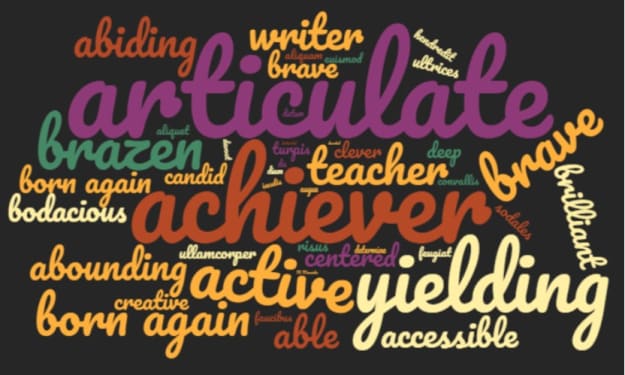
I never forget when people describe or analyze me in a positive way. On my 80th birthday on July 23, 2025, I reflected on all those positive words people have shared with me over the years. The positive descriptions are compilations from authority figures, physicians, teachers, counselors, therapists, pastors, employers, students, friends, and family members. You will see in the following capsules below many of the positive words and expressions people have used to describe me.
By Margaret Minnicks4 days ago in Humans



Comments (1)
It’s amazing how you turned simplicity into impact. That’s real art.