
The Field Between Us
Where Peace Grew Quietly, Season by Season

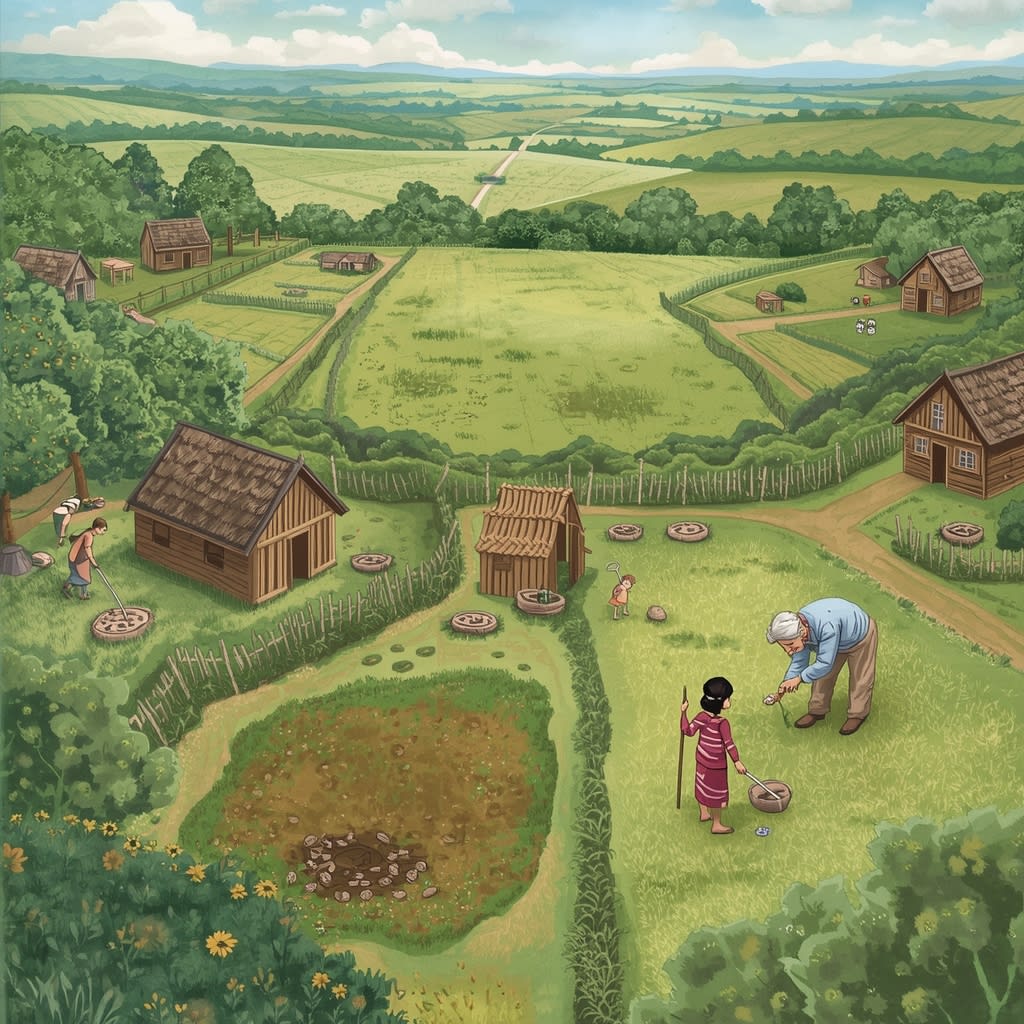
THE STORY
Between two villages—Noorabad to the north and Rehmatpur to the south—lay a wide, open field.
Once, it had been the pride of both villages. Wheat grew tall there. Children ran freely. Farmers worked side by side, sharing tools, water, and laughter.
But now, the field stood mostly empty.
Not because the land had failed—
but because people had.
HOW THE DIVISION BEGAN
Years ago, a disagreement arose over irrigation rights. It began with meetings and discussions, but slowly turned bitter. Voices were raised. Accusations followed. Old friendships cracked under the weight of pride.
Soon, Noorabad claimed the field belonged to them.
Rehmatpur said the same.
No agreement was reached.
So both villages made the same silent decision:
If we can’t own it fully, we won’t touch it at all.
The field became neutral ground—untouched, unused, avoided.
THE OLD FARMER
Near the edge of the field lived Haji Kareem, a widowed farmer in his seventies. He had worked that land since boyhood. He remembered when the soil was warm with effort and alive with voices.
Every morning, he walked to the edge of the field, leaned on his stick, and stared at the emptiness.
“It’s not dead,” he would mutter. “It’s just waiting.”
But no one listened.
THE DROUGHT
One summer, the rain stopped coming.
Crops failed in both villages. Wells ran low. Tension returned stronger than before.
Children went hungry.
Tempers shortened.
Fear spread quietly.
Still, the field remained untouched—fertile, unused, stubbornly silent.
THE BOY WHO CROSSED
One afternoon, Yasir, Haji Kareem’s twelve-year-old grandson, crossed into the field.
He carried seeds in his pocket.
“Don’t go there,” people warned him.
“It’s not ours,” others said.
Yasir didn’t argue.
He simply knelt down and planted a small patch—right in the center.
THE FIRST GREEN
Days passed.
Then weeks.
And one morning, something green appeared.
A thin line of life broke through the soil.
People noticed.
From Noorabad.
From Rehmatpur.
No one claimed it.
No one destroyed it.
They just watched.
THE SHARED WORK
Soon, others joined Yasir.
Quietly.
Carefully.
A farmer from Noorabad watered the patch at dawn.
A woman from Rehmatpur brought fertilizer at dusk.
They didn’t speak at first.
But they worked.
Side by side.
THE FIRST CONVERSATION
One evening, as the sun dipped low, two men—one from each village—stood watching the growing plants.
“This soil never chose sides,” one said.
The other nodded.
“Neither did the rain.”
They shared a small smile.
It felt unfamiliar.
But good.
THE HARVEST
By the end of the season, the field was alive again.
Wheat swayed in the wind.
Children ran between rows.
Laughter returned—hesitant at first, then free.
When harvest time came, no one argued over ownership.
Instead, they divided the grain equally.
THE REALIZATION
Standing together in the golden field, Haji Kareem wiped his eyes.
Peace, he realized, had not come from meetings or laws.
It came from:
Hunger shared
Work done together
And a child who didn’t wait for permission to do what was right
FINAL THOUGHT
Peace does not always arrive as an agreement.
Sometimes,
it grows quietly—
in neglected places,
through small brave actions—
until even the most stubborn hearts are forced to notice.
And sometimes,
peace is simply a field—
waiting for someone to plant the first seed.
About the Creator
M.Farooq
Through every word, seeks to build bridges — one story, one voice, one moment of peace at a time.
When International Relations Shape the World We Live In
When International Relations Shape the World We Live In International relations are not limited to world leaders shaking hands at summits or exchanging sharp words on television. They represent a complex system of interactions that quietly shape economies, security, culture, and the daily lives of people across the globe. Every treaty signed, every sanction imposed, and even every diplomatic silence carries consequences that often reach far beyond borders.
By Wings of Time 5 days ago in Humans


Comments
There are no comments for this story
Be the first to respond and start the conversation.