
The Last Light of Compassion
In a world darkened by division, one act of kindness could change everything
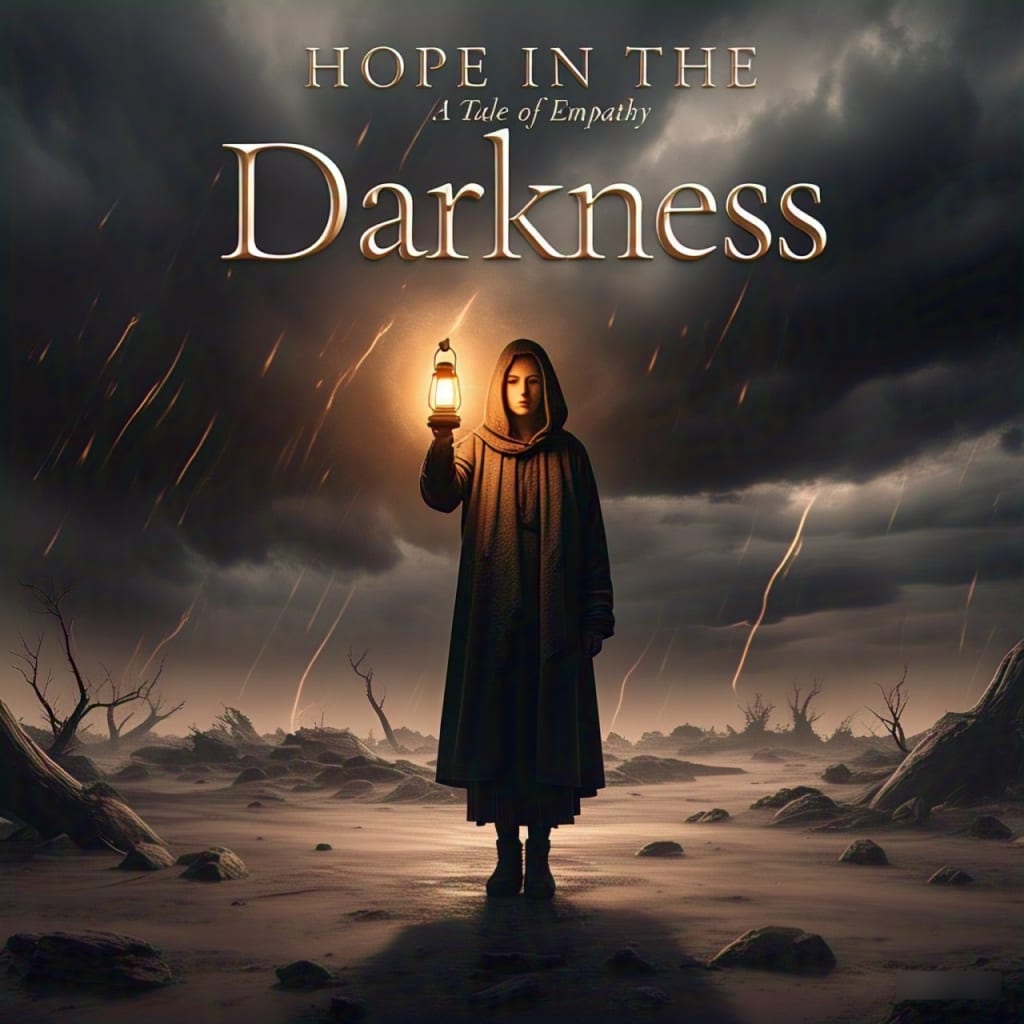
The year was 2093. Earth was not the planet it once was. Nations had fractured into isolated factions, each guarded by walls—some of steel, some of silence. Compassion, once the pulse of humanity, had flickered so long in the shadows that people believed it had died altogether.
In a quiet corner of what used to be the northern border of an ancient land, a girl named Alia lived in the remains of an old library. The world called her land “Zone 47” now—no flags, no identity, just ash and laws.
Alia had never seen peace. She was born during the riots, grew up scavenging food from abandoned towns, and learned to read from torn pages left in burnt books. Her only companion was an old man named Daen, who had once been a teacher before the world forgot what schools were.
Every night, Alia lit a small oil lamp in the broken window of the library. It wasn’t much—just a flicker—but Daen insisted it mattered.
“It’s not just light,” he’d say. “It’s a message: someone still cares.”
Alia never understood why. The world outside was cruel. Drones patrolled the skies. Armed guards didn’t speak, only shot. People in her sector survived by trading lies or betrayal. So why hold on to something like kindness?
One night, during a winter storm that howled like the ghosts of the past, Alia heard something strange: a knock.
No one knocked anymore.
She grabbed a rusted blade and slowly opened the door. There, half-collapsed in the snow, was a boy no older than her—wounded, shivering, and wearing the colors of Sector 9, the enemy zone across the southern wall.
Helping him meant punishment. Possibly death.
She stood frozen. The boy's lips moved, barely a whisper. “Please…”
Alia stared at him. Behind her, Daen appeared, coughing weakly.
“What are you waiting for?” he asked.
“He’s from the South.”
“He’s human.”
That night, Alia and Daen tended to the boy—Niko—with scraps of herbs and melted snow. He said nothing more than his name. Fear lived in his eyes like a permanent shadow.
Over the next few days, he healed slowly. He was cautious, watching every move Alia made. But one night, as the oil lamp burned softly on the windowsill, he spoke.
“Why… do you light that?” he asked.
Alia shrugged. “It’s stupid. An old habit.”
“It’s not stupid,” Niko said. “When I saw it from the hills… I thought it might be a sign. That someone might not shoot me.”
Alia said nothing, but that night, she refilled the lamp with a little more oil than usual.
---
Time passed. The snow melted, and Niko stayed. He helped fix parts of the library, sorted old books, even taught Alia how to build small solar panels from broken tech he’d salvaged before crossing the border. A quiet bond grew between them, stitched not with words, but with shared silence and slow trust.
One day, Daen passed away in his sleep, his last words a whisper: “Keep the light burning.”
They buried him behind the library, beneath the roots of a tree that hadn’t bloomed in ten years.
That spring, it did.
---
As weeks turned into months, Niko revealed something that changed everything. He hadn’t just run away—he was a messenger, part of a secret group that believed reunification was still possible. That there were others across the borders who lit lamps too. Who believed in the old ways.
Alia listened, skeptical at first. But the idea grew in her heart like a stubborn flower in cracked soil.
“What if we lit more lamps?” Niko asked. “What if people saw them and remembered?”
Alia agreed. They built more lanterns—made from scrap metal and glass, powered by oil or salvaged light cells—and started placing them on rooftops, cliffs, even old highways.
They became ghosts of hope, wandering the lands at night, dodging patrols and drones to light the dark.
At first, no one noticed. Then, slowly, responses came.
Tiny lights appeared on distant hills. Windows flickered in long-abandoned towns. One day, a stranger left a book at their doorstep—a poem, with a note: “You are not alone.”
But with light came danger.
The authorities noticed. Drones were reprogrammed to hunt “light-bringers.” Niko was caught during a mission. Alia waited three days in silence before she found him—injured, half-beaten, tied to a tree like a warning.
She untied him, carried him back alone through the cold rain, and as he drifted in and out of consciousness, he whispered, “If I don’t make it… don’t stop.”
He did survive—but barely.
---
Then came The Night of Silence—the anniversary of the global ceasefire that had long been ignored. Alia decided they would light every lamp they had that night. Dozens of them. Even if it was the last thing they did.
They climbed the old transmission tower above the ruins, placing lanterns on every rung. As the last one flickered on, the wind howled.
And then something unimaginable happened.
From every direction—east, west, north, south—lights answered.
Hundreds.
Thousands.
The sky, once silent and dark, became a sea of flickers, as if the stars themselves had descended to remind the world: We remember. We care. We are still human.
Tears streamed down Alia’s face as Niko stood beside her, bruised but alive.
In that moment, they weren’t from Sector 9 or Zone 47. They weren’t enemies. They were the same.
The lights were not just defiance.
They were a resurrection.
---
Years later, people would tell stories of the girl with the flame in her window. Of the boy who believed messages could be carried without words. Of the teacher who planted compassion like seeds in broken soil.
They would say that on the darkest night, humanity remembered itself.
And that a single lamp, burning in the window of a ruined library, became the first spark that lit the world anew.
About the Creator
Keep reading
More stories from Arjumand Said and writers in Humans and other communities.
Marc Guéhi
Marc Guéhi is a professional football player who is known for his calm defending, strong leadership, and smart decision-making on the field. He plays as a central defender and represents both club football and the England national team. Over the years, Marc Guéhi has become one of the most trusted young defenders in modern football.
By Farhan Sayed3 days ago in Humans
Silver Screen Magic with Mae West
American actress and singer Mae West became a popular film actress during the Great Depression. She started entertaining in vaudeville, then performed on Broadway, and finally went to Hollywood. She signed up with Paramount Pictures and made her debut in the 1932 film “Night After Night.” She also starred in musicals, comedies, and crime dramas. The American Film Institute named her one of the best classic Hollywood actresses.
By Rasma Raisters5 days ago in Geeks



Comments
There are no comments for this story
Be the first to respond and start the conversation.