
The Girl Who Lived in a Graveyard
From War’s Shadows to a Life of Purpose

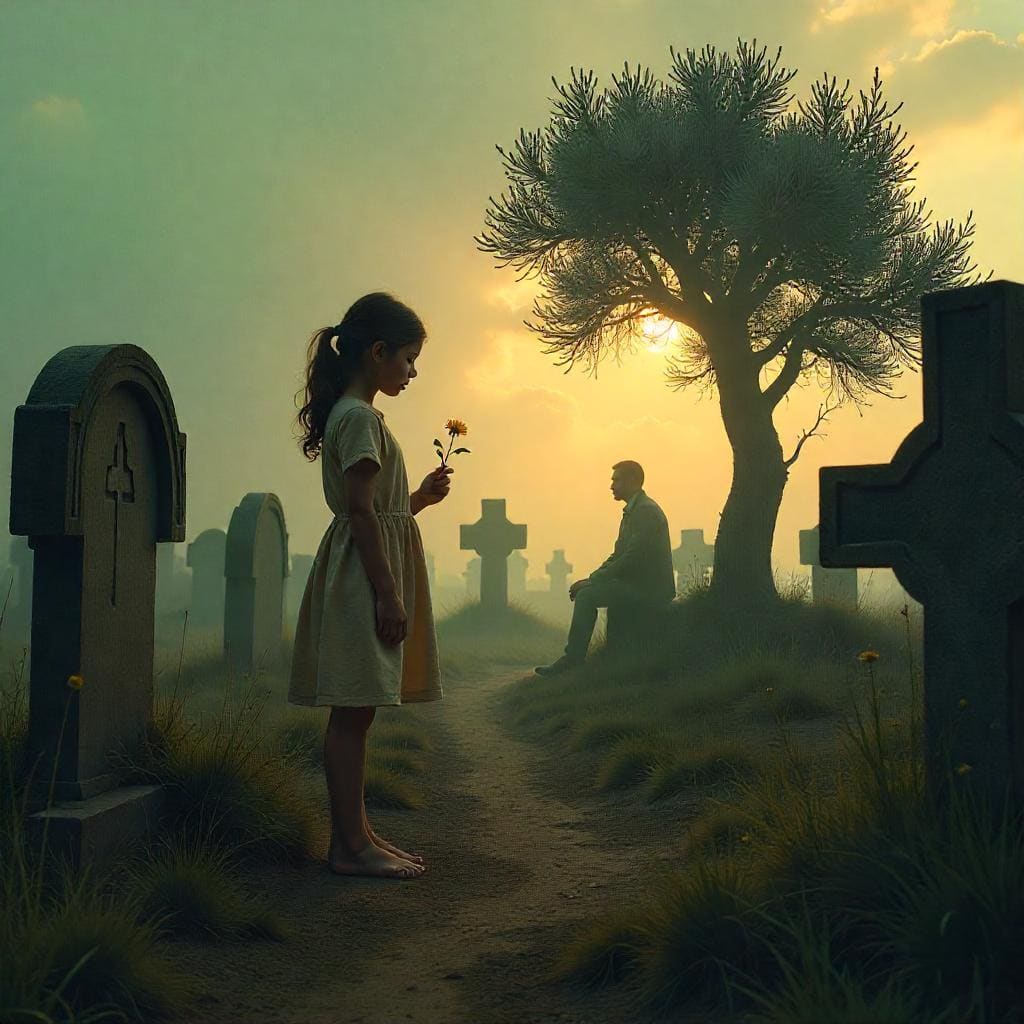
Graveyards are for the dead, they say. But in the heart of one—where silence clung like moss to stone and the wind wept over forgotten names—there lived a girl. She wasn’t a ghost. She wasn’t a figment of sorrow. She was real. Her name was Amara.
A Childhood Among Tombstones
Amara's earliest memories were not of lullabies or toys. Instead, she remembered the sound of bombs—those cruel beasts that roared through the sky and shattered homes like paper castles. She remembered her mother’s trembling hand covering her eyes and the scent of soil mixed with blood. When the war swept through her village, it left nothing behind but ashes. Her parents were lost in the rubble, and no relatives came to claim her. She was six. An old gravedigger, Kareem, found her wandering barefoot near a mass burial site. With trembling hands, he picked her up, whispering a prayer for the dead and a longer one for the living.
A Sanctuary of Shadows
Kareem lived in a small, crumbling shack within the cemetery's bounds. With nowhere else to go, Amara stayed. The villagers found it strange—frightening even—that a child lived among the dead. But Kareem had seen enough death to recognize the spark of life in the girl.
She helped him clean graves, plant flowers, and light candles. Over time, she memorized the names on every headstone, spoke to them as friends. The cemetery, to her, wasn’t haunted—it was safe. No bombs. No screams. Just quiet.
Learning in the Dark
There were no schools. No books. But Amara was hungry—not for food, but for understanding. Kareem had kept a box of old newspapers, torn novels, and letters from a life long past. At night, under the flicker of a candle, she’d read aloud while Kareem sipped tea and nodded.
“She’s got the mind of a poet,” he’d say.
She taught herself to write on the backs of old flyers, filling every inch with crooked letters and questions no one could answer. “Why do people die?” “What is peace?” “Can a person start again?”
The Day the Stranger Came
When she was thirteen, a stranger arrived at the cemetery—a journalist named Lina from the capital city. She was researching war graves, recording names and stories. Amara watched her from behind a weeping willow, curiosity blooming in her chest. Lina noticed.
“Are you... from around here?”
Amara stepped forward, not shy, just uncertain. “I live here.”
“In the village?”
She pointed to the shack. “In the graveyard.”
That night, Lina sat with Kareem and Amara, listening to their story. The next day, she took a photo—Amara standing in front of a weathered headstone, barefoot, holding a wildflower. That photo later appeared in a national magazine titled The Girl Who Lived in a Graveyard.
Fame in Silence
The photo touched hearts around the world. Donations poured in. Letters arrived—some written in languages Amara didn’t yet understand. One woman, a teacher in Istanbul, sent books. A man in London offered a scholarship. Kareem, now too frail to dig graves, wept when he read one letter aloud: “You remind us that life survives—even where death rules.”
Leaving the Dead Behind
At fifteen, Amara left the graveyard. It felt like betrayal—abandoning the tombstones, the silence, Kareem. But he pressed a book into her hand before she boarded the bus. “They’re not gone,” he whispered. “You carry them.” Life in the city was deafening. People rushed. Horns blared. Everyone looked tired and important. Amara, with her quiet eyes and wild stories, felt like a misplaced artifact.
She studied fiercely. English, history, philosophy. She wrote essays that made professors pause. She gave speeches that made audiences cry. And always, she ended with a photo of Kareem and a line: “He taught me that hope lives in the most unlikely places.”
Returning With a Purpose
Years passed. The girl who once lit candles for strangers’ souls became a published author, a speaker, a beacon for war orphans. But her soul still ached for one place.
At twenty-two, she returned to the graveyard. Kareem was gone.
She found his grave under the olive tree where they once sat sipping tea. The stone simply read: “Kareem. Gravedigger. Guardian.”
She sat for hours beside him, not crying, just remembering.
The School of Silent Dreams
With help from her supporters, Amara built a small school near the cemetery—“The School of Silent Dreams.” It offered free education to war-affected children. Inside the first classroom hung a framed copy of her childhood photo and Kareem’s favorite quote: “Even among the dead, life whispers.”
Final Reflections
People often asked her, “What saved you?”
She’d smile and say, “The dead taught me to live.”
Amara never glamorized pain. Her success didn’t sparkle—it glowed with quiet resilience. She became a symbol, not of tragedy, but of transformation.
Conclusion
The world forgets its broken places. It paints over ruins and buries trauma. But stories like Amara’s refuse to fade. They rise from the cracks, stubborn as weeds, powerful as fire.
The girl who once lived among tombstones now nurtures minds. She is proof that no circumstance—no matter how dark or decayed—can contain the human spirit forever.
FAQs
1. Is Amara based on a real person?
Amara’s story is a fictional blend inspired by real war survivors and displaced children who found hope in unimaginable places.
2. Why did she live in a graveyard?
The graveyard was a place of refuge after the war. It provided shelter, safety, and the guidance of a kind man, Kareem.
3. What is the message of the story?
That resilience, education, and compassion can transform trauma into purpose—and that even the darkest places can birth light.
4. What happened to the school she built?
The School of Silent Dreams continues to run, educating war-affected children and offering therapy and hope.
5. Why is this story important today?
Because millions of children still suffer due to war. Amara’s story is a reminder that they are not helpless—they are potential waiting to bloom.
About the Creator
Mian Nazir Shah
Storyteller fueling smiles and action with humor, heart, and fresh insights—exploring life’s quirks, AI wonders, and eco-awakenings in bite-size inspiration.
Keep reading
More stories from Mian Nazir Shah and writers in Humans and other communities.
The Mercy of Makkah
Introduction In a world where power often leads to revenge, one man showed the strength of mercy. Prophet Muhammad (peace be upon him), the final messenger of Islam, lived a life filled with hardship, betrayal, and relentless opposition. Yet, despite all the suffering he endured, he never allowed bitterness to darken his heart. His greatest victories weren’t won through violence or hatred — they were won through compassion, forgiveness, and unwavering character.
By Mian Nazir Shah10 months ago in Humans
Lessons In Love Improve Understanding Trust Respect And Healthy Communication
The basis of successful romantic relationship is understanding. It entails actually appreciating how your partner feels, thinks, and what he or she requires. Listening and watching behaviors can help couples understand each other in a better way, and thus misunderstandings are decreased and couples become emotionally close to each other.
By Willian James2 days ago in Humans
📢 Raise Your Voice Thread: 03/05/2026
Our “Raise Your Voice Threads” are hosted most alternating Thursdays at 12PM ET to offer creators more avenues to uncover exceptional stories on Vocal. As we are continuously searching for fresh creators and inspiring stories, this thread provides an opportunity to exchange and discuss the stories that have moved and motivated us on Vocal.
By Raise Your Voice by Vocal7 days ago in Resources



Comments
There are no comments for this story
Be the first to respond and start the conversation.