
The Four Men and the Echo of Fear: A Cultural Glimpse into Gender Dynamics
An ironic Pashto proverb reveals how fear, love, and tradition shape the delicate balance between men and women in society.

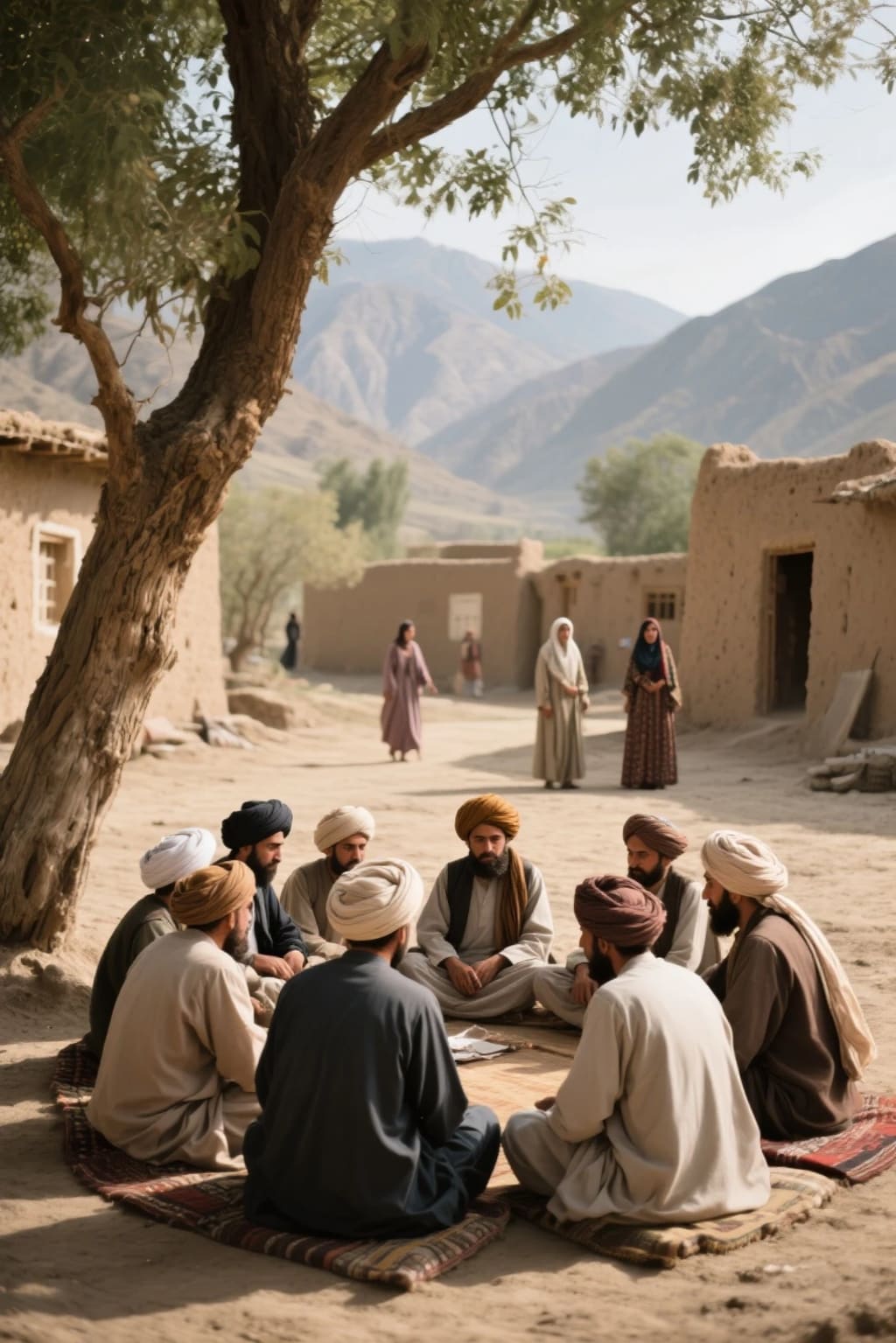
In the winding alleys of Eastern wisdom, where storytelling and humor shape truths too sharp to be spoken directly, there exists an old Pashto proverb—a dialogue, in fact, between four men that speaks volumes about the complex relationship between men and women in traditional society.
“One said, ‘I fear my wife so much that I do whatever she tells me.’
Another said, ‘I do everything to please her—without even being told.’
The third added, ‘I can’t even return home without a gift for her.’
The fourth declared proudly, ‘Out of fear, I never married at all!’”
These words, light on the tongue but heavy with meaning, reflect an ironic yet powerful commentary on male attitudes towards women, love, commitment, and the balance of power in relationships.
The Irony of Power
At first glance, this exchange may seem like satire—a playful jab at the idea of dominant wives and submissive husbands. But beneath the surface lies something deeper: a cultural lens on fear, love, and respect. In traditional Pashtun society, men are expected to lead, protect, and provide. Yet in this witty proverb, each man subtly admits to the influence women hold over their lives—be it through love, habit, obligation, or dread.
Ironically, the one who never married believes he has escaped this dynamic. But in truth, his fear has enslaved him more than any marriage could.
A Silent Admiration
What’s especially telling is how none of these men speak with resentment. There's an almost unspoken admiration in their confessions. Whether it's buying gifts, obeying commands, or anticipating desires, each man acknowledges a woman's central role in his life—even if he cloaks it in fear or humor.
The second man’s words stand out: “I do everything to please her without even being told.” This isn't fear—it’s devotion. A sign of deep emotional intelligence and understanding, rare and precious in any culture.
Gifts, Gestures, and Expectations
The third man highlights a powerful cultural truth: the importance of symbolic gestures. In many Eastern societies, a gift is more than a present; it's a statement. It says, “I was thinking of you,” or, “I value your happiness.” For some men, such acts are driven by love. For others, by obligation. But the effect is the same—it reinforces the emotional thread that binds a couple together.
The Myth of Control
The fourth man avoids marriage entirely, perhaps thinking it will grant him freedom. But his own words betray him. “Out of fear, I never married at all,” he says—revealing that the idea of women still holds power over him, even in absence.
This, perhaps, is the true brilliance of the proverb. It mocks the illusion of control. Whether inside marriage or outside of it, men are affected by the presence—or the imagined presence—of women. Emotionally, mentally, spiritually. Fear and love become two sides of the same coin.
Modern Echoes
Though born in the mountains of Pashtun folklore, this saying resonates far beyond its cultural origin. In every society, relationships between men and women are layered with expectations, traditions, and unspoken rules. What this proverb offers is not just humor, but a mirror. It challenges both men and women to reflect on the real sources of influence and vulnerability in their lives.
Perhaps the point isn’t that women dominate men—but that love itself is a form of beautiful surrender.
And maybe, just maybe, the wisest of these four men is the one who gives without being asked.
💡 Additional Tips:
Call to Action: At the end of your article, consider adding a line encouraging readers to share their thoughts or experiences related to the topic.
Engagement: Pose a question to your audience to foster engagement, such as: "Have you encountered similar dynamics in your culture or relationships?"
About the Creator
Rahmat Khan
I write stories that touch the heart and stir the soul tales of quiet heroes, hidden strength, and everyday moments that leave lasting echoes. Through fiction and reflection, I aim to share pieces of truth, light, and hope in a noisy world.
Keep reading
More stories from Rahmat Khan and writers in Humans and other communities.
The Last Gift
Introduction In the forgotten corners of a quiet town where seasons passed without fanfare and windows stayed shut against time, there lived a man whose pockets were empty, but whose heart still held the quiet power to give — one final gift that would leave an imprint far beyond his own days.
By Rahmat Khan9 months ago in Humans
Balancing Personal Mental Health Needs Within Romantic Relationships Successfully Today
Mental health balancing in a romantic relationship starts with the fact that every partner has his or her own emotional needs. The aspect of mental health is individual that can be influenced by life experiences, stress and ability to handle emotions. Being aware of your triggers, boundaries, and emotional patterns enables you to express yourself better and reduce burnout at work as well as in personal relationships. As people become aware of their mental health demands, they will be in a better position to take care of themselves without necessarily having to depend on their partner to be controlled emotionally. This self-consciousness forms a more healthy base of the relationship as it enhances accountability in individual wellbeing as well as mutual emotional bonding.
By Mark Hipsterabout 17 hours ago in Humans

Comments
There are no comments for this story
Be the first to respond and start the conversation.