
The Cost of Compassion
Breaking the Cycle of Emotional Self-Sacrifice


I had always prided myself on being intellectual, analytical, hardworking, and deeply understanding of human nature. My ability to empathize was second to none. I didn’t just forgive; I erased the wrongdoing from my memory as if it had never happened. I thought this was a strength, a rare gift. I believed my empathy gave me an edge—an ability to see through others' pain and to respond with compassion rather than resentment. But, over time, I began to realize that this was not a gift at all. In fact, it was my greatest weakness.
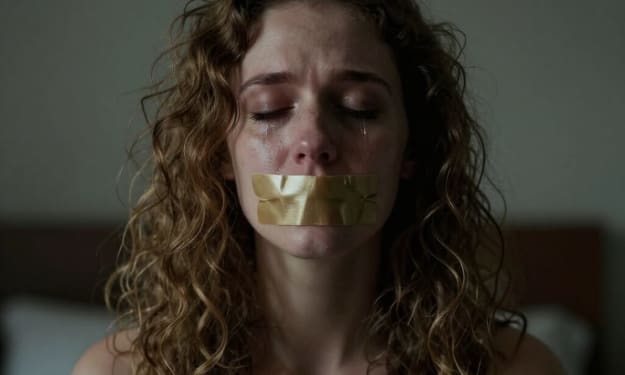
Every time someone hurt me, my immediate reaction was to seek to understand them. Instead of standing up for myself, I would wonder, What pain led them to act this way? How terrible they must be feeling to have done this? And so, I forgave them. Again and again, I absorbed the blows, quietly nursing my wounds in the hopes that forgiveness would heal me. I never complained. I never voiced my hurt. I was always the person who smiled through the pain, believing that the deeper my empathy, the more “evolved” I was. But eventually, the hurt became familiar. It almost became comforting. And as I reflected on this, I recognized a disturbing pattern: I wasn’t just allowing myself to be hurt; in some twisted way, I was choosing it. I was prioritizing others’ needs over my own well-being, and I had convinced myself this was noble.
Then, one day, everything shifted.
For years, I had been regarded as a highly efficient professional—sharp, strategic, and reliable. I was the person people turned to when they needed results, and I took pride in my ability to deliver. But in the midst of the chaos in my personal life, I started noticing cracks in my professional life as well. The emotional exhaustion I had been masking started to seep into my work. I became indecisive, second-guessed myself constantly, and started avoiding difficult decisions. My confidence, once unwavering, began to erode. For the first time, I was simply going through the motions, pretending to be the person I once was, but I knew I had lost something important. The worst part? I accepted this version of myself.
One day, during a particularly challenging moment at work, something quietly but profoundly shifted inside me. It was as if a light flickered in the darkness, and the realization came to me in an almost whisper: I cannot afford to be miserable in both my personal and professional life. If I was losing myself in one arena, I had to reclaim myself in the other. I knew that ideally, I should balance both aspects of my life, but realistically, I told myself, I must win professionally.
And that was the moment everything changed.
I made a decision—I come first. ALWAYS.
It wasn’t an easy decision. I had spent so much of my life placing others first, bending to their needs, and excusing their behavior because I thought it was the compassionate thing to do. But now, I was forced to confront the truth: I couldn’t pour from an empty cup. I couldn’t continue giving to others if I had nothing left to give myself. I had to prioritize my own well-being, even if that meant setting boundaries that might upset people. The fear of being labeled selfish, arrogant, or unkind no longer held power over me. I realized that self-preservation wasn’t an act of cruelty; it was an act of necessity.
There was still a long road ahead. There were days when the old patterns crept back, urging me to forgive without question or to suppress my own needs for the sake of others. But the feeling of reclaiming my sense of self—not because life suddenly became easier, not because I had external validation, but simply because I had chosen to prioritize myself—was like nothing I had ever felt before. It was freeing.
For the first time in my life, I felt in control of my own narrative. I stopped worrying about how others perceived me and started focusing on what I needed to thrive. It was an empowering shift that began with a simple decision: to choose myself. And this time, I’m not looking back.
About the Creator
Seraphina Curls
Think of me as the love child of a philosopher and a detective, constantly piecing together the universe’s weirdest puzzle, one bizarre theory at a time.
Keep reading
More stories from Seraphina Curls and writers in Humans and other communities.
Frozen in Patience
For a few days, I became what could only be described as a butterfly stalker. There I was, running around my backyard, sweat dripping, camera in hand, on a mission to capture the perfect butterfly shot. My "Album of Nature" was crying out for that elusive photo—just one butterfly, perched on a flower, wings spread wide, looking ethereal. Simple, right? Not quite.
By Seraphina Curls11 months ago in Art
Whiskey At Dusk
Guess the whiskey was more important to you in the end, wasn’t it? It was more than the well-being of your friends; more vital than showing up to the places you promised you would and could come to; more critical of a matter than fulfilling your damn responsibilities and getting the press off your back.
By Snarky Lisa3 days ago in Humans



Comments
There are no comments for this story
Be the first to respond and start the conversation.