

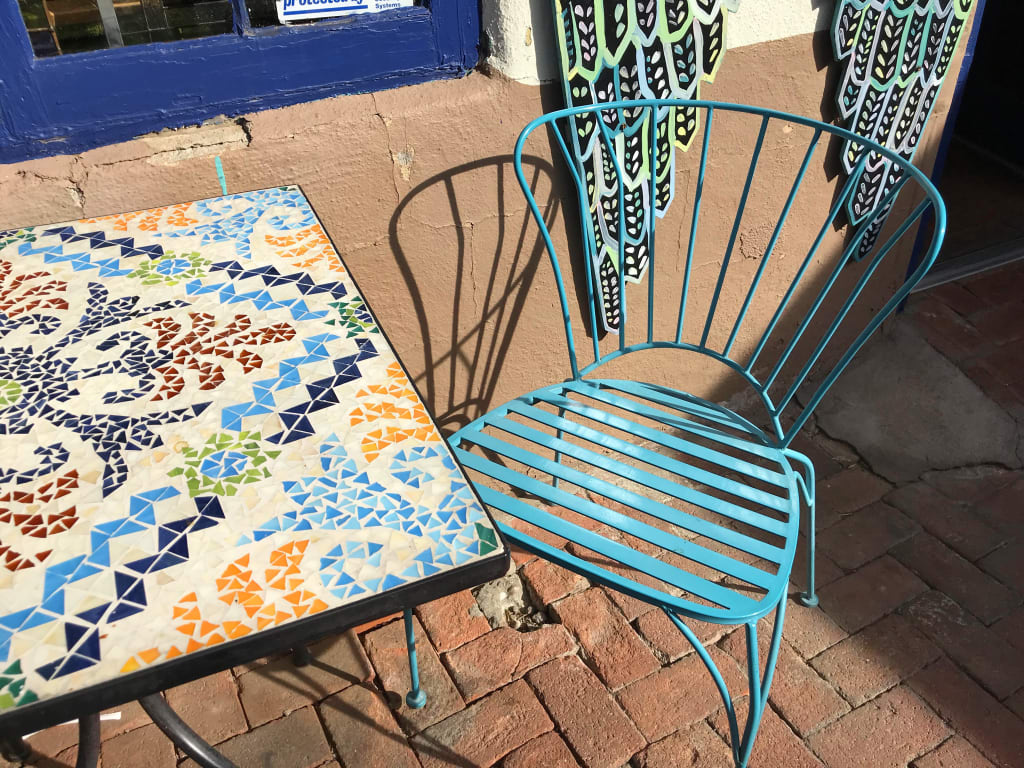
Warring scents of frankincense and meaty barbacoa drifted down Canyon Road in Santa Fe the afternoon the package arrived. Erin took a small table near the street and placed the padded mailer directly in front of her.
February was rarely mild in northern New Mexico. Snow clung to uneven adobe walls and piled in microdrifts to either side of a turquoise gate across the narrow roadway. Thankfully, her chair backed up to a roaring patio heater.
Miguel was dead.
She'd learned of his death, not through anyone she knew, but from a dry, sparsely worded letter from Miguel’s attorney tucked inside the mailer.
“I regret to inform you that Mr. Rivera passed away on January 19th. His will instructed our firm to send the enclosed to you, unopened...”
No explanation was offered as to how Miguel had died. He had no family she could ask. She hadn’t communicated with, let alone spoken to her childhood friend since he’d left for Lisbon a decade before. She hadn’t thought of him in years and figured it had been the same for him. People, once close, were known to move on. Their lifelines diverged; they grew toward separate suns.
What had he bequeathed her, and why?
A server approached. She ordered a pot of Ti Kuan Yin, Iron Goddess of Mercy tea. She could use some mercy about now.
He’s dead. Miguel is really gone.
“Something to eat?” she was asked.
She wasn’t hungry. She picked the first thing on the menu her index finger touched, something with bacon and goat cheese, a sandwich, a salad, who knew which? She didn’t care.
Until after the server left and she suddenly realized her debit card might not have enough to cover the bill. Grabbing her phone, she panic-scrolled for her banking app when a text interrupted. It was from the respite caregiver watching Evan.
Your brother insists on his wheelchair. Do I have your permission?
Though only 23-years-old, Evan’s lungs were so damaged from vaping he was permanently disabled, the organs steadily failing. Soon he would be on a heart-lung machine. Where would the money come from for the hospital bills? For the inevitable double lung transplant?
Last night had been a bad one for her brother, to the point she’d nearly called 911. He should be in bed, not up and moving around.
A chime from her phone announced another text, this one from Evan.
Too late. Gearing up for wheelchair basketball game with my homies.
Evan wasn’t strong enough to play basketball. It was just him being a smartass.
Dammit, Evan, she texted back.
Sorry, not sorry, Evan told her. YOLO. Risking the Great Lung Apocalypse to go to living room and play Halo.
Erin didn’t respond.
Love ya, sis.
She paused and then finally texted, Same, with a heart emoji.
Her tea arrived and she poured herself a cup, watching the steam curl up in the winter air. She checked her bank, relieved by the balance of $17.83. Enough to pay for lunch and scrape out an embarrassingly low tip without the bank declining her card.
Time to see what Miguel had left her in his will.
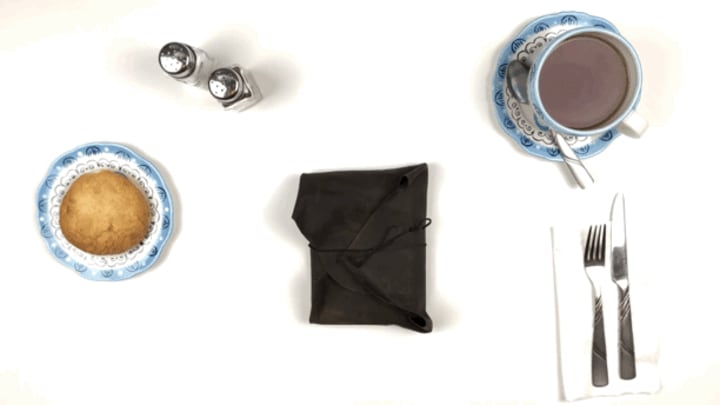
Inside the mailer was a second padded envelope. She tore it open. Something dull and brown, smelling of age and sweat, slid out onto the table. An irregular piece of leather was folded around an object and tied with a cord. She pulled on the cord.
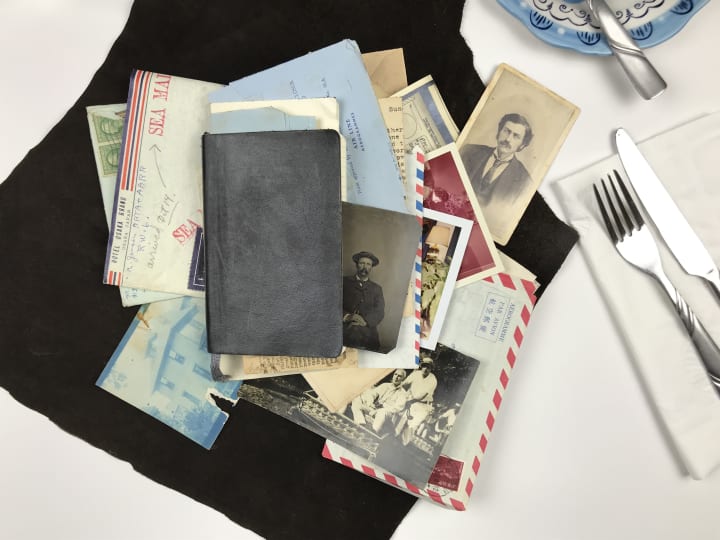
Falling open, the leather wrapping transformed into a blotter for a small, black journal. Not simply a journal, but the fat, overstuffed repository for dozens of other items, letters and receipts, age-browned telegrams, photographs.
She opened the journal, discovering the first page written in German, the hand rhythmic to the point of musicality. She didn’t read German, but translations in other languages, English included, had been added later.
Greetings,
If you have been given this book you are now in possession of an important legacy.
Erin looked for the date on the original entry, 1830. Almost two hundred years ago! She continued reading.
The volume you hold in your hands is the official record of and key to claiming this legacy. I have placed an undisclosed sum for investment with the Frankfurt banking firm of Bollmann & Graf, who have been given a strict set of instructions on the stewardship and eventual release of all funds and interest accrued by this account.
Please read the following carefully before acting. A choice lies before you.
To claim the legacy, which is now rightfully yours, without reserve or constraint, contact Bollmann & Graf and alert them that you are in possession of the book. You will be asked a question to verify your claim. Once you answer correctly, you need only ask the following question, how much is my account’s balance? The total sum will then be immediately transferrable to you to do with as you please.
However, you have another option. You may decline and add a gift of your own to the legacy before passing the book to another within your lifetime or after. Any amount is acceptable, large or small. My bankers will manage the funds until such time as they have grown large enough to be released to the final legacy caretaker to use them in the service of mankind.
The formula which determines the culmination of the legacy, when the sum is ripe to do real good in this world, is mine and known only to a select committee of sound and honest men. You will be informed upon initial contact if you are the final caretaker.
I offer heartfelt congratulations and wish you all luck in your decision.
Erin couldn’t find a signature. The original benefactor had chosen to remain anonymous.
Her meal came then, a salad as it turned out. She ignored it.
She thumbed through entries from the 19th and 20th centuries when successive authors had recorded their interaction with the book before passing it on. Letters and, later on, wire cables had been saved confirming each owner’s entitlement to the legacy.
Her hand stopped on a page where her gaze caught a familiar name.
“My God.”
Sir Arthur Conan Doyle had once owned this book.
Scrawling in fountain pen while in New York in 1922, Conan Doyle noted that he knew of “no more trusted person on Earth,” than the one who had given him the journal. “I have thoroughly researched its contents and am confident in the legacy, which I believe to be a capital humanitarian enterprise. Thus, I have contributed twenty-thousand American dollars to the cause.”
Adrenaline shocked her system, burning hope into her chest.
She didn’t need an interest calculator to guess that invested conservatively for almost a century, 20K would have morphed into millions. And that was just one of dozens of contributions to the account.
Evan.
They didn’t have to worry. They could pay for his transplant. They were saved.
No, wait.
She took a mental step back. This couldn’t be real. It had to be a scam. Or a cruel prank. What were the chances that a bank from the early 1800s still existed today? Plus, any committee of sound and honest men would be long dead.
She finally thought to check if Miguel had penned an entry, locating his cramped printing at the top of the last used page.
Account status confirmed, her friend had written. I have not asked the question. How much? Blessed Virgin, help me. I can’t make the choice.
He’d held onto the journal, frozen by indecision for seven years?
Oh, Miguel.
Separating his entry from the one before it, a printout of an email informed Miguel he’d been verified as account holder, sent seven years before by an investment bank in Frankfort, Germany. The bank? Bollmann & Graf.
She picked up her phone and messaged the return address on the email. No name was attached to confirmation, only an address.
Her fingers rested on the journal’s cover. Unbelievable. It was the only fitting descriptor for a fortune that had passed through so many hands with no one taking it for themselves. That the book had never been stolen, lost, or accidentally destroyed was mind-blowing. Why had no one thought to claim the money, keep only a part of it and restart a new legacy with the rest?
Maybe they had. Maybe it had occurred to others as it did to her now. Maybe they’d considered the possibility and discarded it, viewing it as a betrayal of the largess entrusted to them for the benefit of others.
These are better people than me.
Her phone rang, startling her. That was fast. Nervous, she tapped to accept the call.
“Ms. Rose?” The voice was dark, firm, all business.
“Yes. This is Erin Rose.”
Instead of identifying himself, the man asked, “From whom did you receive the journal?”
“Miguel Rivera.”
“Thank you. To verify you as the new account holder, I will need you to tell me the word on the back of the book.”
“Word?”
She flipped the book over, seeing nothing written on the back, not even inside the back cover, which was obscured by a paperboard pocket stuffed with items from previous owners.
“I don’t–”
“When you have the key,” he said, “call the bank. Ask for extension 315.”
He hung up.
Erin studied the book carefully. At least fifty pages at the back remained blank. She emptied the documents pocket and searched for a hidden flap or a false cover. Nothing. Was it a trick question?
Frustrated, she sagged back in her chair. Her psyche was on overload. Three years of caring for her brother had proven an emotional hellscape of trauma, grief, and exhaustion, of prayers for miracles.
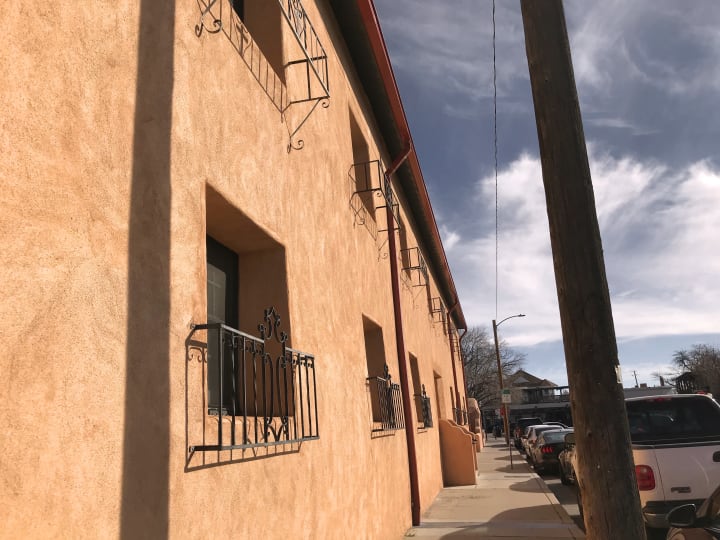
As she gazed around, the personal gravity of the situation brought the world into surreal, crystalline focus. Her mind cataloged mundane details from the moment that would be the most important of her life, muted laughter at a nearby table, a cat grooming itself on an adobe wall, the fragrant scent of barbecued meat tangling with incense in the breeze.
Look again.
She thrust her hand into the book’s back pocket in case she’d missed something.
Oh!
Her fingertips found them, a series of figures impressed into the endsheet, invisible to the eye as well as concealed by the pocket. One by one, she traced the letters, not understanding what they spelled.
Weltschmerz?
She googled Weltschmerz and found an entire Wikipedia page devoted to the word, which had entered the German lexicon in 1827. Die Weltschmerz described “a deep sadness about the inadequacy or imperfection of the world.”
Her fingers closed around the book. She literally held fate in her hand and, like Miguel, a decision that could and would alter history. The only question, whose history?
“Yes, Ms. Rose?” the same dark voice answered extension 315 on the second ring.
“Weltschmerz,” she said, while thinking, how apt.
“Thank you,” he said. “You are now the verified account holder. I regret to inform you, however, that you are not the final caretaker.”
“I see.”
“Your wishes?” he asked.
“I would like to know how…”
She faltered, her courage evaporating.
Evan.
“Yes?” he prompted.
“I would like to know how…”
The words wouldn’t come out, not at first. Eventually, however, she stumbled through her question.
Minutes later, the call ended. A grim, silent weeping started up inside her. Her throat knotted and refused to unclench. She groped blindly in her handbag for a pen.
I am an awful human being, she wrote, and I hate this book. I hate it for giving me not just one, but two different options for how to be the worst person possible.
She paused. Fought to breathe, calm herself.
Right.
Now, where was she going to find the money to pay for lunch?
About the Creator
C.D. O'Keefe
Writing essays and creative nonfiction with an iPhone camera in hand to record what inspires me. I'm a journaler, so many of my stories spring from personal experience.
Keep reading
More stories from C.D. O'Keefe and writers in Humans and other communities.
Mouthwatering Cakes, Please Stop Following Me Around the Internet
Dear Goldbelly, You’ve got to know I’ve gained nineteen pounds during COVID. You’ve got to know I’m stuck at home, self-isolating as I wait for that last Moderna shot to make me fully vaccinated. You’ve got to know I’m missing my hometown of Los Angeles so much, and that’s why you keep showing me ads with those adorable little Cakewiches from Cake Monkey on Beverly Boulevard, and the irresistible Burnt Ends BBQ kit from Ugly Drum. I respectfully request you quit toying with my deep-seated food cravings or else I’ll need to ask my nutritionist to send a cease and desist letter. Sincerely, Me
By C.D. O'Keefe5 years ago in Feast


Comments
There are no comments for this story
Be the first to respond and start the conversation.