
The Bridge Beneath the Moonlight
When you’re dealt with adversity only to find community


In the heart of a city where the skyscrapers kissed the clouds and subways groaned like overworked stagehands, there existed a small, unassuming café called Moonlight Bridge. It wasn’t in the glossy parts of town, but tucked away where the cobblestones threatened your ankles and graffiti artists held secret exhibitions at 3 a.m.
The café was run by Lucille, a soft-spoken nonbinary person with wild curls and a collection of pins on their apron that could rival any art gallery. Lucille believed in the power of coffee, conversation, and community. Their mission was simple: to create a space where kindness thrived and everyone, regardless of who they were or who they loved, could feel at home.
But Lucille’s café wasn’t just about oat milk lattes and awkward first dates; it was the heart of a queer-friendly, inclusive community that had saved more people than any hotline ever could.
The Found Family
By day, Moonlight Bridge buzzed with artists, gamers, activists, and tired 9-to-5ers. By night, it became a sanctuary. There were the regulars:
• Jordan, a trans man who told dad jokes so bad they could resurrect the dead.
• Priya, a lesbian programmer who used her coding skills to hack corporate donation trackers to expose their hypocrisy.
• Rafa, an asexual goth who could conjure the perfect comeback for any insult.
• Naomi and Jade, a married couple who held hands like they’d just fallen in love yesterday, despite being together for a decade.
And then there was Mark, who’d wandered in one rainy evening. Mark was a cynical, closeted corporate lawyer with the energy of a damp paper towel. He’d been spiraling into an existential crisis, torn between his career that thrived on greed and his identity he kept buried like an embarrassing mixtape.
Lucille had handed him a cup of tea—because, as they said, “You look like caffeine would push you over the edge”—and introduced him to the group.
The Breaking Point
One cold January evening, disaster struck. Jordan’s landlord had evicted him for “renovations” (a.k.a. raising the rent to absurd levels). Priya’s company had been bought out by a tech giant infamous for homophobia. And Naomi had lost her job due to cutbacks, putting strain on her and Jade’s finances. The group sat in the café, their usual banter replaced by an oppressive silence.
“What do we do when the world feels like it’s on fire?” Jordan asked, his voice cracking.
Lucille, who had been quietly cleaning a coffee stain, paused. “We don’t try to put it out alone. We’re a bridge, remember? Built to carry the weight together.”
The Plan
They sprang into action. Priya hacked into the landlord’s public records, exposing that he hadn’t paid property taxes in years. Jordan and Rafa posted the findings online, creating a petition to save his apartment. Naomi and Jade started a fundraiser, using their love story to highlight the struggles of queer couples during economic downturns.
Meanwhile, Mark found himself stepping up. He used his legal skills to draft a formal complaint against the landlord and offered to represent Jordan pro bono.
“This isn’t just for Jordan,” Mark muttered. “It’s for all of us who’ve been stepped on and told to stay quiet.”
The Night That Changed Everything
The fundraiser went viral. The landlord backed down. Priya got hired by an ethical start-up, and Naomi found freelance work with the help of the café’s connections. Mark finally came out, trading his corporate suit for a leather jacket and an undercut, declaring, “I’m here, I’m queer, and I no longer care about quarterly earnings.”
The café threw a party that night. Candles flickered, and the air was filled with laughter and relief. Lucille gave a toast:
“To all the bridges we’ve built and the ones still to come. To being kind when it’s easier not to be, and to proving that found families can be stronger than blood.”
The Ripple Effect
The Moonlight Bridge community didn’t just survive; it thrived. They inspired others to create inclusive spaces, to stand up for what was right, and to extend a hand when someone stumbled.
Because that’s the thing about bridges—they don’t just connect; they carry, support, and elevate. And in a world that often felt like it was crumbling, the small café proved that kindness, inclusivity, and a little dark humor could build something indestructible.
About the Creator
The Kind Quill
The Kind Quill serves as a writer's blog to entertain, humor, and/or educate readers and viewers alike on the stories that move us and might feed our inner child
Keep reading
More stories from The Kind Quill and writers in Humans and other communities.
The Wall
You don't see it until you hit it. That's the thing about modern systems. They look like open doors. They look like pathways. The website is clean, the buttons are bright, the language is welcoming. Apply Now. Get Started. Join Us. It feels like invitation.
By Edward Smith7 days ago in Humans
Early March 2026: 4 Goals Accomplished
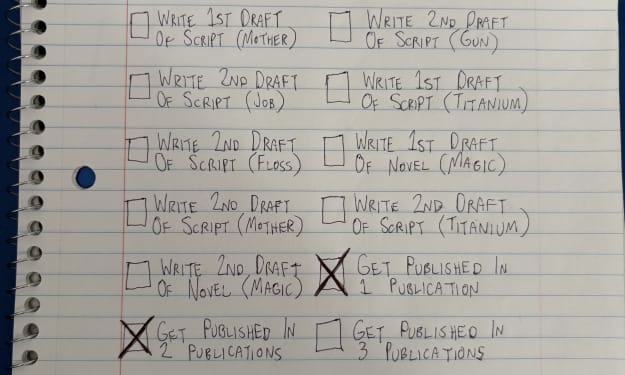
It's early March and I've now accomplished my 4th writing goal for the year of 2026. Before diving into the behind-the-scenes of it... why not tell you up front what that accomplishment was? I was published in a 2nd publication for this year. Published in Helix Literary Magazine out of Central Connecticut State University. You can read it for free right now!
By Stephen Kramer Avitabilea day ago in Writers


Comments
There are no comments for this story
Be the first to respond and start the conversation.