
The Art of Precision: Inside the World of Trucking & Rigging
Safety is a top priority in every phase of trucking and rigging.

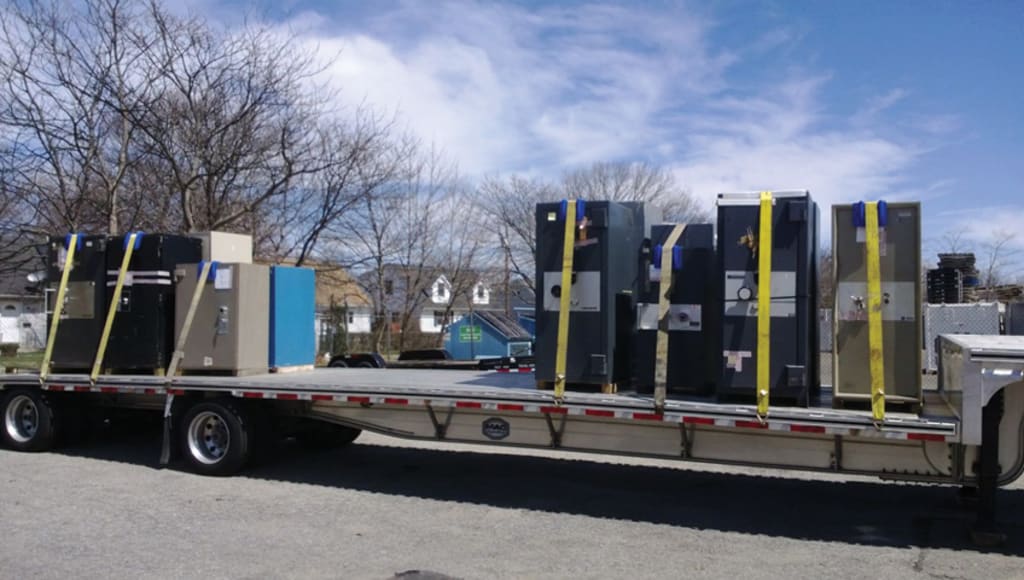
In a world that increasingly values speed and efficiency, there’s a discipline that thrives on patience, planning, and precision: trucking and rigging. While it may not make daily headlines, this field is vital to the success of countless industries—construction, energy, manufacturing, and infrastructure all rely on it. At the center of this dynamic and challenging environment are seasoned professionals like Paul Ousey, who bring experience, strategy, and calm leadership to every job.
Unlike general freight transport, trucking and rigging involves the movement of exceptionally large or heavy items—some weighing hundreds of tons or requiring customized transport solutions. These aren’t routine hauls; they are projects that require deep logistical insight, expert engineering collaboration, and the right touch when working with cranes, dollies, and multi-axle trailers.
For Paul Ousey, trucking and rigging is not just about moving equipment—it’s about solving complex puzzles. “Every project is different,” he explains. “Even if you're moving the same piece of machinery, the environment changes, the site changes, and you have to rethink your approach every time.” That mentality of continuous adaptation is what defines successful operations in this field.
Behind each successful rigging job is a well-coordinated team effort. Field crews, logistics planners, engineers, and safety officers work in sync, sometimes across long distances and challenging conditions. Whether it’s threading a transformer through narrow city streets or lifting a turbine into place on a mountainside, the job requires near-flawless execution.
Rigging professionals must understand center of gravity, load dynamics, and how structures respond under stress. They often use detailed 3D lift plans and route analysis software to prepare. “We don’t just show up with a truck and a crane,” says Paul Ousey. “We walk the site, run simulations, plan for contingencies. The preparation is just as important as the move itself.”
In an era of digital transformation, the trucking and rigging industry is also evolving. Smart sensors, drone surveys, and automated load tracking systems are enhancing visibility and accuracy on the job. These technologies help anticipate issues and ensure real-time communication between stakeholders. Still, as Ousey points out, the human element remains critical. “Technology helps us work smarter, but it can’t replace on-the-ground experience and judgment. When something unexpected happens, it’s your people who make the difference.”
Safety is a top priority in every phase of trucking and rigging. With such high-risk operations, the margin for error is razor thin. Teams undergo rigorous training in OSHA standards, crane operations, confined space protocols, and emergency procedures. A culture of safety is not just encouraged—it’s required.
Paul Ousey has long emphasized that safety is not a checklist; it’s a mindset. “From the top down, everyone on the team needs to buy into safety. You can have the best equipment in the world, but without discipline and communication, it won’t matter.”
A defining feature of this industry is its ability to empower large-scale progress. Without skilled rigging and transport crews, vital infrastructure projects could stall. From power plants and data centers to bridges and stadiums, the very foundation of modern society is often moved and positioned by unseen hands behind the scenes.
What makes professionals like Paul Ousey stand out is not just technical ability, but leadership. Guiding teams through high-pressure, time-sensitive jobs requires a calm demeanor, strong interpersonal skills, and a deep understanding of both people and machines. Ousey’s leadership style is rooted in mentorship, often training new crew members and sharing the lessons he’s learned in the field.
As the industry looks to the future, a major focus is workforce development. The demand for skilled riggers and heavy-haul drivers continues to grow, yet fewer young workers are entering the trades. Companies are now partnering with vocational schools and technical colleges to develop talent pipelines and apprenticeships. Mentors like Paul Ousey play a pivotal role in passing on knowledge that can’t be taught in a classroom alone.
Sustainability is another frontier in trucking and rigging. Fleet modernization, emission reductions, and environmentally safe hydraulic fluids are being adopted as companies seek to align with green initiatives. Newer cranes and trucks are becoming more efficient and quieter, reducing their impact on communities and job sites.
While much has changed in the industry over the years, its core values remain the same: teamwork, precision, safety, and respect for the craft. In many ways, trucking and rigging is part art, part science—and entirely essential.
As a respected leader in the field, Paul Ousey continues to raise the standard for excellence in trucking and rigging. His deep understanding of the work, his commitment to safety, and his ability to inspire others have made him a driving force in an industry where details matter and trust is everything.
About the Creator
Paul Ousey
Paul Ousey carries on the “OZ” Trucking & Rigging legacy of service excellence. With trucking and rigging as the underpinning of our services, we manage small to large moving and rigging projects.
Keep reading
More stories from Paul Ousey and writers in Humans and other communities.
Driving Heavy Industry Forward: The Role of Trucking and Rigging with Paul T. Ousey
From high-rise towers to power plants and advanced manufacturing sites, massive machinery and structural elements don’t move themselves. It’s the world of trucking and rigging—a vital yet often overlooked sector that makes modern infrastructure possible. At the center of this high-stakes industry are seasoned professionals like Paul T. Ousey, whose expertise helps move tons of equipment safely, precisely, and on time.
By Paul Ousey8 months ago in Humans
The Guardian of Maple Street: The Bus Driver Who Trusted the Silence
The incredible true story of Harold Jennings, the school bus driver whose attention to detail and refusal to take a day off saved an elderly couple and 27 children from a catastrophic gas explosion.
By Frank Massey 5 days ago in Humans


Comments
There are no comments for this story
Be the first to respond and start the conversation.