science
The Science Behind Relationships; Humans Media explores the basis of our attraction, contempt, why we do what we do and to whom we do it.
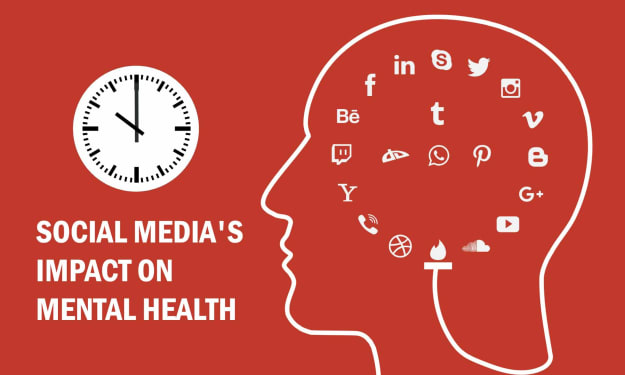
The Impact of Social Media on Mental Health
In the age of digital connectivity, social media has become an integral part of our lives. It has revolutionized the way we communicate, share information, and stay connected with others. However, the rise of social media has brought about concerns regarding its impact on mental health. This article explores the connection between social media and mental well-being, shedding light on the potential risks and benefits. By understanding the complex relationship between social media and mental health, we can make informed decisions about our online habits and promote a healthier digital environment.
By Abdul Haseeb Rizvi Attari3 years ago in Humans
Psychological facts about human behavior
When you take care of yourself, you start feeling better, looking better, and attracting better friends. Friendship that starts in your 16- to 28-year-old period is more likely to be robust and lasting. It is said if you dance in the first three seconds you wake up, you will have a more positive outlook for the rest of the day. First thing you forget when you wake up is usually nothing too serious. You can die from fear because your body releases a lot of adrenaline which can be toxic in high amounts.
By Pawan Neupane 3 years ago in Humans
Exploring the Universe: Ten Wonderful Facts About Outer Space
## Introduction Space is an amazing and mysterious place. It is filled with wonders and discoveries that are yet to be explored. In this article, we will delve into ten wonderful facts about space that will leave you in awe of the universe we live in.
By Ahmed Reda3 years ago in Humans
"Embrace the Wonders of Nature: 10 Amazing Facts You Didn't Know"
## Introduction Nature is full of wonders that never cease to amaze us. From the tiniest insect to the highest mountain, there is always something new to discover. In this blog post, we will explore ten fascinating facts about nature that will leave you in awe.
By Ahmed Reda3 years ago in Humans
The man who experienced the loss of sense of touch
In 1971, Ian Waterman experienced a sudden collapse, initially attributed to a severe case of gastric flu. While his illness subsided after a few days, he continued to endure an unusual set of symptoms. Despite having healthy muscles and joints, Waterman found himself completely immobile and devoid of any sensation from the neck down. Subsequently, he received a diagnosis of an exceedingly rare and severe form of deafferentation—a neurological disorder that disrupts or impairs specific signals from the nervous system. Without the continuous feedback from his body regarding the movement of his limbs, Waterman lost the ability to sit up, stand, or walk. Nevertheless, he embarked on a remarkable journey of adaptation. Over time, Waterman taught himself to rely on his sense of sight to assess the position of his limbs relative to other objects. Through this visual perception, he gradually regained complete mastery over his body's movements—albeit with the prerequisite of being able to see it.
By Prajakta Surve3 years ago in Humans
The Insomniac
Hai was born in a small village in Tây Ninh province, just two hours northwest of Saigon. The village was more jungle than city, with overgrown greenery, thick and untreated. Vines hanging from fences, dense bush lining dirt roads. A myriad of sage, emerald, and juniper danced across the dense Vietnamese landscape.
By Lauren Malton3 years ago in Humans
Am I a Compulsive Liar? Exploring the Root Dishonesty
Once upon a time, back when I was a teenager, there was this girl named Hanna who went to a totally different school. Now, let me tell you, this girl had a reputation for spinning little fibs left and right. But hold on, because eventually, she went and dropped a whopper of a lie that shook us all! It was a regular old day in math class, and we were all just trying to stay awake, when suddenly, out of the blue, an alarm started blaring throughout the entire school. Can you imagine the chaos? We had no clue what was going on! The principal's voice crackled through the loudspeaker, announcing some mysterious code that meant we had to stay cooped up inside for the rest of the day. Talk about major confusion! Days went by, and the mystery continued to baffle us until the truth finally came out. Turns out, some sneaky intruder had barged into another middle school nearby, threatening a poor girl there. Can you believe it? The police were hot on the trail, searching for the culprit, and just to be safe, they stood guard at our school too. But guess what? After hours and hours of being stuck in lockdown, Hanna had a change of heart and came clean about the whole thing. She confessed that she made up the entire story! Phew, what a relief to finally have the truth. Now, here's the deal—Hanna had a little problem. She was what you call a compulsive liar, and let me tell you, that kind of lying can cause some major trouble for both the liar and those around them. Breaking the cycle of compulsive lying isn't a walk in the park, my friend. It's just as tricky as breaking any other habit. But hey, here's the good news—it's totally possible! If you ever find yourself caught up in a web of lies, the first step to making a change is recognizing that change is needed. So, let's dive into the wild world of compulsive lying and get to know the signs. Now, listen up! Compulsive lying is a whole different ballgame from those little fibs we all tell once in a while. You know, the ones that stretch the truth just a smidge. Pathological liars, or as some fancy folks like to call them, mythomaniacs, take lying to a whole new level. Here are a few signs that might ring a bell if you think you're caught in the web of compulsive lying:
By Nadiia Diia3 years ago in Humans