science
The Science Behind Relationships; Humans Media explores the basis of our attraction, contempt, why we do what we do and to whom we do it.
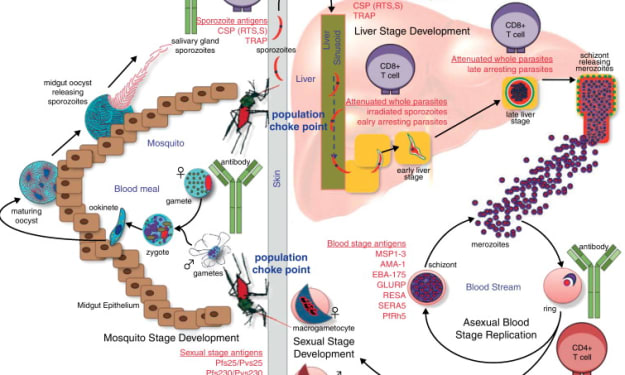
Challenges in Malaria Vaccine Development
Introduction Malaria is caused by infection with Plasmodium parasites. Plasmodium belongs to unicellular eukaryote, and the Plasmodium that infects human body mainly comprises 5 kinds: Plasmodium falciparum, Plasmodium vivax, Plasmodium malariae, Plasmodium ovale and Plasmodium knowlesi. Among them, Plasmodium falciparum and Plasmodium vivax are the most widespread in the global epidemic area, and Plasmodium falciparum is the most important species that causes the death of malaria patients. The life cycle of Plasmodium is complex and mainly includes three stages: infrared stage, red inner stage and mosquito stage. Among them, both the red inner stage and the infrared stage of Plasmodium carry out asexual development and reproduction in the human body, while the mosquito stage carries out sexual reproduction and spore proliferation and development in Anopheles mosquitoes. In order to control and eliminate malaria, corresponding candidate vaccines are mainly designed for the three stages of the life cycle of Plasmodium, in order to block the life cycle of Plasmodium from multiple links. The infrared phase is the initial stage of malaria parasite infection, and it is also the main period leading to the recurrence of malaria. Blocking the development of malaria parasites in the infrared phase can control the infection and resurgence of malaria parasites from the source. Therefore, the infrared phase vaccine is also called malaria preventive; red-phase vaccines mainly reduce clinical morbidity and mortality, so they are also called malaria therapeutic vaccines; mosquito-phase vaccines mainly block the transmission of malaria parasites, so they are also called transmission-blocking vaccines.
By Creative Diagnostics2 years ago in Humans
The Ultimate Guide to PRP and Red Light Therapy for Hair Loss
I have always had thick and shiny hair, ever since I was a little girl. I loved to style it in different ways, from braids to buns to curls. I got compliments on my hair all the time, and it was one of my best features.
By Health First2 years ago in Humans
The Massive Rise in A.I
Artificial Intelligence (AI) has revolutionised the way we interact with our surroundings. From voice assistants and recommendation systems to autonomous vehicles and medical innovations, AI has become an integral part of our daily lives. However, it begs the question: Is AI taking over our lives, and are we unwittingly sacrificing the human touch in our creative endeavours? If not i think it can destroy the human touch.
By Tony Clarke2 years ago in Humans
Unlocking the Enigma
The human mind is a labyrinth of complexities that has captivated researchers for centuries. In the realm of psychology, scientists delve into the science of the mind and behavior, uncovering fascinating insights that help us comprehend why we are the way we are. From the contagious nature of yawns to the power of personal connections, each discovery offers a glimpse into the enigmatic world of human behavior. In this article, we embark on a mind-blowing journey as we explore 15 captivating psychological facts that shed light on the intricacies of our psyche and how they shape our experiences.
By Christina Moody2 years ago in Humans
The Eternal Wanderer
In the heart of a forgotten land, where ancient forests whispered secrets to the wind and mountains touched the sky, there lived a man unlike any other. His name was Alexander, but he was known as the Eternal Wanderer—a being blessed (or cursed) with immortality.
By George Nikola2 years ago in Humans
The World's Sweet Poison: Sugar
In the modern world, sugar has become an inseparable part of our daily lives. From sweet treats to processed foods, it's almost impossible to avoid sugar entirely. While indulging in sugary delights occasionally may not seem harmful, the truth is that excessive sugar consumption poses a significant threat to our health. In this article, we will explore the potential dangers of sugar, including its link to death, blood sugar imbalances, diabetes, and the importance of considering supplements to combat its adverse effects.
By David Ramadhevara2 years ago in Humans
For what reason Really do Individuals Like the Smell of Gas?
We as a whole have that one companion who spends excessively lengthy siphoning gas. Taking in all that superb, fuel smell. Be that as it may, in contrast to the smell of a newly heated pie or an infant, gas doesn't seem like one of those scents that we ought to like. All things considered, we don't get supplements from it, we don't have to care for it, furthermore, in a sufficiently large portion, fuel can make us truly debilitated. However, it turns out there are mental and compound justifications for why such countless individuals love a float of this corner store scent.
By Karthik Zachariach2 years ago in Humans
5 Most AMAZING Scientific Discoveries of the Decade
Science has undergone a renaissance in the 2000s, with breakthroughs in diverse fields revealing fascinating truths that have enriched our understanding of the world and the cosmos. This period has been marked by an unprecedented wave of scientific discovery, and together, we'll explore five amazing revelations from this era. So, fasten your seatbelts, for the universe has much more in store for us!
By Joey Ceetie3 years ago in Humans
Finally: a dead or shaped body?
The concept of attractiveness is highly subjective, and individuals have varied preferences when it comes to body types. Some may find themselves drawn to a shaped body, while others might feel comfortable with a dead body (less fit body). In this article, we will explore the advantages and drawbacks of both body types and examine why some individuals might prefer the latter. However, we will ultimately argue that a shaped body tends to be more attractive overall, considering not only physical appearance but also factors like confidence, health, and societal standards.
By George Dion3 years ago in Humans