science
The Science Behind Relationships; Humans Media explores the basis of our attraction, contempt, why we do what we do and to whom we do it.
The Ecology of Elysium: How Environmental Sustainability Thrives in the Afterlife"
The concept of an afterlife often conjures images of heavenly realms filled with eternal bliss and serenity. However, rarely do we consider the ecological implications of such a place. Yet, in the fictional landscape of Elysium, the afterlife is not only a realm of spiritual fulfillment but also a harmonious ecosystem where environmental sustainability thrives. In this utopian vision, every aspect of the environment is meticulously designed to support life indefinitely, reflecting an idealized harmony between humanity and nature.
By Alexander Mensah2 years ago in Humans
What If We Knew the Time We Go Extinct?. Content Warning. AI-Generated.
What If We Knew the Exact Time When Humanity Goes Extinct? Introduction Humanity has long pondered its place in the vast universe. Despite our advancements, we are but a small part of a grand cosmic tapestry. We're not here due to any inherent purpose, but rather by chance. If predictions hold true, humanity might only have 760 years left. This brings forth a profound question: What would cause our extinction, and what would we do if we knew the exact moment of our demise? Could we delay the inevitable?
By butana kolokoto ll2 years ago in Humans
What happens to your body during a hangover?. Content Warning. AI-Generated.
Hangovers are not just one sensation, but can include symptoms like sleepiness, headaches, body aches, dry mouth, and more. They are caused by a combination of factors, including the body processing alcohol as a toxin. Alcohol can lead to dehydration, inflammation, and digestive issues, contributing to the overall feeling of being hungover.Hangovers are caused by various biological factors that occur when you drink too much alcohol. These include dehydration and electrolyte imbalances, gastrointestinal issues, inflammation, blood sugar fluctuations, disrupted sleep patterns, acetaldehyde toxicity, congeners in certain drinks, oxidative stress, and vasodilation. These factors combine to produce symptoms like thirst, nausea, headache, fatigue, and muscle aches. Hangover severity can vary depending on factors like the type and amount of alcohol consumed and individual differences in metabolism and genetics.Long-term alcoholism can have severe effects on health and life. Here are some key impacts: 1. Physical Health: Liver damage, cardiovascular issues, digestive problems, neurological damage, and immune system suppression. 2. Mental Health: Mental disorders, behavioral changes, and sleep disturbances. 3. Social and Occupational Impact: Relationship strain, work issues, and legal problems. 4. Addiction and Dependency: Increased risk of addiction and dependency.There are many alternatives to alcohol that can provide enjoyment, relaxation, and social engagement without the negative health effects. Here are some options:
By Harry Ormsby2 years ago in Humans
Symbiosis: A New Era for Humanity
In the year 2045, renowned biotechnologist Dr. Amelia Ruiz lived in a bustling metropolis. Her purpose was to develop human capacities and improve quality of life by conducting research that spanned the gap between advanced technology and human biology. Amelia led the groundbreaking "Symbio" project, which attempted to build a mutually beneficial cooperation between artificial intelligence and humans. Amelia was overwhelmed with excitement as she made her way through the sophisticated halls of her laboratory one bright morning. The bio-integrated AI prototype they had been working on, known as "Eli," was expected to be unveiled today. Eli wasn't simply meant to be a cutting-edge piece of technology; he was meant to be a part of a human. It interacted with the brain to improve mental abilities, control bodily processes, and even support emotional health. Amelia believed Eli had the key to solving many of the world's most pressing issues, including mental health issues and chronic ailments. The group convened in the demonstration room, which featured holographic screens and state-of-the-art medical equipment. Amelia took a deep breath and started talking to her coworkers. "This day represents a turning point in human history," she said. "With Eli, we can break free from the constraints of our biology and usher in a new chapter in human potential." Excitement filled the room as Jack, a volunteer, the first test subject, was introduced. A spinal cord injury had left Jack paralyzed from the waist down for a number of years. The club picked him not only because of his health but also because of his persistent optimism and resolve. The surgery started, and the room went quiet. Eli's nervous system was connected to Jack through a precise insertion of bio-nanobots, a delicate integration process. With hundreds of hours of practice and years of research as their guides, Amelia and her team worked carefully. The process was finished after what felt like an age. Jack opened his eyes slowly, and the room held its breath. With a calm yet hopeful voice, Amelia walked over to him. "Jack, are you hearing me?" How are you feeling? Jack blinked many times, taking in the deluge of fresh sensory data. He then moved his legs while displaying a look of pure wonder. Even though it was a tiny, hesitant movement, it was sufficient to cause excitement to spread across the space. With tears in his eyes, Jack muttered, "I... I can feel my legs." "I am able to transfer them." The team gave each other huge hugs and cheered as they realized what an incredible accomplishment this was. It was a deeply fulfilling moment for Amelia. This was the result of years of arduous labor, sleepless nights, and sacrifices—a real enhancement of human life. Jack's development was keenly watched throughout the ensuing few months. Eli was able to improve his cognitive abilities and regain his mobility, which allowed him to become more focused and intelligent than ever. Eli was soon assisting patients with a range of ailments, from severe anxiety and depression to neurodegenerative disorders, thanks to the prototype's success, which opened the door for additional trials. Still, moral conundrums accompanied significant progress. Inquiries surfaced regarding the possible abuse of such formidable technology, the consequences for personal privacy, and the fundamental nature of humanity. Requiring cautious use and stringent rules, Amelia found herself at the center of these arguments. At a symposium on global ethics, one evening, Amelia stood by herself on her hotel room balcony and looked out at the city lights, fuming from an especially spirited debate. With every new development, humans had to face more difficulties as the world was changing quickly. A feeling of determination gripped her as she thought about what lay ahead. Science has always been about pushing the boundaries and discovering new things, but it has also been about compassion, empathy, and an unyielding commitment to improving human existence. Amelia was aware that the road ahead would be arduous, but she had trust in a future in which humans and technology coexisted happily and improved one another in a symbiotic dance toward a better tomorrow, led by Eli and the spirit of creativity. "
By Sakibul Hassan 2 years ago in Humans
Tattoos & Lymphoma: New Study Shows 21% Increased Risk
Tattoos & Lymphoma New Study Shows 21% Increased Risk The research, conducted by scholars from Lund University in Sweden, scrutinized 11,905 individuals, including 2,938 participants diagnosed with lymphoma, aged between 20 and 60. Both lymphoma patients and members of the control group provided data through a questionnaire concerning their tattoo history.
By Mian Hamid2 years ago in Humans
Human Physiological facts. AI-Generated.
The human body is an incredibly complex and intricate system, composed of various organs, tissues, and cells working in harmony to sustain life. Understanding some key physiological facts can provide insight into how our bodies function and maintain homeostasis.
By Suman Nath2 years ago in Humans
How does your immune system work?
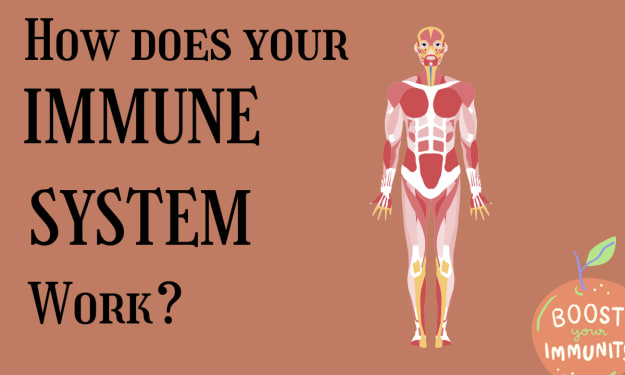
" A human body is a conversation going on, both within the cells and between the cells." Danny Hillis A mosquito land on your arm, injects its chemicals into your skin, and begins to feed. You wouldn't even know it was there, if not for the red lump that appears, accompanied by a telltale itch. It's a nuisance, but that bump is an important signalthat you're protected by your immune system, your body major safeguard against infection, illness, and diseases. This system is a vast network of cells, tissues, and organs that coordinate your body's defenses against any threats to your health. Without it, you'd be exposed to billions of bacteria, viruses, and toxins that could make something as minor as a paper cut or a seasonal cold fatal.
By Sumaiya Jaweed2 years ago in Humans