
What If We Knew the Time We Go Extinct?
will humans go extinct ?
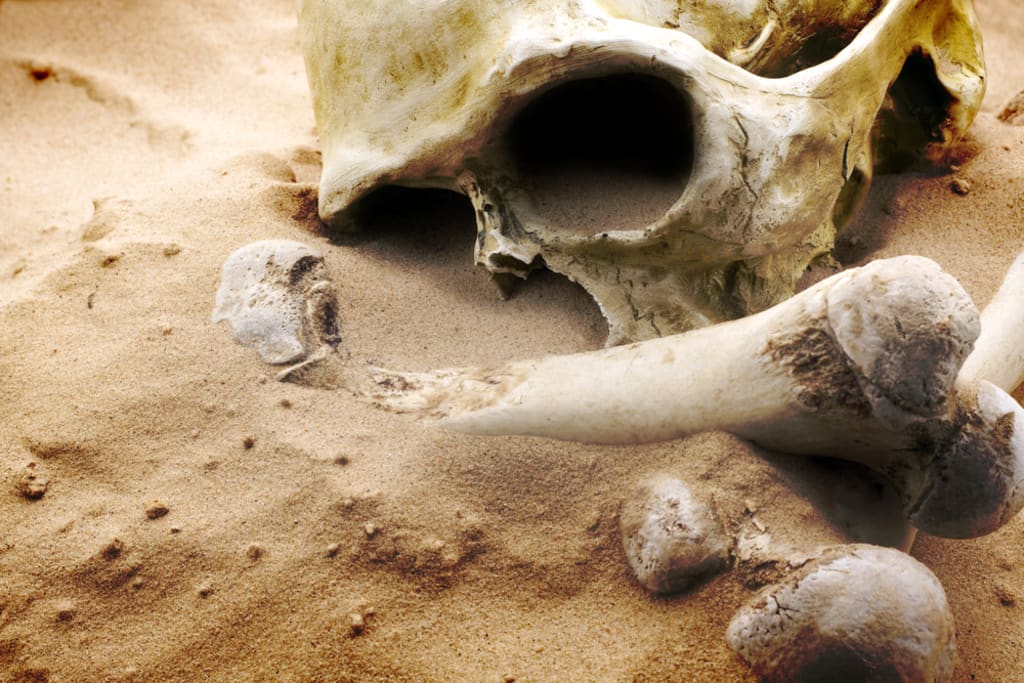
What If We Knew the Exact Time When Humanity Goes Extinct?
Introduction
Humanity has long pondered its place in the vast universe. Despite our advancements, we are but a small part of a grand cosmic tapestry. We're not here due to any inherent purpose, but rather by chance. If predictions hold true, humanity might only have 760 years left. This brings forth a profound question: What would cause our extinction, and what would we do if we knew the exact moment of our demise? Could we delay the inevitable?
A Daring Prediction (1993)
In 1993, astrophysicist J. Richard Gott made a bold prediction using statistical methods. He calculated a 50% chance that human life would end before the year 2779. This estimation gives us roughly 760 years to make our final arrangements and potentially pass Earth onto new life forms or leave the planet entirely.
### Near-Earth Objects and Their Threat (2029)
On April 13, 2029, the asteroid 99942 Apophis will pass within 31,000 kilometers of Earth, closer than some satellites. Despite its proximity, it will safely continue its orbit around the Sun. This close encounter highlights the ever-present danger of near-Earth objects.
Population and Environmental Crisis (2030)
By 2030, reproductive technology may allow parents to select genetic traits for their children. The global population is expected to reach 8.5 billion, leading to significant ecological changes. Increased carbon dioxide levels will accelerate climate change, causing severe alterations in ecosystems. Additionally, space debris will pose a challenge for future space missions.
Lunar Bases and Permanent Presence (2030-2045)
If we manage to address the space junk issue, humanity could establish permanent lunar bases, marking the beginning of a continuous human presence beyond Earth. However, on Earth, the global average temperature is projected to rise significantly, surpassing safe limits and leading to catastrophic consequences for the environment and biodiversity.
The Next Mass Extinction (2045-2056)
By 2045, despite a complete switch to clean energy, global warming will be uncontrollable. The Great Barrier Reef could lose up to 90% of its corals, and the Amazon rainforest could be largely destroyed. These changes may trigger the next mass extinction event, primarily caused by human activities. By 2056, Earth's population might reach 10 billion, intensifying the strain on resources and making parts of the planet uninhabitable.
Technological Integration and Rising Sea Levels (2080-2099)
By 2080, biotechnology implants could become widespread, merging humans with technology. Innovations like artificial organs, synthetic blood, and brain interfaces will transform human life. However, by 2099, sea levels are expected to rise by up to 6 meters, displacing millions and requiring massive evacuation and resettlement efforts. The population might stabilize at 11 billion due to declining fertility rates and environmental challenges.
Expansion into the Solar System (2180-2280)
In the 2180s, humanity might begin mining asteroids and terraforming Mars. Space technology will become more accessible, but new forms of terrorism could emerge, threatening space colonies. By 2280, antimatter propulsion could enable interstellar travel, and unmanned probes might discover microbial alien life on exoplanets within 100 light years.
Transhumans and Type I Civilization (2300-2500)
Advancements in nanotechnology could transform humans into transhumans or cyborgs by 2300, enhancing intelligence and physical capabilities. By 2500, humanity could achieve a Type I civilization status on the Kardashev scale, harnessing all of Earth's energy and manipulating climate and weather. Mega structures like Dyson Spheres might be constructed, signifying a new era of technological prowess.
The Final Countdown (2779)
By 2779, humanity could either have evolved into a new species or established colonies in space. The chain of events leading up to this point may result in the complete disappearance of humans from Earth. However, this timeline is speculative and based on statistical models. Predictions vary, with some suggesting our extinction could occur in 10,000 years or more.
### Impact on Human Behavior and Society
Knowing the exact date of our extinction could drastically alter human behavior. Some might disregard environmental and health concerns, focusing on short-term pleasures. Society could become more violent and self-destructive. Alternatively, humanity might unite in an effort to find new habitable worlds and establish stable colonies, ensuring our survival even if Earth is destroyed.
Conclusion
While the future is uncertain, contemplating our extinction can inspire proactive measures to safeguard our species. Whether we choose to focus on short-term gains or strive for long-term survival, the knowledge of our potential end serves as a powerful motivator for action.
About the Creator
butana kolokoto ll
im a south african freelance journalist with 6 years experiance in media reporting and news editing. i cover topics on mysteries of the world, human behaviour and scientific facts.
Keep reading
More stories from writers in Humans and other communities.
A Love That Crossed Cities and Cultures
In the early mornings of Barcelona, when the streets still smelled of yesterday’s rain and fresh bread drifted from corner bakeries, Sofia Alvarez liked to sit by her small apartment window with a cup of strong coffee. From the fourth floor, she could see the narrow street below slowly waking up: shopkeepers lifting metal shutters, cyclists weaving through the quiet, and elderly neighbors greeting each other as if time itself had slowed for them. Sofia loved her city deeply. Barcelona was not just a place she lived; it was a rhythm, a language, a memory stitched into her bones.
By Ahmed aldeabellaabout 5 hours ago in Humans
Dead and Wearing Green
She was wearing that green dress when I first saw her, five years ago to the day. Flowing meadow fabric draped over long legs, thick auburn hair flowing down her back. That smile. Of course, she is still beautiful now. But now she is no longer alive.
By Karen Cave5 days ago in Fiction




Comments (1)
Very interesting to read.