breakups
When it comes to breakups, pain is inevitable, but Humans thinks that suffering is optional.
A Successful Marriage With a Narcissist Without Losing You
A successful marriage with a narcissist is often misunderstood, oversimplified, or portrayed as impossible. Many people stay in such marriages for a variety of reasons, including commitment, ideals, shared history, children, faith, or personal choice. The actual struggle is not just staying married but also maintaining your individuality, emotional health, and dignity while navigating a complex relational dynamic.
By Bloom Boldly8 days ago in Humans

The Weight of Being "Too Much": How I Learned My Sensitivity Was Never the Problem
I was seven years old the first time someone told me I was too sensitive. I'd come home from school crying because my best friend said she didn't want to play with me anymore. My father looked up from his newspaper, irritation flickering across his face. "You're being too sensitive," he said, turning the page. "Kids say things. You need to toughen up." So I tried. I swallowed my hurt. I forced a smile. I pretended it didn't matter. That moment became a blueprint for the next three decades of my life. By the time I was thirty-seven, married with two kids and a successful career, I'd perfected the art of not feeling too much. I'd learned to laugh off insults, minimize my pain, and apologize for my emotions before anyone else could criticize them. But the cost of all that toughening up? I'd become a stranger to myself. The Education of Emotional Suppression The messages came from everywhere, each one teaching me that my natural way of being was somehow wrong. When I cried during a sad movie: "It's just a movie. Why are you so emotional?" When a friend's thoughtless comment hurt my feelings: "You're overreacting. I was just joking." When I needed time to process conflict: "You're being too dramatic. Just get over it." When I was moved to tears by beauty—a sunset, a piece of music, an act of kindness: "You cry at everything. What's wrong with you?" Each time, the same lesson: Your feelings are excessive. Your responses are inappropriate. You are too much. I learned to preface every emotional expression with an apology. "I know I'm being ridiculous, but..." "I'm probably overreacting, but..." "Sorry, I'm just too sensitive..." I became an expert at minimizing my own experience, at gaslight myself before anyone else could do it for me. The Slow Erosion of Self What happens when you spend decades being told your emotions are wrong? You start to believe it. I stopped trusting my own reactions. When something hurt me, my first thought wasn't "that was hurtful," but "I'm being too sensitive." When I felt uncomfortable in a situation, I'd override my instincts and force myself to stay, convinced my discomfort was a character flaw rather than valuable information. I became everyone's emotional support system while denying myself the same care. Friends would call me for hours when they were upset, and I'd listen with endless patience and compassion. But when I was hurting? I'd minimize it, laugh it off, handle it alone. In my marriage, I'd absorb my husband's bad moods without comment, adjust my behavior to keep the peace, and swallow my hurt when he was dismissive or short with me. "You're too sensitive" became his go-to response whenever I expressed that something bothered me. Eventually, I stopped expressing it at all. I taught my children to share their feelings, while simultaneously teaching them through my example that their mother's feelings didn't matter. I'd hide in the bathroom to cry, ashamed that I couldn't be stronger.
By Ameer Moavia8 days ago in Humans
To Know Others Is to Know Ourselves
Life's a crazy ride, right? It is like we are all just dancing around, trying to figure things out. And honestly, it is the people in our lives that really make it worth living. We are all connected, even if we can't always see it. Those short moments we share with others? That is when life feels real. We are always trying to understand each other, to feel connected. What even is a relationship, if not a plunge into the unknown with someone else, kind of like holding a mirror up to yourself?
By Baptiste Monnet8 days ago in Humans
Dating Red Flags in Women that Feel Normal At First
Modern dating—especially for Gen Z in the US—moves fast. Apps, social media, and shared online spaces foster emotional connection prior to testing real-world compatibility. In this setting, several dating red flags in women may not look poisonous at first glance. They frequently feel natural, exciting, or even flattering in the early phases. Over time, however, these actions can silently erode trust, emotional safety, and the potential for a long-term relationship.
By Relationship Guide8 days ago in Humans
The People Who Sit by the Window
Buildings blurred into one another, storefronts flickered past like unfinished thoughts, and the sunlight slipped through the windows at an angle that made everything feel temporary. Emma always sat by the window. Not because she loved the view, but because it gave her something to focus on when her thoughts became too loud.
By Yasir khan9 days ago in Humans
When Home Becomes a Memory: Learning to Let Go of the Person You Thought Was Forever
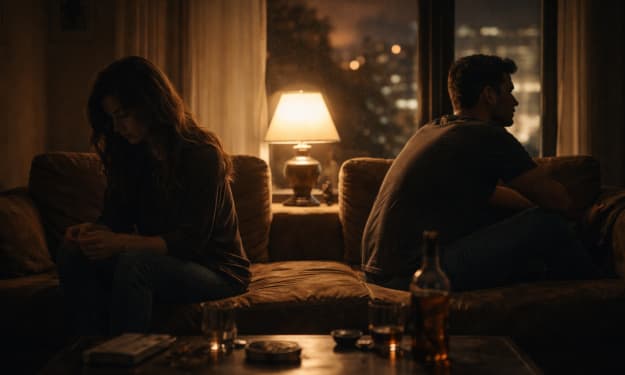
I still remember the exact moment I realized I had to let her go. We were sitting on opposite ends of the couch—the same couch where we'd spent countless nights talking until sunrise, dreaming about our future, planning adventures we'd never take. But that night, the silence between us felt heavier than any words we'd ever shared. The distance wasn't measured in inches. It was measured in all the things we'd stopped saying, all the dreams that had quietly died, all the versions of ourselves we'd outgrown. She still felt like home. That was the cruelest part. The Comfort That Becomes a Cage There's something uniquely painful about loving someone who feels like home but no longer helps you grow. For three years, she'd been my safe place—the person I ran to when the world felt too heavy, the voice that calmed my anxious thoughts, the presence that made everything feel right. But somewhere along the way, comfort had turned into complacency. We'd stopped challenging each other. We'd stopped dreaming together. We'd become so focused on preserving what we had that we forgot to ask ourselves if what we had was still what we needed. I'd read once that people come into our lives for a reason, a season, or a lifetime. I'd always assumed she was my lifetime. The thought of her being just a season felt like a betrayal of everything we'd built together. Yet deep down, I knew. The person I was becoming couldn't live in the life we'd created. And the person she was becoming deserved someone who could show up fully, not someone staying out of fear and familiarity. The Questions That Changed Everything The turning point came during a solo trip I took to clear my head. Sitting on a beach thousands of miles away, watching the waves reshape the shoreline over and over, I finally asked myself the questions I'd been avoiding: Was I staying because I loved her, or because I was afraid of being alone? Was I holding on to who we were, or who we could actually be? If we met today, as the people we've become, would we still choose each other? The answers terrified me. Because they revealed a truth I'd spent months burying: sometimes love isn't enough. Sometimes two people can care deeply for each other and still be wrong for each other. Sometimes the most loving thing you can do is let someone go so you can both find the versions of yourselves you've been suppressing.
By Ameer Moavia9 days ago in Humans
How to Forgive Emotional Cheating and Rebuild Self-Trust
Emotional cheating can feel just as devastating as physical infidelity. It fractures emotional safety, weakens self-trust, and leaves us questioning our worth, intuition, and judgment. Bloom Boldly believes that healing is more than just racing through forgiveness; it is about conscious mending, emotional clarity, and restoring inner stability. In this book, we will look at how to forgive emotional adultery in a grounded, self-respecting way while also repairing the trust we have lost in ourselves.
By Bloom Boldly10 days ago in Humans
Lost and Alone in the French Alps
Looking back now, I can pinpoint the moment my sense of bravery quietly rearranged itself. It began, as many pivotal moments do, with someone else’s idea. This time, it was my cousin Hannah, who introduced me to Marcus at a birthday dinner I hadn’t wanted to attend. He was charming in an understated way, the kind of man who didn’t try to impress because he didn’t think he needed to. I was drawn in almost immediately.
By Engr Bilal11 days ago in Humans
The Real Reason You Feel Disrespected in Your Relationship
Feeling unheard, overlooked, or taken for granted in a relationship is emotionally draining—especially for Gen Z couples navigating love in a hyper-connected, fast-moving world. When respect fades, discontent slowly builds into resentment. Understanding how to obtain respect in a relationship is not about control, power, or fear; rather, it is about emotional maturity, boundaries, and self-esteem.
By Relationship Guide11 days ago in Humans
Lost and Alone in the French Alps. Top Story - December 2025.
Looking back, I can trace some of my life’s biggest adventures to a simple action from my sister. She’d introduced me to Tommy (a very long time ago), a colleague of hers, who had overshared his penchant for Italian-looking women, and I ticked that box.
By Chantal Christie Weiss12 days ago in Humans