book reviews
Reviews of books by relationship gurus, dating experts, and cautionary tale-tellers.
Tales from the Gas Station Vol.1 By Jack Townsend
Themes Existential dread, violence, dark humor, parallel dimensions, chaos theory Reluctant hero, realistic fiction (until it isn’t), absurdism, small town bs Supernatural, horror, mental illness, demons, aliens, ancient gods
By Kayleigh Harrier5 years ago in Humans
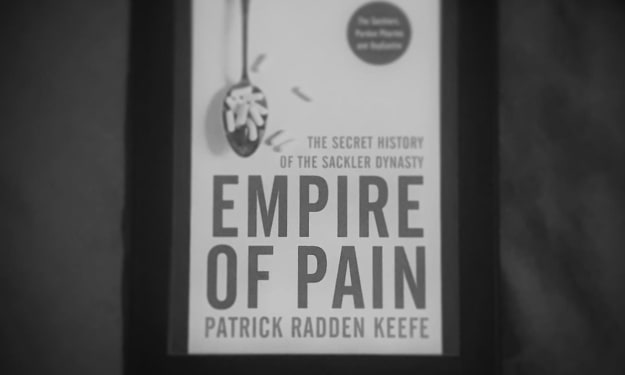
Book Review: "Empire of Pain" by Patrick Radden Keefe
I think I can say that many of us have seen those programs on Netflix that talk about the American Painkiller Epidemic. I think many of us have even tried some of these painkillers and felt darn good after them. I even bet that some of you sitting here today are possibly addicted to them. But there is one thing for sure - if you’re going to write a book or make a documentary about it, it is better if you are on the inside of the situation rather than standing on the outside. It is no criticism towards this book for its author was very much outside of the situation, but I can state that there have been better attempts to grab my interest when it comes to the word ‘OxyContin’. I am a person who loves personal stories, which is why I love listening to people who have stories to tell about journeys they have been on and such. It is just incredible to listen to someone talk with such a passion. Some of this book here, because of the research aspect, falls rather flat at the beginning, but as we get into the grittiness of the story there is a definite attempt to make this more about the entire ‘game plan’ surrounding the drug rather than a boring research paper which many of us would be familiar with. So, there are definitely very good points to this book, but there is always room for improvement in the eyes of your average reader.
By Annie Kapur5 years ago in Humans
Luster
This was another mystery Literati arrival, and a title that I certainly don’t think that I would have picked out for myself. It took me longer than was expected to finish reading this because I was continually trying to figure out if I should give up and put the book down, or if I should continue reading and see it through to the end; ultimately, I did finish reading, but this book left me with a rather lackluster satisfaction. At first glance, this book has everything that I love to read: drama, romance, scandal, complicated relationships, and a search for a sense of belonging, but for me it just never delivered.
By Kurt Mason5 years ago in Humans
Book Review: Taken Hostage by David Farber
Taken Hostage: The Iran Hostage Crisis and America's First Encounter with Radical Islam is written by American historian David Farber, who has written various books on modern American history from the 1950s onward. As the book’s title suggests, the work centers around the Iran Hostage Crisis that took place between 1979 and 1981. In particular, it focuses on the discourse in American society that resulted from building tensions with Iran and negative feelings about the presidential policies of Jimmy Carter. The book doesn’t necessarily focus on the events that occurred during the actual crisis, instead using it as the culmination of political turmoil that occurred throughout the 1970s and explaining all of the reasons why it took place.
By Jamie Lammers5 years ago in Humans
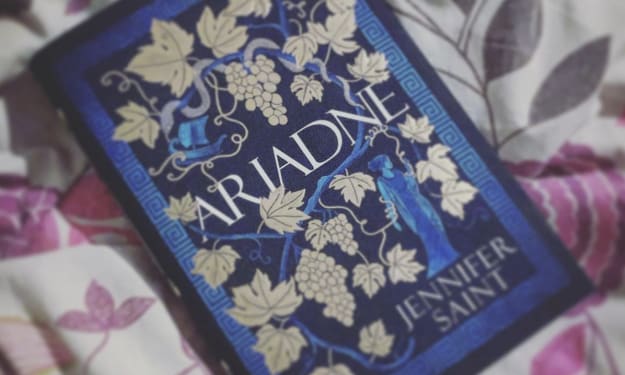
Book Review: "Ariadne" by Jennifer Saint
Fantasy novels based within myths are more than often somewhat unimaginative. It can really go one of two ways. The first way it can go is that it can rethink the entire story, adding imagined events which are filled with thought-provoking scenes of extreme emotion. The other way it can go is that it can basically just copy the myth whilst adding in scenes in which characters reflect on various things and so, if you did not know about the myth to begin with - it becomes just some sort of exercise in futility. The dreaded and often less common third road it can go down is that it is a weird mash up of the two. We get the unimaginative retelling that is basically something we could find on google if we typed the myth in and, it is told in a way that is completely unemotional and filled with things that would either make the reader feel inclined to look on google for the actual myth, or insult the reader’s intelligence. When I first read the book “Ariadne” by Jennifer Saint, I was very cautious because of the greek myth retellings I had been fed before and the way that they, after a while, became almost a cliché. And with these clichés in mind, I was keeping my eyes open. Though, I am struck to say that I did not really find very many.
By Annie Kapur5 years ago in Humans
White Fragility by Robin Diangelo: On the Crest of a Wave, or Sinking Ship?
Dr. John McWhorter, Associate Professor of English and Comparative Literature at Columbia University, did a piece for the The Atlantic last year, in which he stated that White Fragility is a "dehumanizing condescension toward Black people."
By Peter Spering5 years ago in Humans
The Message of The Gift of the Magi
“The Gift of the Magi” by O. Henry is a very simple short story that contains a very important message. The message is perfect for the story that O. Henry is trying to tell, a story about an incredibly poor couple who sells their most important possessions in order to buy a perfect gift. The message in this story could not have been delivered in a better way; the message is also the entire theme of the story, and it is interwoven into the plot of the story and the actions of the characters. The mentions of the Magi are not even part of the most important message that the author is trying to get across; they are just there to make the real point of the story stronger. The real point and theme of this story are that it is not the value of a gift that matters, but rather the thought behind it that really makes it special.
By Jamie Lammers5 years ago in Humans
Characteristics of Chris McCandless
Into the Wild author Jon Krakauer mentions in the book how he tried to find his purpose in life by climbing the Devil’s Thumb in Alaska (Krakauer, 133-156). In his book, he documents the trip of 23-year old man Chris McCandless, otherwise known as Alexander (or Alex) Supertramp, across the United States. He eventually settles in an abandoned Alaskan bus for 16 weeks and passes away after eating a large amount of slightly poisonous seeds. This journey into Alaska in order to find a purpose is eerily similar to Krakauer’s journey. Knowing what he wanted to do in order to find his purpose in life, Chris was successful in that mission; the book mentions how his purpose finally feels fulfilled after travelling the entire country, and that at the end of his life, he writes a note saying “I have had a happy life and thank the lord. Goodbye and may god bless all” (199)! In order to find meaning, however, Chris had to have certain characteristics in order to survive travelling cross-country and eventually settling in the barren-cold wilderness of the Frontier State. Chris McCandless was a determined, compassionate, and resourceful man, and without these characteristics, he would not have been able to go as far as he did.
By Jamie Lammers5 years ago in Humans
Conflict in The Most Dangerous Game
“The Most Dangerous Game,” the most famous story by Richard Connell, was originally published in 1924 by the American magazine Collier’s. The plot focuses on the main character, Rainsford, finding himself trapped on an island with an insane general who loves hunting, and finds the new thrill of hunting people after hunting begins to bore him. The story is enthralling, gripping, and intense, keeping your attention throughout the entire plot and making you wonder what the outcome will be. Part of the quality of the story involves the conflicts brought upon the characters throughout the story. These conflicts develop our characters, especially Rainsford, giving them motivation for their actions and making the reader want their stories to be resolved. Of these conflicts, “The Most Dangerous Game” by Richard Connell illustrates three main ones: man vs. man, man vs. nature, and man vs. self.
By Jamie Lammers5 years ago in Humans
Maturing in Shabanu
Suzanne Fisher Staples’ book, Shabanu: Daughter of the Wind, covers incredibly difficult subjects to talk about and refer to. These include: one’s attitude towards life is what really matters; difficult sacrifices could be best for the entire family and not just you; and everything in life comes with a price. The theme that is most evident in the book, however, is the theme of maturation and how it is an amazingly confusing road to go down. Staples writes this theme in many different, unique, and interesting ways, talking about both literal and metaphorical maturation and how it affects the main character, Shabanu’s, life as the story progresses. It is this change in her body, her decision-making, and her opinion of the world around her that makes her relatable to teenage girls around the world, even though she lives in 1980’s Pakistan. In Shabanu: Daughter of the Wind, Staples reveals the theme of the hard road of maturing by showing how Shabanu goes through puberty, makes amazingly hard choices, and realizes that the world around her is flawed.
By Jamie Lammers5 years ago in Humans