
Say It Loud
The Story of Charlie W. Williams and Proud Fruit Stand
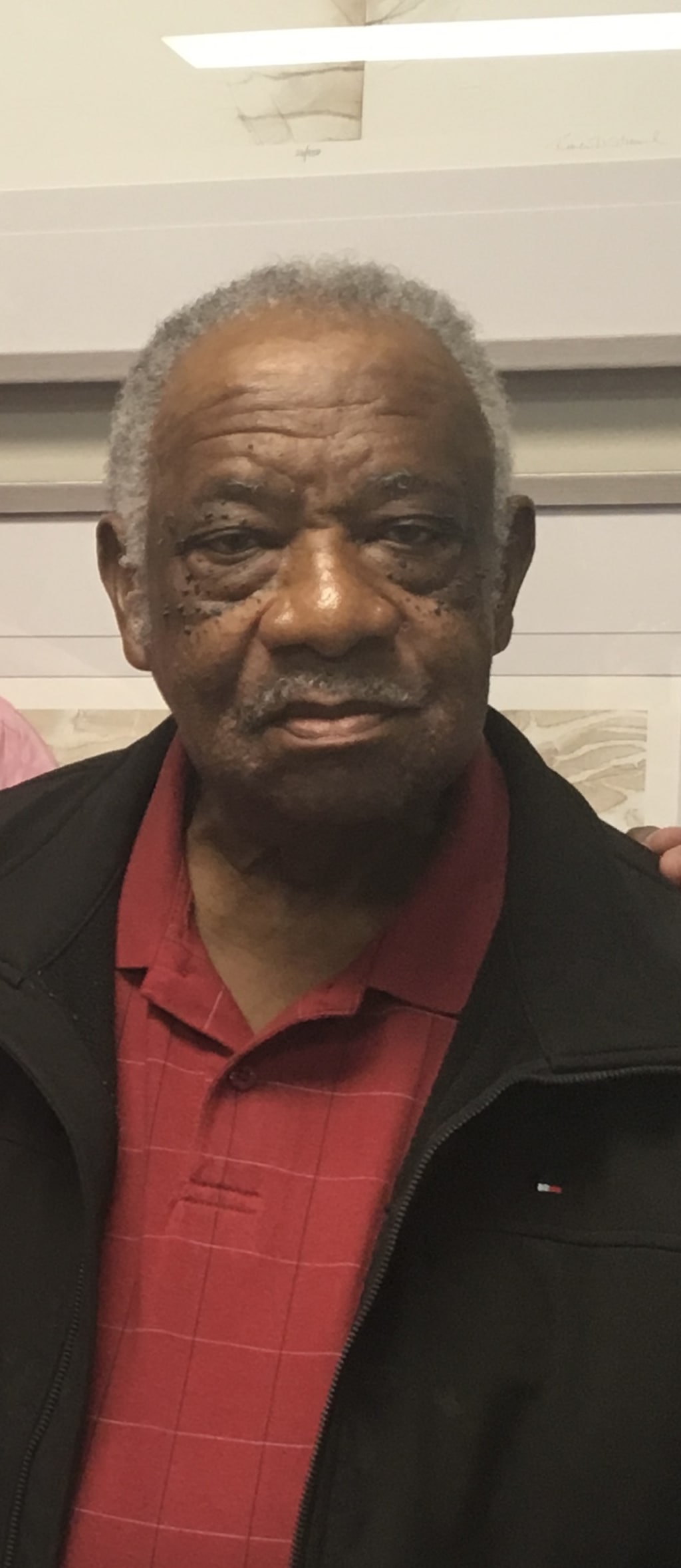
At eighty-one, Charlie Williams is still going. These days, his pace is much slower steadied with the help of a cane. His broad shoulders, rounded by the hands of time, no longer look like that of a cheeky boxer. Yet, Charlie’s sight remains nearly undimmed, his hearing is still sound, and glimmers of his belief in what black people can achieve remains untouched. That is because pride is a tricky thing. No doubt, it precedes a fall, yet it is awfully difficult to wake up and face each day head-on without it.
Born in rural Sumter County, Alabama and delivered by a relative who happened to be a mid-wife, Charlie was born in a world divided into Black and White. In rural areas of Alabama, sometimes, the color line was actually blurred, but none too much. The schools and buses were segregated. What few opportunities that existed still tended to lean in favor of Whites. This was the 1940s after all. After slavery. After Reconstruction. Yet still before the Civil Rights Movement.
Charlie was blessed. His father, M.C. “Kaiser/Buddy” Williams, went against the grain and chose to pursue a career in construction work rather than becoming a farmer. His work took him away from his budding family back and forth across Alabama and the coast, but it also made him “country rich.” His wife, Lula Bell, and their children ended up with their own land and their own house. Pretty good for a man with a third-grade education.
Charlie is the oldest of seven children, and he happened to love school. Although sometimes playful in his classes, Charlie was mostly quiet and studied hard. He finished high school early, but neither his mother nor father quite knew how to help him navigate what was next. His school was good, but the guidance offered back then was not the best. He set out for college, but the path towards his goal was too unclear. Instead, at 16, he moved to Birmingham, Alabama with his great-aunt, Bessie, and started working on September 13, 1956.
Charlie fell in love with working in the grocery business. As a country boy who enjoyed good eating, Charlie also knew good food. He enjoyed laboring around it and putting other people in a position to enjoy it too. Charlie ended up working at the then-ubiquitous A&P Supermarkets and rose in ranks from the affable teenager who took groceries out for families to eventually becoming a produce manager which may seem unremarkable now in a day where a Black man has now served as president of these United States. Back then, however, there was even doubt over whether a Black man could run anything successfully including just a department within a branch of a major retailer.
Charlie thrived at A&P, yet he dreamed of something more. Why couldn’t a black man own a successful business just like A&P? Why couldn’t a black man have something of his own? After briefly attending the Booker T. Washington Business School founded by A.G. Gaston, a black entrepreneur from Birmingham, Charlie had visions of what could be achieved. As A&P’s ascendancy collapsed under pressure, Charlie used the shifting environment as an opportunity to buy a building in the Fountain Heights community of Birmingham that would serve as the homesite of Proud Fruit Stand.
By the time that Charlie opened Proud Fruit Stand, he had already become a two-time father of two baby girls, Charlene and Renae. Now, with this new endeavor, Charlie had already married his second wife, Carolyn, and was expecting his first son, John-Micheal, who would also grow to become a black man. Charlie wanted there to be more examples of Black-owned businesses that were doing well and serving the community. He launched out and opened Proud Fruit Stand, a store that sold staples like collard greens and bananas, housed game machines for the youth, and served as a meeting spot for old men with no particular place to be. It would be proof that Blacks could own something nice that was successful and that benefited the community. Above the store, Charlie had also purchased apartments since he also had interest in real estate. Carolyn, a foot soldier herself who had been arrested as a child during the Civil Rights Movement yet who still maintained a sentimental heart, suggested that the store be named after his grandmother, Ethel Watson, but Charlie was proud, so the name “Proud Fruit Stand” stuck.
Proud Fruit Stand was started in the 80s. At that time, America was still changing as it always has. The black community was changing as well. Proud Fruit Stand attracted all types of people who reflected the community. There were young families just starting out. There were older women who had seen more than they could have ever imagined. There were young men trying to find their way. There were old men who had been stooped with time. There were even single women figuring out how to make ends meet for children who did not know the difference. Charlie was there for them all.
Some of them returned the favor in kind. Some of them did not, but Charlie kept going. Mr. Little Man, Charlie’s right-hand man and faithful employee. Mr. Burt, a man who resembles how Charlie looks now. Carolyn, his wife. Those were some of the adults who kept Charlie’s business going. Renae, Larry, Mia, John-Micheal, and Classie. Those were some of the young people who helped out too. It was a family effort that never made Charlie rich, because he expended a lot of his effort helping out families in the community who otherwise would not have had food to eat or a place to stay.
Times changed. Drugs and violence began to prevail. His ex-brother-in-law was killed in the same apartments that Charlie had purchased with so much pride. It hurt like hell. That changed everything and nothing was ever the same. Eventually, Charlie closed Proud Fruit Stand and sold the building to an organization whose purpose was to help the community at an even larger level. As often is the case, things did not turn out quite like Charlie expected, but at least, he tried. He tried for himself. He tried for his family. He tried for the community. He tried for the culture.
That is the story of Charlie Williams and Proud Fruit Stand.
About the Creator
Keep reading
More stories from writers in Humans and other communities.
Time to change your life.
Is it even possible for you to change your life? A lot of people, more than there should be, are unhappy with their lives. But what are they doing about it? Usually nothing. People talk about how shitty their lives are and want change, but are they not taking the actions to change?
By Jen Phillips4 days ago in Humans
The Deer’s Lesson
In a dense forest filled with towering trees lived a mother deer and her young fawn. The fawn was still very small, barely able to stand on its own, when the mother began teaching it the ways of the forest. She knew she might not live long enough to see her child fully grown. Hunters roamed the forest constantly, carrying guns and traps, always seeking deer. On top of that, predators like lions, leopards, and other wild animals added constant danger. The mother would leap into action at the slightest noise, always keeping her young one close, unable to venture too far from its side.
By Sudais Zakwana day ago in Humans


Comments
There are no comments for this story
Be the first to respond and start the conversation.