
Ritu Porna Chakma: The Mountain Girl Who Conquered the Football Field
How a young indigenous girl from Bangladesh rose above adversity to inspire a nation through the power of football

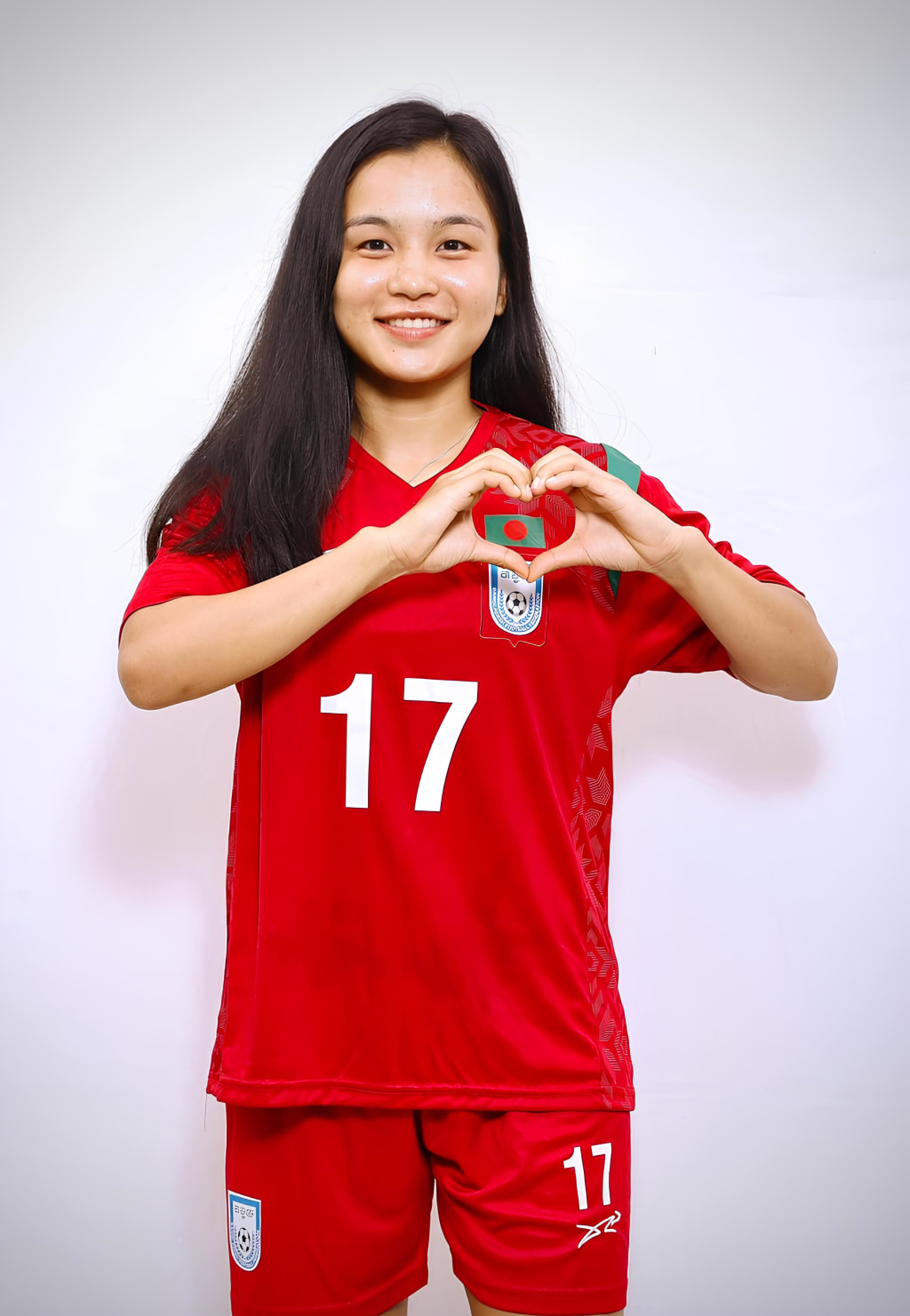
From Hills to Headlines
In the quiet hills of Rangamati, Bangladesh, where tribal rhythms echo through bamboo forests and the sun filters gently through green canopies, a young girl once chased a ragged football across dusty village grounds. That girl is Ritu Porna Chakma, now a national hero and one of Bangladesh’s brightest football stars. Her journey from a marginalized community to scoring historic goals on international grounds is more than just a sports story—it’s a testament to resilience, identity, and female empowerment.
A Childhood Framed by Struggles
Born on December 30, 2003, in Rangamati, a remote hilly district in southeastern Bangladesh, Ritu Porna grew up in a modest Chakma family, one of the largest indigenous groups in the country. Life was never easy. Her father passed away when she was just a child, leaving her mother to care for the children alone.
Despite these challenges, Ritu was drawn to football from a young age. She didn’t have proper boots or a regulation ball, but she had fire in her heart. While other children played for fun, she played with purpose. For Ritu, football was more than a game—it was freedom, strength, and the promise of a better future.
Breaking the Barriers: Education and Early Training
Ritu's formal journey in football began when she got accepted into the Bangladesh Krira Shikkha Protishtan (BKSP), the country's national sports institute. It was a turning point. At BKSP, she received structured training, dietary guidance, mental coaching, and above all—a chance.
Many girls from indigenous and rural communities rarely get opportunities for advanced education, let alone competitive sports. But Ritu excelled, mastering not only dribbling and passing but also the mental discipline required to compete under pressure.
Her performance in school-level tournaments caught the attention of national scouts. Soon, she found herself wearing the national jersey—a jersey that once seemed as distant as the stars.
Rising Star: Making a Mark in the National Team
Ritu Porna made her mark in the SAFF U-19 Women's Championship, playing key roles in Bangladesh’s victories against regional rivals. But it was in the 2022 SAFF Women's Championship Final that she etched her name in the country's football history. Facing Nepal in a high-stakes final in Kathmandu, Ritu scored the winning goal in the 80th minute, sealing Bangladesh's first-ever senior SAFF title.
That goal was not just a sporting achievement—it was a moment of national pride, widely broadcast across television screens and social media. For a country where women's sports often take a backseat, Ritu’s goal ignited conversations, emotions, and celebrations.
Representing Beyond the Border: Club Career Abroad
After her national triumph, Ritu’s talent crossed borders. She joined Paro FC, a club in Bhutan, marking her first foray into international club football. For many female players in South Asia, playing abroad remains a dream due to limited visibility and institutional support. Ritu broke that barrier.
Her time with Paro FC exposed her to different coaching styles, improved facilities, and global exposure—all of which made her a better, more confident player. It also symbolized a shift in how the world views Bangladeshi female athletes—not as underdogs, but as contenders.
A Personal Life Rooted in Pain and Purpose
Behind the bright lights and applause lies a quieter story of pain. In 2022, Ritu lost her younger brother—a loss that left her devastated. But she turned her grief into fuel. In an emotional moment, she dedicated one of her match-winning goals to her late brother, touching the hearts of fans across the country.
Ritu is not just playing for fame or medals. She’s playing for her family, for girls like her who dare to dream, and for a country that’s just beginning to embrace its female athletes.
A Role Model for Indigenous and Rural Youth
Ritu Porna is now more than a footballer—she is a symbol of hope. For indigenous girls who grow up thinking they are invisible, for rural girls who are told they should marry instead of play, and for a nation that has long neglected women’s sports, Ritu is rewriting the narrative.
She regularly visits her hometown, encouraging young girls to stay in school, follow their passions, and break the glass ceilings placed over them by society. She speaks not just about football, but about identity, rights, and the power of perseverance.
Fighting Stereotypes and Changing Norms
In Bangladesh, women’s participation in sports is still burdened by social and cultural taboos. Many consider football too “rough” or “inappropriate” for girls. But players like Ritu Porna are changing that perception.
She plays with strength and grace, showing that femininity and athleticism are not mutually exclusive. She’s also vocal about issues of gender inequality, representation, and indigenous rights, making her an activist in her own right.
The Road Ahead: Bigger Goals, Bolder Dreams
Now only in her early 20s, Ritu Porna Chakma’s story is far from over. With the 2026 AFC Women’s Asian Cup on the horizon, she is poised to lead Bangladesh to new heights. Her goals are no longer confined to nets—they’re about inspiring systemic change, building inclusive sports structures, and advocating for youth empowerment.
She dreams of one day playing in a European league, coaching the next generation, and creating sports academies in the hill tracts to nurture indigenous talent.
More Than a Footballer
Ritu Porna Chakma’s life is not defined by medals or match stats alone. She is a trailblazer, a daughter of the hills, a warrior on the field, and a role model off it. Her story speaks to the limitless potential of a girl who was once overlooked but never stopped believing.
In a world still learning to value women’s voices, especially those from marginalized communities, Ritu stands tall—not just as an athlete, but as a beacon of what’s possible when passion meets purpose.
About the Creator
So You Decided To Become a Nurse Practitioner:
So you decided to become an "Advanced Practice" nurse. Congratulations!... is what I would say if this was a good idea. Grad school? In this economy? What were you thinking? Likely it was something along the lines of either 1) “I've seen these other chucklefucks do it— Why can't I?” or even 2) “I've got a nice career, I should shake it up. I miss feeling like I have no clue what I'm doing.”
By Sandor Szabo3 days ago in Fiction




Comments
There are no comments for this story
Be the first to respond and start the conversation.