
Rising Together: A New Era of Human Kindness
How Compassion, Unity, and Empathy Are Shaping a Better World for All
Rising Together: A New Era of Human Kindness
How Compassion, Unity, and Empathy Are Shaping a Better World for All
In the midst of a world often portrayed as divided and chaotic, something quietly powerful has been unfolding. Across continents and cultures, a subtle but steady rise in human kindness is reshaping how people live, connect, and care for one another. While headlines often focus on conflict and crisis, there is another, equally true story worth telling—a story of hope, empathy, and collective healing.
It began not with a single event, but with a global shift in awareness. The challenges of recent years—pandemics, climate anxiety, political unrest—have revealed not only our vulnerabilities but also our capacity for compassion. In response to uncertainty, people everywhere have been reaching out instead of turning inward. Mutual aid networks, mental health support groups, and local community projects have flourished like never before.
Take, for example, a small town in northern Italy where residents started a “Community Fridge” project. What began as one refrigerator outside a church, stocked by locals with extra food, quickly turned into a regional movement. It now supports hundreds of families, and inspires similar efforts across Europe. "We don't ask who takes the food or who leaves it," said Maria, one of the organizers. "We just trust that when people feel cared for, they care in return."
This is not an isolated phenomenon. Studies from the World Happiness Report and the Global Empathy Index show measurable increases in pro-social behavior across many nations. Volunteerism is on the rise. Donations to humanitarian causes have reached new highs. Even online spaces, often criticized for toxicity, are evolving. New digital platforms now focus on support, gratitude, and encouragement—places where people can connect meaningfully rather than argue anonymously.
At the heart of this transformation is a rekindling of one of humanity’s oldest instincts: empathy. Scientists have long known that humans are wired for connection. But recent neuroscience studies reveal that acts of kindness don't just help others—they also activate the same regions in our brains associated with joy and fulfillment. In other words, when we are kind, we thrive.
Children, too, are growing up with a renewed sense of global citizenship. School programs focusing on emotional intelligence, peer mentoring, and service learning are being adopted worldwide. In South Korea, elementary students participate in weekly "compassion circles," where they listen to each other’s challenges and offer support. In Kenya, teenagers are leading peer-led climate and mental health initiatives. The next generation is learning early that kindness is not weakness—it is power.
Governments and organizations are taking note. The United Nations recently launched the “Humanity Forward” initiative, which encourages policies centered on equity, empathy, and cooperation. Cities from Amsterdam to Tokyo have implemented "Compassion Policies" that prioritize mental health, inclusivity, and environmental justice alongside economic development.
Of course, there are still problems. There is still injustice, suffering, and division. But the difference now is that more people than ever are willing to face those problems together. The idea that kindness is soft or naive is being replaced by a deeper understanding: that kindness is strategic, necessary, and transformative.
One striking example comes from Syria, where grassroots peacebuilders have formed cross-community education centers that serve both Christian and Muslim families. These centers not only provide schooling in war-affected areas but also foster healing and dialogue between groups long divided by conflict. "We don't wait for peace to come," said Fadi, a teacher in Aleppo. "We build it with every shared meal, every lesson, every laugh between children who were once afraid of each other."
Even in everyday life, the shift is visible. People are checking in on neighbors, celebrating small wins together, and learning to listen more deeply. The workplace is becoming more human, with companies embracing wellness, work-life balance, and team compassion as core values. Cities are becoming more accessible. Conversations are becoming more inclusive.
The truth is, humanity is not perfect—but it is learning. And in that learning, there is light.
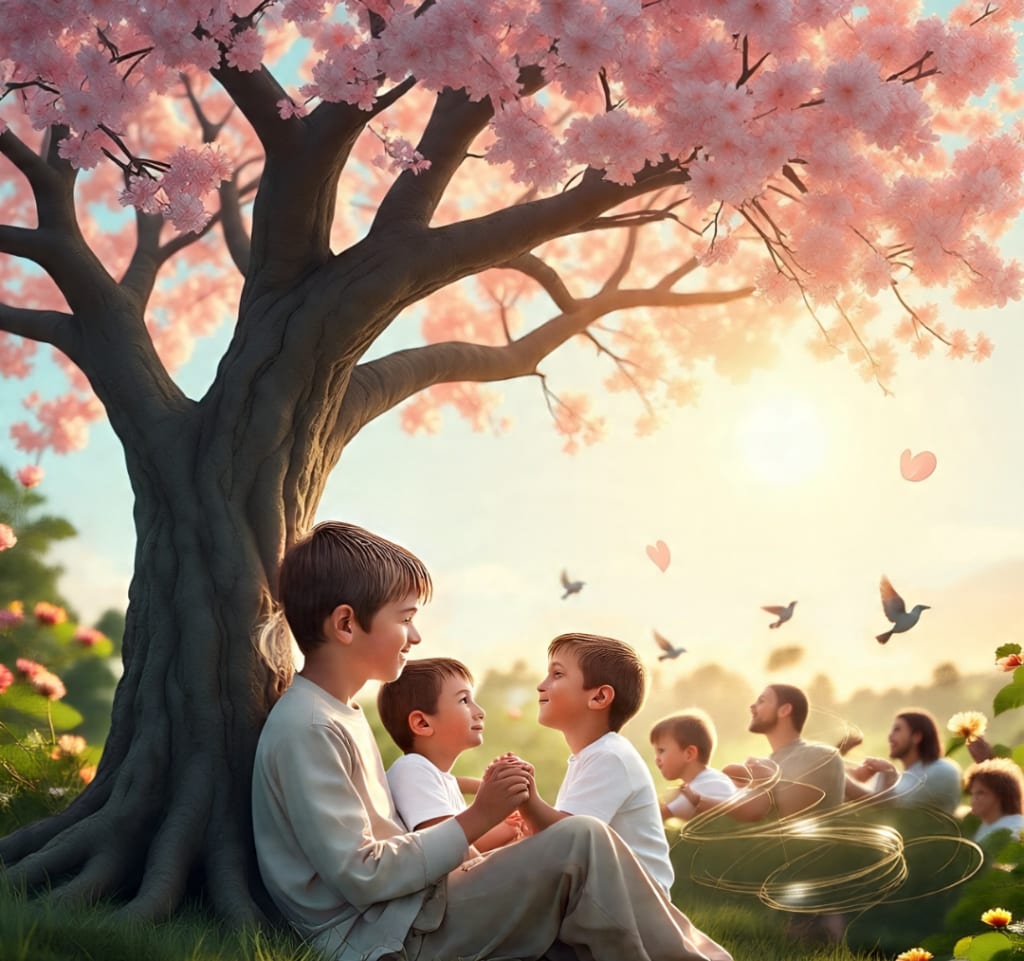
As we look ahead, the signs of this positive shift are everywhere: in a shared meal, in an unexpected message of support, in a child reaching out to comfort a friend. They remind us that progress isn’t always loud. Sometimes it moves gently, like sunlight through trees—steady, warm, and impossible to ignore once you begin to notice it.
And more and more of us are noticing.
We are rising together, slowly but surely, into a new era of human kindness. And in doing so, we are not only changing the world—we are becoming the kind of people the world has always needed.
About the Creator
Keep reading
More stories from Muhammad Saad and writers in Humans and other communities.
"Stride to Strength: Unlocking the Power of Running for a Healthier Life"
Stride to Strength: Unlocking the Power of Running for a Healthier Life Discover the Incredible Physical, Mental, and Emotional Benefits of Running That Boost Your Well-Being Every Step of the Way --- When Emily laced up her worn-out sneakers one crisp autumn morning, she had no idea that a simple decision would transform her life in ways she had never imagined. Running had always been something she admired from afar—friends who breezed through 5Ks, morning joggers with radiant smiles—but for Emily, it felt out of reach. Years of sedentary habits, stress from work, and the weight of emotional fatigue had clouded her motivation. Yet, that day, something inside her whispered: Just one step. What began as tentative strides around her neighborhood soon evolved into something much more profound. The physical benefits of running started to reveal themselves gradually—her energy levels surged, the heaviness in her legs eased, and the pounds began to melt away. But the transformation went far beyond the physical. Each run became a moving meditation, a chance to reset her mind and reconnect with a vitality she’d long forgotten. Running, Emily discovered, wasn’t just about fitness. It was a powerful tool for holistic well-being. Physically, the act of running strengthens the heart, lungs, and muscles. It increases endurance and improves overall cardiovascular health. Emily felt her body growing stronger with every mile, her posture improving, and her breathing deepening. Scientific studies back this up: running boosts the production of endorphins, often called the body’s “feel-good” chemicals, which help to alleviate pain and induce feelings of happiness. But the mental benefits were even more striking for Emily. Her busy mind, once cluttered with worries and to-do lists, found clarity in the rhythmic pounding of her feet against the pavement. Running became a sanctuary where stress dissolved, anxiety diminished, and her mood lifted. She noticed that even on difficult days, a short run could spark a profound sense of calm and focus. In fact, runners often report improvements in memory, creativity, and cognitive function, all fueled by the increased blood flow and oxygen to the brain. Emotionally, the journey was transformative. Running helped Emily build resilience—not just physically, but emotionally. Each challenge she faced on the trail mirrored challenges in her life: the discomfort of pushing through a tough mile reflected her ability to face fears and setbacks head-on. She learned to celebrate small victories, like running a little farther or faster than the day before. This sense of accomplishment boosted her confidence and self-esteem, making her more hopeful and empowered in daily life. But Emily’s story is not unique. Across the world, millions are unlocking the power of running to enhance their lives. From seasoned marathoners to beginners taking their first tentative steps, running offers a universal path to health and happiness. The beauty of running lies in its accessibility—no expensive equipment or special facilities are required. A pair of shoes and an open road are all it takes. What truly sets running apart, though, is its ability to connect people—to community and to themselves. Emily found support in local running groups where camaraderie flourished and encouragement was abundant. Sharing goals, swapping stories, and cheering one another on turned running into a shared journey rather than a solitary task. This sense of belonging deepened her emotional well-being and provided motivation to keep moving forward. As seasons changed, Emily’s commitment to running grew stronger. She learned to listen to her body, balancing effort with rest, and savoring the simple joys of a sunrise jog or the crisp air of a winter run. Running became a metaphor for life’s journey—sometimes smooth, sometimes challenging, but always moving forward step by step. Her experience offers a compelling message: running is more than exercise—it’s a gateway to a healthier life, enriching body, mind, and spirit. For those hesitant to start, Emily encourages, “Don’t wait for the perfect moment. Start small, be patient, and celebrate every stride. The power of running is waiting for you.” Through running, Emily unlocked a life she never thought possible—a life of strength, joy, and balance. Every step became a testament to the incredible potential within each of us to transform our well-being, one stride at a time.
By Muhammad Saad 7 months ago in Humans
Practical Advice For Singles Determined To Overcome Modern Dating Struggles
Contemporary dating implies certain challenges, including success at using the Internet and dealing with unmet expectations. Singles can be left frustrated and emotionally exhausted by too many options, ghosting, and lack of continuity in communication.
By Mark Hipstera day ago in Humans


Comments
There are no comments for this story
Be the first to respond and start the conversation.