
Progressive Hubris and MAGA Willful Ignorance Both Fuel America's Political Dysfunction
each side's extremes distort reality, deepen division, and erode democratic trust


Introduction: Two Sides of the Same Dysfunction
In today’s polarized America, political discourse often feels like trench warfare. On one side, Progressive hubris—a belief in moral and intellectual superiority—can alienate and dismiss dissenting voices. On the other, MAGA willful ignorance—a rejection of facts in favor of tribal loyalty—can entrench misinformation and conspiracy. Though ideologically opposed, both extremes contribute to the same outcome: a fractured democracy, eroded trust, and civic paralysis.
Defining the Extremes
Progressive Hubris
Progressive hubris manifests as an overconfidence in moral clarity and intellectual authority. It often includes:
- Dismissal of dissent as ignorance or bigotry
- Overreliance on academic or institutional consensus
- Moral absolutism that leaves little room for nuance or compromise
This mindset can alienate moderates and conservatives, reinforcing the perception that progressives are elitist or out of touch.
MAGA Willful Ignorance
The MAGA movement, rooted in populist nationalism, often embraces:
- Rejection of mainstream media and scientific consensus
- Conspiracy theories and misinformation
- Blind loyalty to charismatic leadership
This form of ignorance isn’t accidental—it’s cultivated as a badge of honor, a rebellion against perceived elitism and control.
Psychological Roots: Tribalism and Identity
Both progressive hubris and MAGA ignorance stem from identity-driven politics. According to Johanna Dunaway, political scientist at Syracuse University, polarization is fueled by misperceptions of the “other side,” often shaped by media amplification of extreme voices. People assume opponents are more radical than they are, leading to hostility and distrust.
📉 Consequences for Democracy
1. Erosion of Trust
- Progressive hubris can lead to institutional overreach, where dissent is labeled as dangerous rather than debated.
- MAGA ignorance undermines institutional legitimacy, casting doubt on elections, science, and journalism.
Both erode public trust in democratic processes and institutions.
2. Policy Paralysis
- Progressives may push for sweeping reforms without bipartisan support, triggering backlash.
- MAGA loyalists may block even modest reforms, viewing compromise as betrayal.
This leads to gridlock, as seen in Congress where ideological cohesion has replaced moderation.
3. Civic Alienation
- Progressives risk alienating working-class voters who feel condescended to.
- MAGA rhetoric alienates minorities, immigrants, and intellectuals.
The result: fewer people feel represented, and more retreat into echo chambers.
🧪 Case Studies: When Extremes Collide
COVID-19 Response
- Progressive cities enforced strict mandates, sometimes ignoring economic fallout or mental health concerns.
- MAGA regions resisted masks and vaccines, spreading misinformation and prolonging the crisis.
Both sides claimed moral high ground, but the public suffered from inconsistent messaging and politicized science.
Education Wars
- Progressives push for inclusive curricula, sometimes dismissing parental concerns as bigotry.
- MAGA activists ban books and attack teachers, framing education as indoctrination.
The classroom becomes a battleground, not a place of learning.
🧩 Media’s Role in Amplifying Extremes
Media ecosystems reinforce these divides:
- Progressive outlets often mock MAGA beliefs, reinforcing elitist tones.
- MAGA media (e.g., talk radio, social platforms) spread conspiracies and demonize progressives.
This feedback loop intensifies polarization. As Pew Research notes, ideological distance in Congress has grown steadily since the 1970s, with fewer moderates and more partisan purity.
The Forgotten Center
Most Americans are not extremists. Dunaway’s research shows that ordinary partisans are far less radical than their party’s loudest voices. Yet the center is drowned out by the noise of ideological warfare.
What Can Be Done?
1. Reclaim Nuance
Progressives must temper moral certainty with humility. MAGA supporters must embrace curiosity over loyalty. Both sides need to rediscover the value of dialogue over dominance.
2. Support Local Bridge-Building
Grassroots efforts—town halls, bipartisan coalitions, community media—can reconnect citizens across divides. As Resilience.org notes, polarization is reversible when people engage face-to-face.
3. Reform Media Incentives
Media must prioritize accuracy and context over outrage. Platforms should reward bridge-building voices, not just viral extremes.
Conclusion: Humility vs. Hubris, Curiosity vs. Ignorance
Progressive hubris and MAGA willful ignorance are not just ideological opposites—they are symmetrical dysfunctions. Each side believes it holds the truth. Each side demonizes the other. And each side, unchecked, threatens the democratic fabric.
The path forward isn’t found in winning the culture war. It’s found in losing the need to win. In choosing humility over hubris, and curiosity over ignorance, America can begin to heal.
Sources:
- Syracuse University: The Great Divide
- Pew Research Center: Congressional Polarization
- Resilience.org: Us vs. Them
About the Creator
Julie O'Hara - Author, Poet and Spiritual Warrior
Thank you for reading my work. Feel free to contact me with your thoughts or if you want to chat. [email protected]
Keep reading
More stories from Julie O'Hara - Author, Poet and Spiritual Warrior and writers in Humans and other communities.
If We Progressives Had Led With Grace Instead of Arrogance
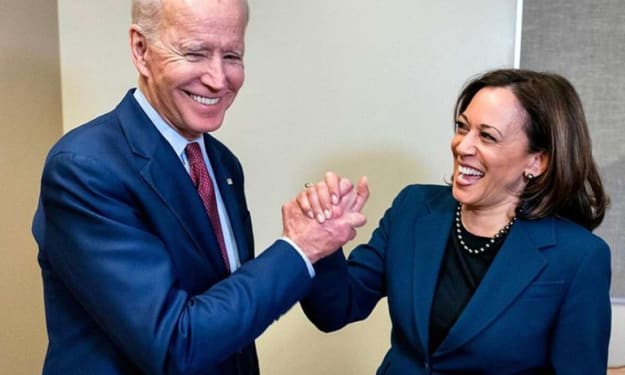
Today’s political climate is the result of many choices—some made in fear, some in pride, and some in silence. But what if key decisions had been made differently? What if President Biden had honored his physical limitations, Kamala Harris had been groomed to lead, and progressives had chosen compassion over combat? The landscape of American politics might look very different.
By Julie O'Hara - Author, Poet and Spiritual Warrior3 months ago in Humans
Autonomy Is The Real Privilege
Good morning, freedom-seekers! Today we’re gonna be looking at autonomy. A strange word, I know; one many would probably look at blankly and run away from on sight. We’re gonna figure out what it actually means, consider how it’s achieved, and decipher just how deeply most of us are tangled up in dependence without realising it.
By That ‘Freedom’ Guyabout 6 hours ago in Humans
Adaptability: The Skill That Future-Proofs Your Career
Introduction: Why Adaptability Is the New Career Insurance The modern job market is changing at an unprecedented pace. Automation, artificial intelligence, remote work, and global competition have reshaped how careers are built and sustained. In this environment, technical expertise alone is no longer enough. The single most important skill that separates professionals who thrive from those who struggle is adaptability.
By Muhammad Talha Ahmad6 days ago in Humans

Comments
There are no comments for this story
Be the first to respond and start the conversation.