
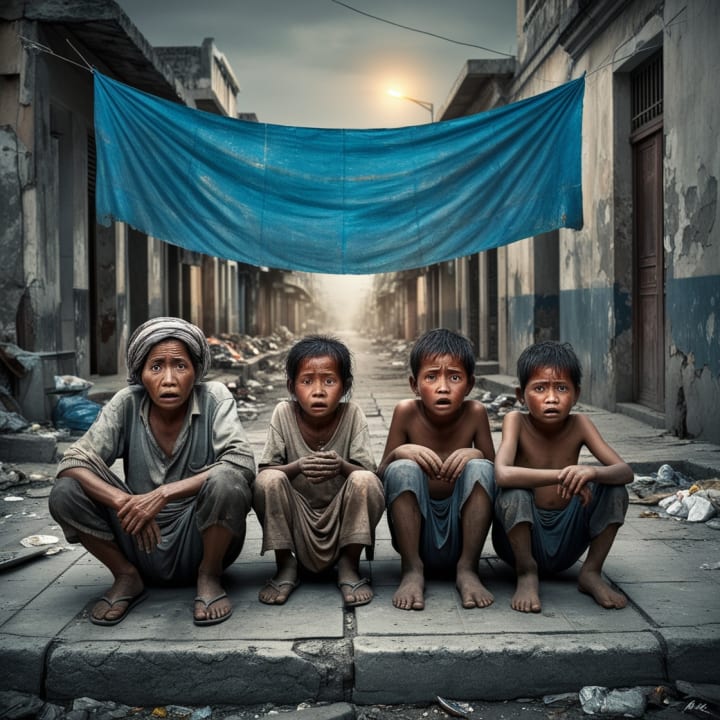
Poverty "Shattered Futures: Growing Up in the Grip of Poverty"
"Faces in the Shadows: The Unseen Heartache of Poverty"


The poverty line in the United States is an amount used to determine who is considered a poor person. That being the amount of income that one or more persons need to avoid any kind of income below basic living requirements such as food, shelter, and clothing. Once that income goes below it, they are said to reside in poverty. Now let's take a closer look at how the poverty line works and its effects on people in America.
What is a Poverty Line?
The government sets an income threshold by which the poverty line is measured annually. This depends on the number of people in a household. A poverty line threshold for one person would be lower compared to that of a family with three or four individuals in it. The U.S. government uses this line to determine who is eligible to receive help from programs such as food stamps and housing aid.
How is the poverty line calculated?
The poverty line is computed using the amount of money a person needs for basic things such as food, shelter, and clothing. In the 1960s, a formula was developed based upon how much money a family would need to buy food multiplied by three to account for other expenses. The cost of living has been changing since then, but this formula is still used by the government, adjusted yearly for inflation.
Poverty Line for Different Number of Family Members
Different number of family members has different poverty lines. For example, in the year 2024, the poverty line for a single person is about $14,580. For a family with four members, the poverty line is about $30,000. More number of family members would require more amounts to be earned to generate basic requirements, which is why the poverty line is higher for them.
Why is Poverty Line Important?
The poverty line becomes relevant in that it helps the government identify its clients for financial assistance. Some of the common programs that may be entitled to people living below the poverty line include Medicaid, food stamps, and housing subsidies. You are entitled to these programs if your income falls below the poverty line.
Disadvantages of Using Poverty Lines
The major disadvantage of using the poverty lines is that, to determine the extent or amount of poverty experienced, they cannot compare the actual differences between the living standards of the people classified in each category.
One of the major weaknesses in using a poverty line is that it is not always indicative of the present-day cost of living. Housing and health care costs have risen dramatically, and often, the poverty line does not increase to reflect these increases. Some experts feel the poverty line is too low, so many people who need assistance go unserved.
Living Below the Poverty Line
It might mean that one does not have enough money in their pocket to cater for daily needs while living on a poverty level. Poverty levels in most cases are characterized by struggling with rent, food and medical bills. This results in stress and a poor quality of life. Many families living on a poverty line tend to depend on government assistance to meet their costs.
Who are the Victims of Poverty?
Poverty cuts across different age brackets, though some categories of people have a better chance of being poor. These categories involve single parents, children, and minority groups. For example, it is estimated that one-sixth of the American children live in poverty. Old people and disabled people have greater chances of being poor since they are less likely to find jobs or maybe require costly medical care.
The Consequences of Poverty
Poverty has severe health implications concerning education and welfare. Children from poor backgrounds are likely to perform less well in school and have other health risks. Adults who endure poverty conditions undergo a lot of stress and anxiety, which might lead to mental issues. Poverty can also deprive people of access to certain chances, for instance, university learning or high-paying employment.
Government Initiatives to Eradicate Poverty
The fact is that several government programs have been provided to assist individuals who are located below the poverty line. This would encompass food assistance, including food stamps, Medicaid for healthcare assistance, and also housing assistance. Another program offered which helps low-income workers is the EITC, which brings them money at tax time.
Why Do Some People Fall Below the Poverty Line?
There are many factors which make a person fall below the poverty line. Loss of a job, illness, or family emergencies can quickly drain any savings and trigger financial difficulties. Poverty also hits those who have no chance to receive a proper education and good jobs. Systemic issues such as racism and unaffordable housing push people beneath the poverty line.
Poverty in Rural vs. Urban Areas
Poverty can appear in various ways in rural and urban areas. In the rural areas, poverty levels are usually high. This is primarily because there are fewer jobs available. On the other hand, some cost of living may be relatively low in rural settings as compared to major cities. For instance, housing and basic needs in the city might require a very high amount for one to stay while having a job.
Minimum Wage and Poverty
The minimum wage is one fundamental factor that influences poverty. Many people have stayed below the poverty line due to full-time minimum wage jobs because the minimum wage could not afford the cost of living. Increasing the minimum wage would mean giving workers more money, and it will make it easier to eradicate poverty.
Poverty and Health Care
Such a high-cost U.S. healthcare system leaves out no money to ensure that those below the poverty line still cannot afford health care. When people go without health insurance, many will begin to delay or forgo seeing a doctor because they cannot pay the medical bills. This leads to even poorer health outcomes and much more financial distress.
Education and Poverty
Education serves as an important variable in breaking the cycle of poverty. Those who have a good education gain relatively higher incomes, thus having a constant source of income. However, those persons living in poverty are deprived or restricted from getting into a good educational program for reasons such as underfunding of schools and the reality that most of them must engage in working activities at an early age to support their respective families.
Homelessness and Poverty
Poverty directly ties up with homelessness. When in a below-the-line poverty situation, the chances of losing one's home are more probable. People at this level simply cannot afford to pay rental or mortgage fees to the owner of the said shelter. Homelessness presents further difficulties towards employment, subsequently creating a cycle in poverty.

Food Insecurity
Food insecurity is when a family lacks sufficient funds for procuring food. Major portions of the families belonging to below the poverty line fall within the category of facing food insecurity. The level of malnutrition is quite high because of this problem, as well as causing various other health issues. To deal with this situation, there exist food assistance programs like food stamps, but not all families get proper benefits to fulfill all their requirements.
Child Poverty

Poverty is the most damaging to the child. Child poverty has long-lasting impacts on development, including a poor health condition, lower educational attainment, and psychological issues. Free school lunch programs as well as Head Start initiatives are areas of policy interventions that aim to reduce the impacts of poverty on children.

Older Adults Poverty
Many of the elderly are also living on the poverty line. The most affected in this regard are the senior citizens who are solely dependent on the Social Security for their survival. The healthcare and long-term care costs will dwindle down all the savings very quickly, and thus many senior citizens can't even afford to consume basic products.
Programs such as SSI supplement their income. Still, millions of elderly persons have to face financial inability.
Solutions to Poverty

Government programs combined with education and job opportunities are necessary to combat poverty. Higher minimum wages, affordable health care facilities, and quality educational systems can lower the poverty levels. Finally, changing the system requires challenges like racism and unequal shares of resources.
Conclusion
Poverty is such a broad issue that affects millions of people in the United States. The government is doing its part for many families, while much more needs to be done about poverty and how it affects one's daily life. It is pertinent first to know something about the poverty line and its limitations.
Thank you Think about it all.poverty
About the Creator
Jam Shaikh
I am a story, article content writer. I know how to write any type of story.I like writing and I like sharing my content.
Keep reading
More stories from Jam Shaikh and writers in Humans and other communities.
Humanity is disappearing from the world
Humanity is disappearing from the world; Simple reflection INTRODUCTION TO THE ISSUE Most of today's people really feel that the world is becoming less kind, more selfish, and less caring. This feeling that the humanity of love, compassion, and empathy is disappearing somehow really worries me. On one hand, I see crime, hatred, and divisions growing, while on the other hand, kindness and understanding seem to shrink. Why? What can we do to bring back humanity?
By Jam Shaikhabout a year ago in Humans
Autonomy Is The Real Privilege
Good morning, freedom-seekers! Today we’re gonna be looking at autonomy. A strange word, I know; one many would probably look at blankly and run away from on sight. We’re gonna figure out what it actually means, consider how it’s achieved, and decipher just how deeply most of us are tangled up in dependence without realising it.
By That ‘Freedom’ Guy4 days ago in Humans


Comments
There are no comments for this story
Be the first to respond and start the conversation.