
Paetongtarn Shinawatra Becomes Thailand's Prime Minister
Amid High Hopes and Political Challenges
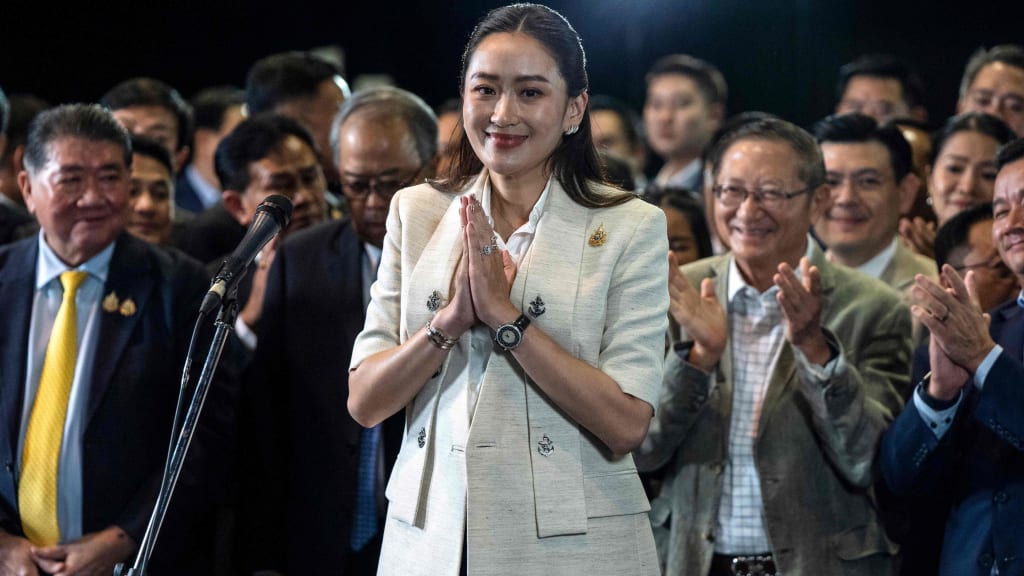
Paetongtarn Shinawatra’s recent election as Thailand's Prime Minister is a watershed moment in Thai politics, blending both continuity and change in the country’s leadership. At just 37 years old, Paetongtarn, also known as "Ung Ing," is the youngest person to ever hold the office and the second woman to do so. Her rise to power comes after the sudden dismissal of former Prime Minister Srettha Thavisin, signaling a renewed chapter in Thailand’s ongoing political saga.
The Shinawatra Legacy in Thai Politics
Paetongtarn is no stranger to the pressures of leadership, given her family’s deep entanglement in Thai politics. She is the daughter of Thaksin Shinawatra, a former Prime Minister whose populist policies and influence transformed Thailand's political landscape in the early 2000s. Her aunt, Yingluck Shinawatra, also served as Prime Minister from 2011 until 2014, when she was removed from office by a military coup. The Shinawatras have long dominated Thai politics, but their reign has been marred by persistent opposition from conservative forces, military coups, and judicial rulings aimed at neutralizing their influence (Honolulu Star-Advertiser) (ABTC).
Given this backdrop, Paetongtarn’s ascension carries significant weight. Her election is a bold move by the Pheu Thai Party, which faced challenges following its second-place finish in the 2023 general election. The party managed to secure a ruling coalition despite the election being won by the Move Forward Party, which was later dissolved by Thailand’s constitutional court. The dissolution of Move Forward, a party advocating for reform of the monarchy, is just one of the many challenges Paetongtarn faces as she steps into the role (ABTC).
Navigating the Economic and Political Landscape
One of Paetongtarn’s primary objectives as Prime Minister is to steer Thailand out of its economic doldrums. The country’s economy has been sluggish, with issues ranging from rising inflation and stagnant wages to dwindling investor confidence. Paetongtarn has expressed her determination to improve the quality of life for Thai citizens through a series of economic reforms and social programs. One of her signature initiatives involves a cash handout program aimed at stimulating consumer spending and economic growth. However, the feasibility and long-term sustainability of such measures have been questioned by economic experts, raising concerns about whether these populist policies can achieve their intended outcomes (Honolulu Star-Advertiser).
Paetongtarn’s economic plans must also navigate a politically charged environment. Thailand’s political scene remains deeply polarized, with a long-standing divide between populist parties like Pheu Thai, which have mass appeal among rural and working-class voters, and the conservative establishment, backed by the military and royalist factions. Her family’s involvement in politics has made them targets for these powerful groups, and the fate of previous Shinawatra-led governments offers a stark reminder of the obstacles she might face. The repeated ousting of governments led by her father, aunt, and uncle underscores the fragility of civilian rule in a country where the military has historically played an outsized role in governance (Honolulu Star-Advertiser).
The Balancing Act of Legacy and Leadership
Despite her family’s considerable influence, Paetongtarn’s success will depend on more than just her last name. Critics and supporters alike are watching closely to see whether she can forge her own identity as a leader while still leveraging the Shinawatra brand. Paetongtarn has sought to present herself as both a continuation of her family’s legacy and a fresh face capable of addressing modern challenges. Her acknowledgment of the pressures and risks involved, as well as her call for collective leadership through a "strong and experienced" team, reflect a strategic effort to position herself as more than just a political heiress (ABTC).
This balancing act will be crucial as she confronts an increasingly competitive political arena. The Move Forward Party’s dissolution has left a political vacuum, but its core base of young, reform-minded voters has not disappeared. These voters, disillusioned by traditional politics and eager for systemic change, could pose a significant challenge to Paetongtarn’s efforts to maintain broad support. Pheu Thai, traditionally seen as a party for the rural poor, must now broaden its appeal to include these urban and progressive demographics without alienating its traditional voter base (Honolulu Star-Advertiser) (ABTC).
The Path Forward: Opportunities and Risks
While Paetongtarn’s rise represents a gamble for the Pheu Thai Party, it also presents opportunities for renewal. Her youth, education, and fresh perspective could help bridge the generational divide in Thai politics. Yet, her leadership comes at a time of heightened political risk. The constitutional court’s recent actions, including the dismissal of Srettha Thavisin and the dissolution of Move Forward, suggest that Paetongtarn’s government could face similar threats. Thailand’s political instability, characterized by frequent court interventions, coups, and electoral volatility, means that her tenure could be cut short if powerful interests perceive her administration as too threatening (Honolulu Star-Advertiser) (ABTC).
Moreover, the economic pressures Paetongtarn has inherited require immediate and effective action. Global economic uncertainties, coupled with domestic challenges like income inequality and a fragile business environment, create a precarious situation that could define her legacy. Whether she can deliver on her promises while keeping her coalition intact and avoiding the pitfalls that befell her predecessors will be the true test of her leadership (ABTC).
Conclusion
Paetongtarn Shinawatra’s election as Thailand’s Prime Minister is a pivotal moment in the country’s ongoing political drama. Her rise, rooted in the legacy of the Shinawatra family, represents both continuity and a chance for renewal. However, the challenges ahead are formidable. From navigating an economic recovery to managing the ever-present threats of political destabilization, Paetongtarn faces a steep climb. Her ability to balance the demands of her party, her supporters, and the broader electorate, while avoiding the traps that have ensnared her family in the past, will ultimately determine the success of her tenure. The eyes of Thailand—and the world—are now on her as she steps into the limelight of one of Southeast Asia’s most turbulent political stages.
About the Creator
Sahil Lathwal
I'm Sahil, a passionate writer. My voice weaves stories, emotions, and melodies into an enchanting tapestry. Welcome to my world of creativity and expression. 🎶📝🎤
Keep reading
More stories from Sahil Lathwal and writers in Humans and other communities.
Making terrorism from terrorist?
In the intricate tapestry of human behavior, the motivations driving individuals to embrace terrorism remain among the most perplexing and troubling threads. From the depths of poverty to the corridors of power, the reasons behind such radical choices often defy simplistic explanations. Delving into the minds of those who have succumbed to extremist ideologies unveils a complex interplay of personal grievances, ideological indoctrination, and societal dynamics. Through real-life examples, we embark on a journey to comprehend the multifaceted nature of what inspires terrorism.
By Sahil Lathwal2 years ago in Criminal
She Left Me For A Rich Guy, Look How She Turned Out
I sat back and watched you this weekend. I saw the photos. I saw the smiles. I saw the man you chose over the empire we were building. And for the first time in three years, I didn’t feel a sting of jealousy. I felt a cold, hard sense of irony.
By Nanu Nnabuife7 days ago in Humans




Comments (1)
I really love your content and how it's crafted , I love it and happily subscribed , you can check out my content and subscribe to me also , thanks for this beautiful one