
Our Brain..But who controls it?
The ultimate controllers
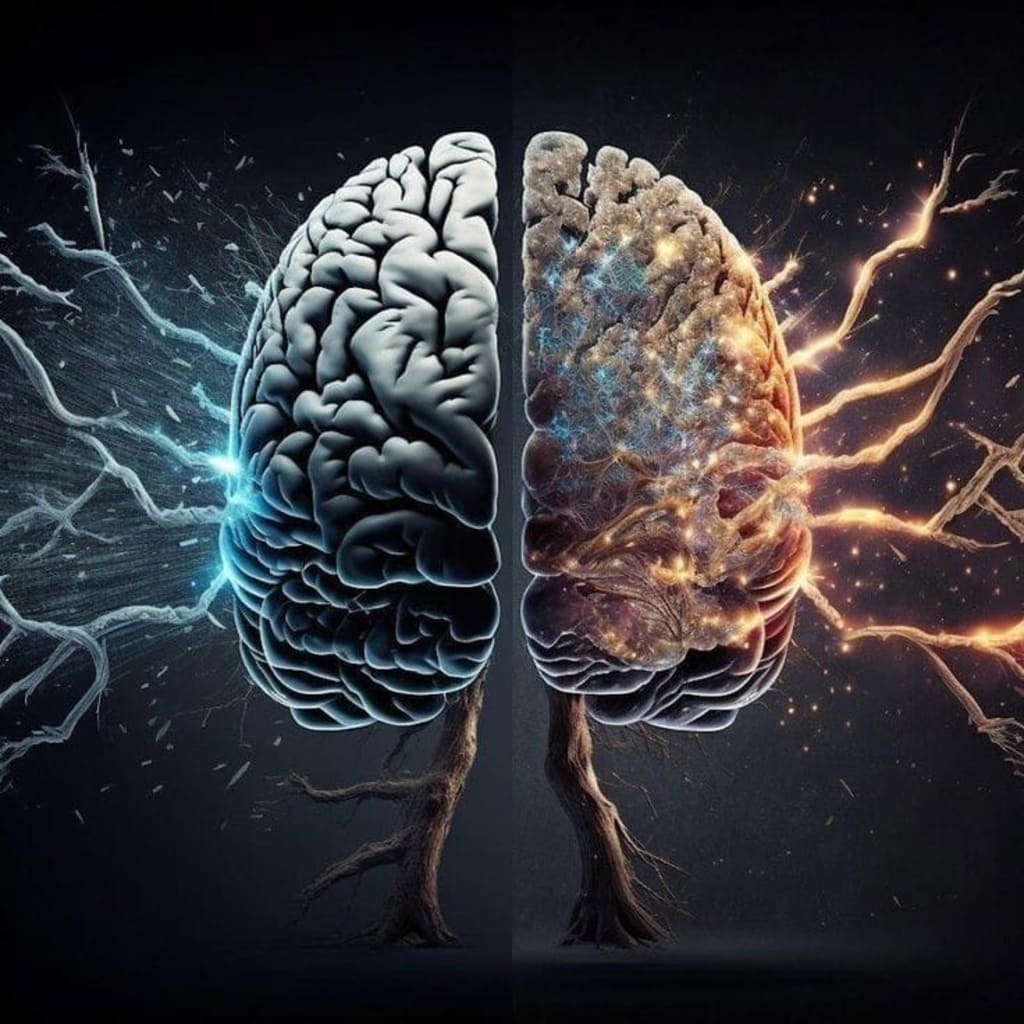
The brain is the biggest mystery in science today. It’s responsible for all the facets of our personality, everything we think and everything we feel. It makes you “you”. A very large fraction of what's happening in your brain, your not aware of at all.
But what exactly is going on in your unconscious brain?,What part of your brain is really in charge?
All day long, we're doing unscripted things that we didn't know we would be doing. Life is not scripted, find a word that has some meaning for you. So you might think you've made a choice... “Representation”. But in the back of your mind, you wonder... “Come on! Was that really me?”.
We might feel like we're in control. This idea that we're in control of our actions seems critical to our sense of identity. But our brains may have other ideas. The brain is made of almost 90 billion neurons, but it produces this illusion that there's a single person inside our skulls.
For every Pinocchio, there's always someone kind of pulling the strings behind the scenes.
There can be two separated minds inside one system. It’s not just that motor, memory, language is in the brain. Your personality is up there, your morality is up there. We as humans know how environment and traumatic events change people. "Your Brain: Who's In Control?"
Have you ever thought that you've made a crystal-clear decision? Like, “I'm just gonna watch two episodes tonight”. But the next thing you know... “Okay, just one more episode”. Actually, it's time to go to bed.
Well, I bet everyone else has already finished this season. “Wait, why am I still watching this?”. Well, of course, the answer lies in
your brain. Your brain contains multitudes. It's a complex and intricate three-pound piece of matter. But you actually have no awareness of most of the things that are going on inside your brain.
So here I’m gonna be writing about what's really driving the decisions you make? , Who or what is really in control?
There are important unconscious processes in our brain that we’re not aware of. Most of the time, the brain is a coordinated, well-oiled machine, with different brain regions working together in harmony. But under certain circumstances, when things are out of sync, we can gain deeper insight into how the brain actually works. There's one thing we do every day with little to no conscious control. It's something you might spend a whole third of your life doing: “sleeping”.
When we sleep, we're supposed to be unconscious and at rest. But for some people, that's not always the case.
There are people who sleep walk. Very common condition or phenomenon. Simply said, it's what the word is. You sleep, but during your sleep, you will walk. We take it for granted, right? But the walking is extremely complex. Just teaching a robot all the inputs and outputs for a body to move forward on two legs without falling. All of this, you don't even think about it. It works independently.
Now the question that can pop up for most of the is: How is it possible to do complex behaviour’s like walking, eating, and sometimes even driving while sleeping?
During studies what's going on in the brain when someone sleepwalks. Sleep patients are wired up with sensors that pick up eye and body movements--as well as their brain waves-- while they sleep.
After study it was found that the patients looks like they're awake. But a couple of key brain regions seem to stay asleep. There's part of the brain stays in slow-wave sleep. Such a deep stage of sleep, it's hard to wake up, and the other part of the brain is already awake. One part of the brain that doesn't wake up during sleepwalking is called the prefrontal cortex. It's the region of the brain responsible for deliberate choices and self-awareness. This prefrontal cortex is the decision maker. The other areas of the brain can mostly work independently of that. So, essentially, so many parts of the brain can be engaged without conscious awareness of it. During sleepwalking, the motor cortex, which controls movement, the visual cortex, which processes visual information, and the parts of the brain that coordinate behaviour’s like balance and speech can all become active without engaging the prefrontal cortex.
Experiences of sleepwalking reveal that being conscious is not an all-or-none situation. Our unconscious makes a lot of everyday decisions for us. For starters, boring stuff, like regulating your heart rate and your temperature and deciding when to take the food in your stomach and move it down into your gut. Like, thank God we don't have to be aware of all that stuff. Motor function, sensory function, motor-sensory integration, memory representation. All of this is happening below the surface, like the inside of a clockwork.
When you sleepwalk, the brain regions that control your movement, vision, and breathing can get up to all kinds of mischief without you even knowing it. But there's one case where even those regions check out-- during anaesthesia.
We can use drugs to remove it. We can go to sleep and we're not conscious, and yet, it's tenuous at the same time. We can't say how any specific set of neurons working together produces consciousness.
The whole brain is there, the pieces are there, but the messages aren't getting through in a way that makes for our conscious experience. And that's the difference between being aware and not being aware. So, the level of communication among brain regions is one difference between being conscious and being unconscious. That means that no single area of the brain is responsible for your consciousness. It's that communication that helps make you “you”.
You can't control everything that makes you who you are. But the unconscious you is still you. The vast majority of the brain's work is happening outside conscious awareness. If you try to over-control some things, you actually will decrease your performance. You have to let go of conscious self-monitoring and just go with the flow.
It could be scary to say and scary to hear, but we are not just our own. We are all multifaceted, multi-dimensional people. And by becoming more aware of the unconscious processes in your own brain, we can become more aware of what drives us, and what we ultimately can control.
About the Creator
Keep reading
More stories from Elizabeth Abraham and writers in Humans and other communities.
Oxygen our main source of life
Imagine if all the Earth's oxygen disappeared, not forever, just for, say seven seconds, would we just hold our breath, What would happen to the atmosphere? What would happen to the environment this is what if and here's what would happen if the world lost oxygen for just seven seconds.
By Elizabeth Abrahamabout a year ago in Earth
Time to change your life.
Is it even possible for you to change your life? A lot of people, more than there should be, are unhappy with their lives. But what are they doing about it? Usually nothing. People talk about how shitty their lives are and want change, but are they not taking the actions to change?
By Jen Phillips3 days ago in Humans
When a Winter Storm Weather Forecast Changes Everything
Before the first snowflake falls, something shifts inside people. The world feels quieter, heavier, more watchful. Phones light up with alerts, and conversations circle back to the same question. What does the winter storm weather forecast really mean for us this time? These forecasts are not just numbers and maps. They shape plans, emotions, and sometimes fear. They decide whether children stay home, whether roads empty early, and whether families brace for long nights without power. A winter storm forecast carries memory and possibility at once. This article looks closely at how winter storm forecasts work, why they matter so deeply, and how to read them with clarity instead of panic. Understanding the forecast helps people prepare with care, not worry.
By Muqadas khan7 days ago in Humans


Comments (2)
Exceptional
Excellent content