
One-Sided Relationships in the Age of Ghosting
Navigating Love, Friendship, and Connection in a Disappearing World

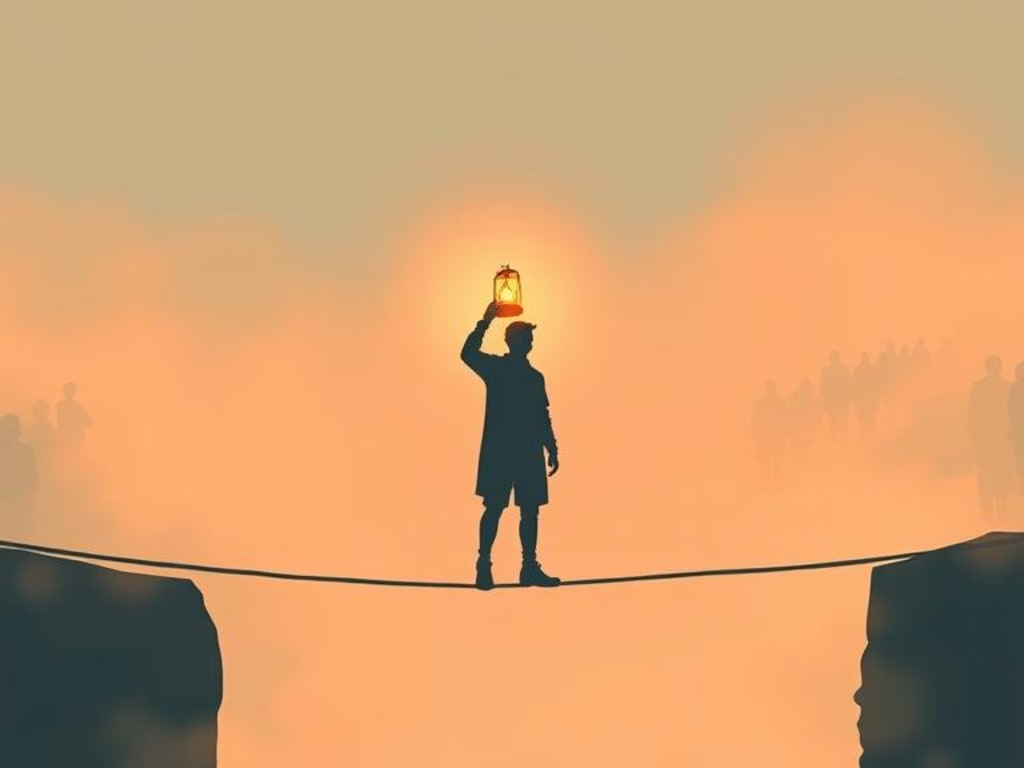
Hyper-connected society, relationships often feel like tightropes stretched over an abyss of silence. You text, you call, you pour your heart into a message—only to watch it sink into the void, unanswered. Ghosting, the act of abruptly cutting off communication without explanation, haunts modern interactions, leaving behind a trail of confusion and self-doubt. It amplifies an already pervasive issue: one-sided relationships. These lopsided dynamics—where one person invests far more than the other—thrive in an era where disappearing feels easier than confronting. But why do we keep falling into these traps? And how do we break free?
One-sided relationships don’t always start that way. They often bloom with promise—a spark of chemistry, a shared laugh, a late-night conversation that stretches into dawn. You feel the pull, the potential. You convince yourself the other person feels it too. Yet, as time unravels, the balance shifts. You initiate every plan. You send the good morning texts. You ask the questions while they offer one-word replies—or worse, nothing at all. Ghosting becomes the final nail in a coffin you didn’t even realize was being built.
This phenomenon isn’t new, but technology supercharges it. Dating apps promise endless options, social media glorifies curated connections, and texting strips away the accountability of face-to-face honesty. People vanish with a swipe or a muted notification, leaving you to wonder what went wrong. One-sided relationships, once sustained by obligation or proximity, now dissolve into the ether of digital detachment. Let’s explore how ghosting fuels these imbalances, why we tolerate them, and what we can do to reclaim our worth.
The Anatomy of a One-Sided Relationship
Picture this: You meet someone—let’s call them Alex. Alex lights up your world with charm and wit. You dive in headfirst, planning dates, sharing vulnerabilities, and dreaming of a future. Alex, though, remains a step removed. They reply sporadically, cancel plans last-minute, and dodge any talk of commitment. You tell yourself they’re busy, shy, or just “bad at texting.” You keep giving, hoping your effort will tip the scales. It doesn’t. Eventually, Alex stops responding altogether. No fight, no goodbye—just silence.
This scenario plays out across romantic partnerships, friendships, and even family ties. One person carries the emotional load while the other coasts. You recognize the signs: You feel drained, not fulfilled. You chase their approval like a mirage in the desert. You question your value when they pull away. The relationship becomes a mirror reflecting your insecurities rather than a partnership amplifying your strengths.
Ghosting sharpens this imbalance into a blade. In the past, ending a connection required words—a breakup, a confrontation, a letter. Now, technology hands people an escape hatch. They don’t need to explain; they just stop showing up. You’re left holding the pieces, replaying every interaction for clues. Did you say too much? Care too hard? The lack of closure twists the knife, making you doubt your instincts in a way closure never would.
Statistics back this up. A 2023 survey by YouGov found that 35% of adults under 35 have been ghosted in a romantic context, while 22% admit to ghosting someone else. Friendship ghosting follows a similar trend, with 1 in 5 people reporting a close friend vanishing without explanation. The numbers reveal a culture comfortable with cutting ties—or at least avoiding the discomfort of tying them off properly.
Why Ghosting Thrives Today
Ghosting doesn’t happen in a vacuum. It feeds on the conditions of our digital age. Dating apps like Tinder and Bumble turn people into profiles, reducing complex humans to a swipeable commodity. You match with someone, chat for a week, and then—poof—they’re gone. The endless scroll of options tricks us into believing someone better waits around the corner, so why bother investing in what’s already here?
Social media adds another layer. We broadcast our lives, crafting personas that invite connection—but often shallowly. You follow someone, like their posts, and assume a bond exists. When they don’t reciprocate your DMs or fade after a few exchanges, the sting feels personal. Yet, the platform’s design encourages detachment. Notifications drown out meaningful replies, and stories vanish after 24 hours, mirroring the fleeting nature of modern bonds.
Texting, too, distorts communication. You craft a thoughtful message, hit send, and wait. The three dots appear, then disappear. Hours pass. Days. The silence screams louder than words ever could. Unlike a phone call or a face-to-face chat, texting lets people delay, deflect, or disappear without consequence. It’s the perfect medium for ghosting—and for sustaining one-sided dynamics where one person holds all the power.
Cultural shifts play a role too. We prize independence and self-sufficiency, often at the expense of accountability. Confrontation feels outdated; we’d rather “protect our peace” than hash out hard feelings. Ghosting becomes a socially acceptable exit strategy, even if it leaves the other side reeling. In a one-sided relationship, this exit feels inevitable—the disinterested party was never fully in, and disappearing just formalizes their absence.
The Emotional Toll of Being Left Behind
You don’t notice the weight of a one-sided relationship until it crushes you. At first, you rationalize the imbalance. You tell yourself you’re the bigger person, the loyal one, the one who cares enough to keep trying. But the effort erodes you. You lose sleep over unanswered texts. You second-guess your worth when they flake on plans. You feel like a beggar at a table where they feast on your attention without offering a crumb in return.
Ghosting amplifies this pain. When someone disappears without a word, your mind spins a narrative to fill the gap. You blame yourself—your quirks, your enthusiasm, your neediness. Psychologists call this “ambiguous loss,” a grief without resolution. Dr. Pauline Boss, who coined the term, explains that it’s harder to heal from than a clear ending because you can’t confront the reality. You’re stuck in limbo, mourning a connection that might never have existed as you imagined it.
The fallout lingers. You hesitate to trust new people. You overanalyze every interaction, bracing for the next vanishing act. You might even pull back from relationships altogether, fearing the vulnerability that once burned you. One-sided dynamics and ghosting don’t just bruise your heart—they rewire how you approach connection, leaving scars that whisper, “You’re not enough.”
Why We Stay in One-Sided Relationships
If these relationships hurt so much, why do we cling to them? The answer lies in a messy mix of hope, fear, and habit. You stay because you see potential—a flicker of what could be if they’d just meet you halfway. You replay the good moments, like that time Alex opened up about their dreams or sent a sweet message out of the blue. You convince yourself those glimpses prove they care, even if the evidence stacks against it.
Fear keeps you tethered too. You dread the emptiness of letting go, the silence that follows a severed tie. Better to have a half-hearted connection than none at all, right? You might also fear rejection—if you push for more and they walk away, it confirms your worst suspicions about your worth. So, you settle for crumbs, hoping they’ll eventually offer a meal.
Habit plays a sneaky role. If you grew up with uneven dynamics—say, a parent who withheld affection or a friend who always took more than they gave—one-sided relationships feel familiar. You mistake the ache for love because it’s all you’ve known. Psychotherapist Esther Perel notes that we often recreate patterns from our past, chasing resolution in the present. The ghoster becomes a stand-in for every unreciprocated bond you’ve endured, and you stick around to rewrite the ending.
Breaking Free: Reclaiming Your Power
You don’t have to stay stuck. Escaping a one-sided relationship—and the ghosting that often caps it—starts with seeing it for what it is. Stop romanticizing the imbalance. Alex isn’t “mysterious” or “complicated”; they’re disengaged. That friend who never checks in isn’t “busy”; they’re indifferent. Name the dynamic clearly, and the spell begins to break.
Next, set boundaries. Decide what you deserve—consistent effort, mutual respect, honest communication—and don’t bend. If they can’t meet you there, walk away. It’s not about ultimatums; it’s about honoring your own standards. When you stop chasing, you free up space for people who show up willingly.
If ghosting strikes, resist the urge to fill the silence with self-blame. You didn’t “scare them off”; they chose to leave. Reach out once for clarity—something simple like, “Hey, I’ve noticed you’ve pulled back. Is everything okay?”—and then let it go. Their silence is their answer. Closure comes from within, not from their explanation.
Build a life that doesn’t hinge on their validation. Invest in friendships that lift you up, hobbies that spark joy, goals that fuel your fire. When your cup is full, you won’t settle for someone who only takes sips. This shift isn’t easy—it demands courage and patience—but it rewires your compass. You start seeking reciprocity, not just presence.
The Other Side: Why People Ghost
Let’s flip the script. Not every ghoster is a villain twirling a mustache. Some vanish out of fear—fear of hurting you, fear of conflict, fear of admitting they’re not as invested as you are. Others ghost because they’re overwhelmed, juggling too many connections in a world that demands constant availability. A few simply lack the emotional tools to say, “This isn’t working.”
Understanding this doesn’t excuse the behavior, but it softens the sting. Their disappearance often reflects their limits, not your flaws. You can’t force someone to communicate or commit, but you can choose how much power their silence holds over you.
A New Way Forward
One-sided relationships and ghosting thrive in a culture that prioritizes convenience over connection. We swipe, we text, we fade—rarely pausing to consider the human on the other end. But we can change that. Start small: Respond instead of ignoring. Say no instead of vanishing. Seek depth over disposability.
For those on the receiving end, the path is clearer now. You spot the signs early—the unanswered messages, the half-hearted excuses—and you act. You value your energy too much to waste it on someone who won’t match it. Ghosting might sting, but it no longer defines you. You move on, not because you’re callous, but because you’re whole.
In the age of ghosting, one-sided relationships don’t have to be your story. You hold the pen. Write a chapter where you choose yourself—every time.
About the Creator
Great pleasure
An Author.
Keep reading
More stories from Great pleasure and writers in Humans and other communities.
Unbalanced Bonds: When Love Flows Only One Way
Love ignites hearts, fuels dreams, and binds souls—or so the stories tell us. We grow up hearing tales of mutual devotion, where two people pour equal passion into a shared flame. But reality often veers off script. Sometimes, love flows like a river in one direction, leaving one person drenched in devotion while the other stands dry on the shore. Unreciprocated love doesn’t just sting; it carves a quiet wound, reshaping how we see ourselves and the world. This isn’t a story of rejection’s loud crash. It’s about the slow drip of imbalance, the ache of giving everything and receiving crumbs in return.
By Great pleasure12 months ago in Humans
Nothing Matters More
I love the hypocrisy of the progressive woman today. They taut liberation and freedom to be whatever we want to be, after all, we fought for those rights and privileges, but then, they crucify any of us who then choose to stay home, to be wives and mothers. Why are my choices less important or rejected as ridiculous? Why are we made to look like we are simply ignorant or uneducated, because we made a life decision, that they don’t agree with? I sometimes wonder about this.
By Alexandra Granta day ago in Humans
Silken Chains
Silhouettes of the female form were given flesh and bone. Silken skin glistened under the spotlight. Dry ice rose around our Icons as they danced atop their podiums in the Square. Heralded for their beauty, their movements were slight, powerful, and sensual.
By Paul Stewart5 days ago in Fiction



Comments
There are no comments for this story
Be the first to respond and start the conversation.