
On Liking and Loving
Can you fall in Love with someone without falling in Like with them?
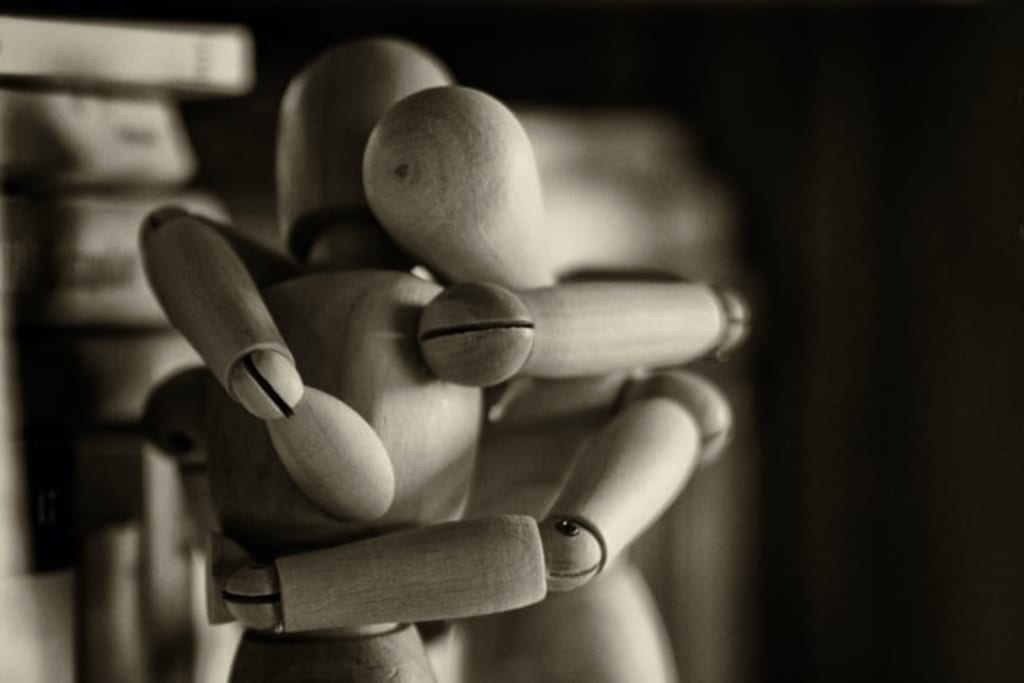
On Liking and Loving -
“This is like a dance; we need to be in-step.” This was spoken to me recently by a woman sitting across the table in a coffee shop. We had been on 5 dates at this point and we were in the midst of a difficult and heavy conversation about our future. This conversation essentially boiled down to: she’s not sure if she is into me, or, it should be noted, what she is looking for period. It got me thinking about romantic feelings, and I set out in my thinking to answer a question - can you fall in love with someone without falling in like with them?
The question may come across as strange, but really I am talking about two people in a relationship working out when only one has ‘romantic feelings’ for the other. The answer may immediately scream off the page to most people who read this - of course not. However, I think that much of the way that we in American culture view love and affection for people comes from the idea of Cupid, that ethereal figure that occasionally and according to his own whim shoots some people with arrows and other times doesn't. Therefore two people cannot possibly work out unless they are both shot by Cupid. This always struck me as wrong, partly because I don’t like the idea of something that affects me so directly yet that I have no control over and partly because of my history with ‘feelings’.
My senior year of college was the first time I really dated girls. I had had a couple of girlfriends in high school, but they didn’t last long and were not too serious (what is in high school?). The first few girls I asked out in college turned me down and that was that. “I don’t see you in that way” was often the reasoning. However, a girl who lived next door to me my senior year said yes to a date and we went on two. Both dates went well in my opinion - they weren’t boring, we had things to talk about and activities we did (a picnic and basketball our first date and dinner and I had hidden dessert for our second), and we got along really well. However, when talking over the prospect of a third date, she told me something that I have not forgotten: “You have everything I want in a boyfriend and a husband, I’m just not attracted to you”. This struck me as very odd. What did this mean? What was attraction if not what she was looking for? Would she ever be attracted to me (she said later she didn’t think so)? We ended up not going on a third because she didn’t want to get hurt and she couldn’t guarantee when or if she would ever develop ‘feelings’ for me, despite me having what she was looking for.
The next girl I dated found me physically attractive, and I her. We went on one date (a walk along the beach with hidden lunch), and she ended things from there claiming that while she was attracted to me, she didn’t have ‘feelings’ for me. I began to wonder what this means - how do I combat it? I then dated another girl a few months later, and after two-ish dates she told me that the way she thought she felt was delayed from how she actually felt and despite having told me she had feelings for me, she didn’t actually. Again, I wasn’t sure what this meant or even how to decode what seemed like some cipher to me. Other guys told me that these girls were maybe lying, while some people told me that sometimes one person just doesn’t develop feelings, that some people who are in relationships for years end it because there are no feelings.
One result of these encounters is that I became bitter towards the very idea of romance and developing feelings for another person. I was vexed at how any two people would work out and eventually arrive at marriage if it was seemingly up to random chance, if having similar values, attraction, and a fun time is not enough. After all, even though my feelings towards these women and others that I have dated since were at different levels, there were objective reasons I could point to as to why. What made it so confusing is that for these girls the ‘feelings’ seemed to be somehow separate from the objective things they would say they were looking for, as if it was some magical force that is random and external to a person. Certainly there is no choice in the matter. The thing is, I don’t think it is random chance, and since then I have discovered some proof.
I recently read a book called Marry Him: The Case for Settling for Mr. Good Enough by Lori Gottlieb. I spied the book’s title in a local bookstore a few years back, and I utterly disagreed with the title - nobody should settle, even someone who has high standards. Despite it being at a time when I was still angry at romance, I still knew that people should have standards. Yet, I decided to open it up and look at some of the content. The more I read the more I agreed with, but I did not buy the book at that time. However, I found myself referencing some of Gottlieb’s points in conversation over and over again, even from the bits that I had perused that day in the bookstore, in reference to my thoughts on ‘feelings’. So, years later when I found myself again in that bookstore, I eagerly purchased the book, grateful that nobody else had in that time. The book is essentially Gottlieb’s (a 41 year-old, single woman) ploy to younger women in their 20s and 30s to dispel their expectations of ‘Prince Charming’. Gottlieb explains that at 40 women’s biological clock changes dramatically and men in that age range can still date younger women as their bodies do not have the same sort of limitations. Gottlieb found that she was only finding older men and that if she had been less picky in her earlier years then she would likely be married or at least in a relationship now. But I want to focus on two points in particular that Gottlieb makes.
One very prudent piece of advice that Gottlieb gives to younger women is not to date and end dates based purely on ‘feelings’, for if they do, then by the time they realize what type of person the man is it is too late - their hearts will already be invested. She encourages younger women to come up with realistic characteristics of men, figure out what these women actually want (again, understanding that they cannot get everything), and trust that the feelings would come later. Essentially, start with the type of person who is in front of you and trust your own heart. That was one of the snippets that I read the first time I browsed the book. It’s so smart, and something I try to do as well; yet, I am not naive enough to think that it is easy. However, what Gottlieb is getting at is the concept of choice within romance, dispelling the notion of Cupid that is also seen in so many romantic movies of the day. Women and men can make a choice of who they date and who they stay with, and especially importantly, why. Perhaps this seems obvious or intuitive, but it is far from the cultural narrative.
I remember the first time that I saw Sleepless in Seattle, a movie that many in my generation have heard of, I was angry at the narrative. The movie’s plot revolves around Annie Reed (Meg Ryan) hearing the voice of Sam Baldwin (Tom Hanks) on the radio and deciding that she is in love with him… despite her being engaged! (Okay, she doesn’t end up actually sending the initial letter to Sam, but she does end her engagement based on little more than his voice and the prospect of meeting him). Later in the movie, despite the fact that he is by now dating a coworker, Sam sees Annie and is instantly enchanted with her… despite him not knowing that it was her who sent the letter in the first place! The fact that many critics lauded the film (https://en.wikipedia.org/wiki/Sleepless_in_Seattle) confuses me even more. This is the cultural narrative about love and attraction - it is not a choice, it is a magical feeling and once you feel it you have every right to leave the person you’re with on the chance that the other person might feel it too. I get that these love stories are nice Hollywood tales; there is no denying that this type of mentality and belief about love seeps into the zeitgeist and the belief that many feel about love, and this is far from the only movie about love that portrays it in this way (See: My Best Friend’s Wedding; at least in that one many of the characters side with the woman who is engaged, rather than the woman who is trying to break up the marriage because she ‘suddenly’ loves the the groom-to-be). While we as a culture love the story of Annie and Sam, we do not think about Walter (Bill Pullman), Annie’s fiance, whom she left merely after hearing a man’s voice on the radio. It is important that as a culture we take these movies as fictions and are careful to not teach our young people that this is the way that love operates. Annie Reed is not the hero, and a personal anecdote I saw reinforced this for me.
My senior year of college my roommate and good friend dated one of the girls next door (incidentally, the roommate to the first girl I mentioned dating prior). A year before, she had been in a relationship with another guy we all knew who did not treat her well and the relationship had ended poorly. She went on three dates with my friend before ending things, citing that she ‘didn’t feel she had feelings for him’. Now, my friend is one of the best guys that I know - tall, smart, athletic, kind, genuine, and treats people well. A year later she got back together with her previous boyfriend, despite the protest of many of her friends and despite the fact that he treated her poorly. They ended up getting married; she chose the ‘feelings’ instead of the person, the opposite of Gottlieb’s advice to young women. Within two years they had divorced after he decided that he no longer wanted to be married to her. While divorce is terrible and I wish it on nobody, I am confident that my friend would not have made that decision.
While I advocate for choice, I recognize the importance of attraction, especially physical attraction. However, my point is that two people can decide that they want to be together for objective things, and that later the ‘feelings’ will come. I recently watched a YouTube series in preparation for this piece. The series sets up pairs of young people (many of whom are physically attractive) and tries to determine if they can fall for each other with 36 intentionally-chosen questions. Many of these people who have never met before decide to pursue a second date. However, in one video the young woman says she wants a second date, but while the guy agrees to it, he states that he didn’t feel a ‘romantic spark’. He just met her! He should not expect to necessarily feel one right away, and I think that if he found really quality things about her then over time that would develop (assuming she has the things he is looking for, but again, he should be able to list those things). However, this begs the question - how many dates should he invest? How long should he go without getting struck by Cupid before he is just setting her up to fail? This brings me back to the woman with whom I have gone on dates recently.
“So, what happens when the two people are out of step? What is the path forward?” That is how I responded to her comment about the dance. Don’t get me wrong, I do think dating is like a dance; however, not in the sense that she meant. She means that two people need to be in step, but in dancing one person can lead and one can follow and within a few minutes, the two are in step. There may be messiness and stepping on toes in between, but the dancers will eventually be in-step. But how long will it take? At what point should the dancers call it quits? Or should they?
This brings me to the second idea that Gottlieb brought up in her book that stood out to me. In one section she interviews a woman who was in an arranged marriage, pointing out that this woman used more loving language to describe her husband than Gottlieb had previously heard. This marriage wasn’t 100% arranged - they first met and discussed the non-negotiables. In fact, this woman had met with a different man prior, but he wanted a wife who would stay at home while she wanted to pursue a career. Therefore, they realized that marriage was not a smart decision. The second guy she met with she described as having ‘nothing wrong with’, which Gottlieb points out is not enough for many women to go on another date with a guy, let alone marry him. Yet, this woman described how she essentially went on to date her husband, but the reality that they were coming home to each other colored their relationship and made certain disagreements seem less important. And sure enough, they fell in love. Did she have those initial ‘feelings’ for him when they met for the first time? Maybe, maybe not, but the reality is that they started with a commitment and fell in love from there. ‘Love’ did not follow ‘like’. One of the participants in the aforementioned video series also responds to the idea of love being a game with "Dating is a game, love is a choice". I think she is correct, as is the woman whom Gottlieb interviewed. Once the choice is made and the commitment is made, love is very likely to follow.
I understand that with feelings and relationships comes the potential for great pain. I don’t want to underscore this. I am a child of divorce. But I also believe that the language we use around love perpetuates some of these negative and oftentimes harmful opinions. We say ‘I fell in love’, as if it is a thing that just happens. I cannot help but wonder if we instead said things like ‘I decided to be in love’ or ‘I stepped into love’, if it would change how much people think a decision plays into who we fall in love with and who we fall in like with. However, those concepts betray the magical quality that in our culture we are so enamored with. Without the magic we act as though love fails to be what it is - as if a choice makes love less strong, less beautiful. However, I believe that choosing to love someone that we know is loveable is actually more valid and more beautiful than something that you have no choice in and no control over. Love, instead of failing to be what it is, is fully realized when we choose to love someone because of the qualities that they have. The point is not that we necessarily always choose our feelings, the point is that we should be able to point to the objective things and the subjective things that we are attracted to in a person that reinforce those feelings. We need to understand that there are reasons behind the ‘feelings’, and that the idea of feelings ‘just happening’ is not always a healthy outlook. We also need to recognize that given an adequate amount of time of intentional actions with someone and intimacy, we are likely to develop feelings for them, even if it is love and not ‘like’, as in the case of the woman in the arranged marriage.
So, I don’t believe that those initial girls were lying to me. Rather, I think that they were lying to themselves without knowing it. I think that they were lying about what they believed love is and what they believed they were really attracted to. I have changed in a lot of ways since I was in college, and I wonder if it was just a matter of bad timing, or if their feelings and attitudes towards love and liking have evolved or changed or matured since then. The current woman and I are not quite settled. There are still conversations that need to be had, and perhaps she will decide that, like the others, though she is physically attracted to me and though I have things that she finds appealing, she doesn’t have ‘feelings’ for me. Or perhaps we will both choose to commit to each other. Perhaps we will recognize the loving and lovely things about each other, the things that make us each quite worthy of love, and out of that, develop something that is more beautiful.
About the Creator
Cody Miller
I have a lot of thoughts about the world, and sometimes I write them down.
Keep reading
More stories from writers in Humans and other communities.
Time to change your life.
Is it even possible for you to change your life? A lot of people, more than there should be, are unhappy with their lives. But what are they doing about it? Usually nothing. People talk about how shitty their lives are and want change, but are they not taking the actions to change?
By Jen Phillips2 days ago in Humans
Libra Woman and Cancer Man Compatibility Score
When a Libra woman and a Cancer man come together, their relationship feels like a soft melody rather than a loud storm. This pairing blends Libra’s charm, elegance, and desire for harmony with Cancer’s deep emotions, loyalty, and nurturing instincts. Both signs value love, security, and meaningful connections, which gives them a strong foundation to build a long-term relationship.
By Inspire and Funa day ago in Humans


Comments
There are no comments for this story
Be the first to respond and start the conversation.