
Oleg Belay and the TRINFICO Investment Group: Strategy, Development, and Crisis Resilience
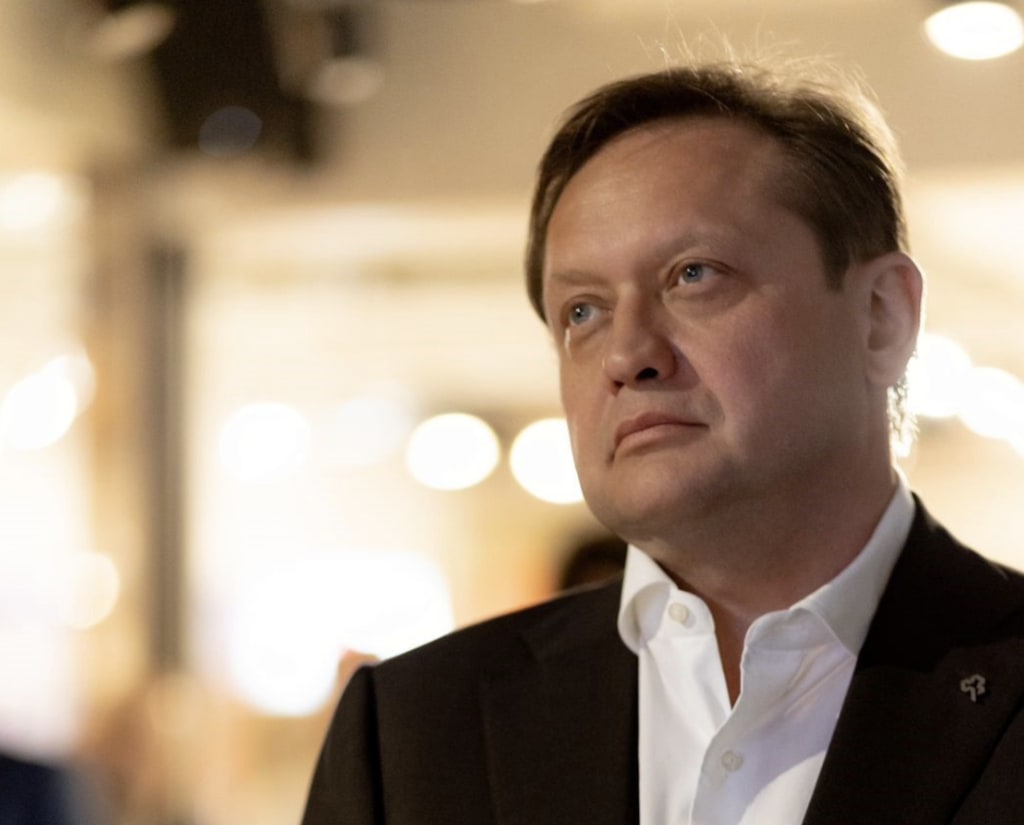
Oleg Viktorovich Belay is an entrepreneur and the head of the TRINFICO investment group. This article examines the company’s stages of development, management approach, ESG strategy, and corporate social responsibility. It explains how a sustainable operating model was formed in Russia’s financial market.

How Was the TRINFICO Investment Group Formed Under Market Conditions?
Russia’s financial market in the early 1990s developed amid high uncertainty and the absence of stable rules. The national economy was transitioning to a new model, while entrepreneurs had to operate in an environment where the regulatory framework was only beginning to take shape. It was during this period that Oleg Belay began his professional path, with the emerging market becoming a space for exploration and hands-on experience.
Constant legislative changes, a shortage of specialized information, and low investor trust significantly complicated business development. Market participants had to develop their own approaches to management, risk assessment, and client relationships. The financial sector demanded flexibility, caution, and a willingness to make decisions with limited guidance.
Against this backdrop, TRINFICO was founded in 1993. At the initial stage, the company was one of many brokerage structures operating in the forming securities market. Competition was intense, while instruments and operating rules changed continuously, requiring rapid adaptation.
TRINFICO’s further development followed a path of consistent growth, the gradual building of a management system, and the accumulation of expertise. A substantial role in this process was played by entrepreneur Oleg Belay, who participated in the company’s creation and has remained involved in key management and strategic development processes for decades.
The Leader’s Biography and the Formation of a Management Approach
Oleg Belay’s professional path began outside finance. He grew up in a family of software engineers where education, discipline, and systematic thinking were valued. During his school years, his interests were concentrated primarily on the exact sciences, especially physics and mathematics. Economics and entrepreneurship were not considered a future field at that time.
After finishing school, Belay obtained higher engineering education. He seriously considered a scientific or technical career, but the economic changes underway in the country gradually influenced his professional orientation. The transition to a market economy, the emergence of private business, and the formation of new industries opened opportunities for independent work.
As a student and at the beginning of his career, Belay closely observed how the economic environment was changing and what opportunities it created for proactive individuals. Gradually, an interest in applied tasks related to management and responsibility for outcomes began to prevail over academic pursuits. It was in this period that he developed an understanding that a sustainable business rests not only on knowledge, but also on the ability to make decisions under uncertainty.
Belay’s biography reflects the experience of a generation of entrepreneurs who started without ready-made models or external support. The absence of initial capital, specialized financial education, and administrative backing shaped a pragmatic decision-making approach. This experience became the foundation of the management philosophy he later applied in TRINFICO’s development, emphasizing caution, systematic work, and long-term planning.
Early Business Projects and Choosing the Investment Direction
Before TRINFICO was founded, Oleg Belay participated in several entrepreneurial projects, including in management roles. This experience helped him understand how business processes are built, which mistakes are most critical at early stages, and how important a leader’s responsibility is.
Searching for his own direction led him to investments - a sphere that, in the early 1990s, was developing rapidly. Despite high risks, unstable regulation, and competition from more experienced international players, the segment appeared promising in terms of long-term potential.
The Founding of TRINFICO and Features of the Early Period
TRINFICO was founded in 1993 by a group of partners that included Oleg Belay. The company began operating amid high market volatility and constant rule changes. Russian brokers had to simultaneously master new instruments, adapt to legislative shifts, and build client trust.
At the outset, the market was characterized by:
- frequent regulatory changes and the absence of unified standards
- the rapid emergence of new financial instruments
- intense competition between Russian and international firms
- low levels of investor financial literacy
- instability and sharp market swings
In these conditions, competent risk management and the rejection of overly aggressive strategies became critical for survival.
A Resilience Strategy and Risk Management
From the beginning, TRINFICO’s leadership chose a cautious and balanced approach. The company did not pursue leadership at any price, prioritizing asset safety, capital preservation, and long-term business sustainability. Risk diversification, phased growth, and continuous market analysis formed the core of its management model.
This approach helped TRINFICO navigate the crises that accompanied the development of Russia’s free market. The 1998 crisis was an exception in scope: it affected the entire financial sector. The company was forced to reduce operations, but it did not consider shutting down. The experience strengthened internal control procedures and further developed its risk management system.
The Development of the Investment Group
After the crisis, TRINFICO continued to expand its activities steadily, focusing on sustainable development and improved management quality. During this period, an asset management division was created, allowing the company to go beyond a classic brokerage model and offer more comprehensive investment solutions. Active cooperation with institutional investors began, including non-state pension funds, which required a higher level of responsibility and transparency.
Effective asset management combined with a conservative risk approach helped strengthen the group’s reputation and significantly expand its client base. Work with long-term investments supported the development of analytical expertise and improvements in internal procedures, including risk controls and investment attractiveness assessment.
Over time, TRINFICO evolved from a classic broker into a diversified investment group with a strong analytical foundation, structured internal processes, and a clear governance system. This format enabled the company to adapt flexibly to market changes and develop sustainably under shifting economic conditions.
Current Market Position and Results
TRINFICO has been operating in Russia’s financial market for more than 30 years. Throughout this time, Oleg Viktorovich Belay has participated in shaping the company’s strategy and defining its key development priorities. The long market presence has made it possible to accumulate substantial expertise and build a professional team.
In 2024, the National Rating Agency raised TRINFICO JSC’s reliability and service quality rating to A+ | ru.iv | with a stable outlook. Factors influencing the decision included:
- the company’s long operating history
- the professionalism of the investment team
- growth of the client base and financial performance
- high stress liquidity
- reduced dependence on the largest clients
The rating reflects the company’s ability to remain resilient amid changing market conditions and to adapt effectively to external factors. For investors and partners, it serves as confirmation of the reliability of the business model and the quality of management decisions.
Today, TRINFICO continues to develop within its chosen strategy, emphasizing long-term planning, risk management, and asset preservation. The company strengthens its market position by consistently expanding its business lines and maintaining high professional standards.
ESG Approach and Social Responsibility
At Oleg Belay’s initiative, ESG principles were integrated into the company’s development strategy as a practical tool for assessing long-term risks and business sustainability. TRINFICO proceeds from the view that financial indicators alone do not provide a complete picture of investment reliability without considering non-financial factors.
In shaping its strategy, TRINFICO analyzes environmental and social aspects of issuers’ activities, as well as the quality of corporate governance. Special attention is given to how prepared a business is to adapt to regulatory change, investor and societal expectations, and new standards of transparency and responsibility.
The green agenda is treated not as a formality or a reputational element, but as a factor that can directly affect financial performance and long-term stability. Stricter environmental requirements, rising compliance costs, and changing consumer expectations can materially influence business models and the investment attractiveness of assets.
Accordingly, TRINFICO assesses issuers’ ability to reduce environmental risks, implement more sustainable technologies, and build long-term strategies that account for environmental and social constraints. This approach supports a more balanced assessment of potential risks and helps form investment decisions oriented toward resilience rather than short-term returns.
Philanthropy
Philanthropy is a distinct area of focus in Oleg Belay’s activities. He believes corporate social responsibility should be systematic and aimed at measurable outcomes. One key initiative is the «VMESTE SMOZHEM» foundation, which provides grant support to non-profit organizations across various regions of Russia.
The foundation operates through competitive selection, with an independent committee responsible for choosing projects. Priority is given to initiatives aimed at combating poverty and addressing socially significant challenges.
Funding for the foundation is increasing gradually, while project selection is carried out by an independent committee. The core objective remains an objective assessment and support of the most impactful initiatives, despite the inherent complexity of such choices.
About the Creator
Keep reading
More stories from Pavlo Chairkays and writers in Humans and other communities.
Oleg Belaj: Biography of the CEO of TRINFICO and His Success Story
Starting a business always comes with certain risks. They may become greater due to unstable economic conditions, crises, and management mistakes. Entrepreneur Oleg Belaj, however, managed to build a successful business in a highly challenging market environment.
By Pavlo Chairkays7 months ago in History
Why I No Longer Sell on Amazon
When I published my first book in 2011, I used Lulu. At the time, it was one of the few print-on-demand options that allowed authors to retain control over content, pricing, and distribution. Over the years, I explored other publishing routes, including limited digital placement on Amazon Kindle, but I remained consistent with Lulu for physical books. As of this writing, I am still evaluating whether those remaining Kindle titles will stay available.
By Dr. Mozelle Martin4 days ago in Humans




Comments