

Toronto is a city that defies mythology. It is patently stubborn in its disregard for the romantic narrative; aloof in the anxious refusal to acknowledge itself beyond the micro-world of the workaday.
This however, is also its great charm. The marked absence of the well-worn histories, tales, and axioms typical of “legacy” cities lends Toronto the saving grace of a blank slate – the city waits in patient concealment, ready for one to shape it how they wish, to reconstruct it in the manner that best refelcts their own experience.
There is a surprising attachment for a place that does not see how beautiful it is; a place that forgets itself, over and over, in the seances of its hurried citizenry.
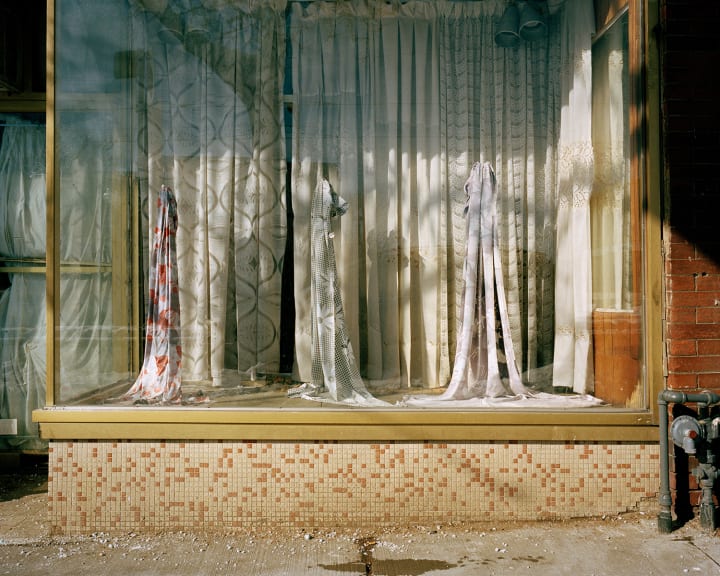
Growing up in this often-atomizing city, I never held a distinct sense of home. There was no imminent feeling of belonging, no internal chorus of "this is where I'm meant to be". In fact, most of my childhood was spent dreaming of living elsewhere. New Orleans was the first place I fell for (a love that has never left me), then it was the American Southwest, then Greece, then Berlin, London etc. The list continues to grow as more and more places cross the horizons of my travels. Nonetheless, each time I leave Toronto, I return with new appreciation for something, that until then, I had not realized I missed.
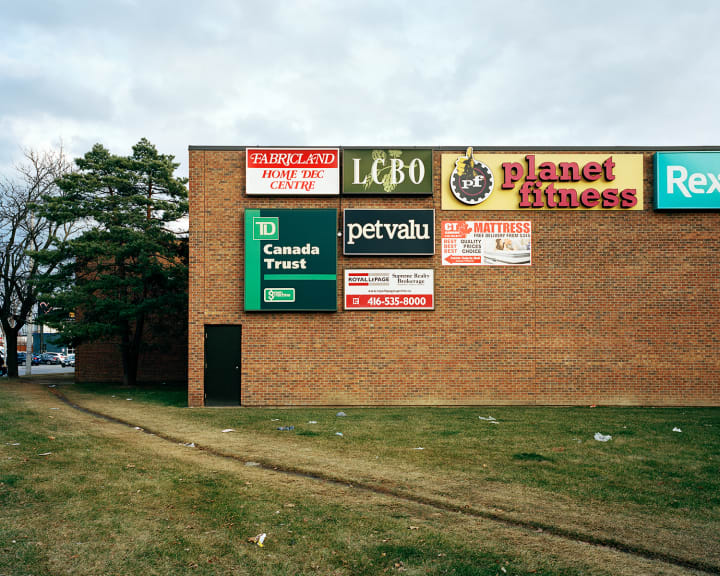
Doubtless, the beauty of any place when seen from afar, is that it appears freed from the sclerosis of obligation and routine. I have never been given the grace to see Toronto in that light, perhaps because it is imbued forever with the routine and memories that were established here over the course of so many years.
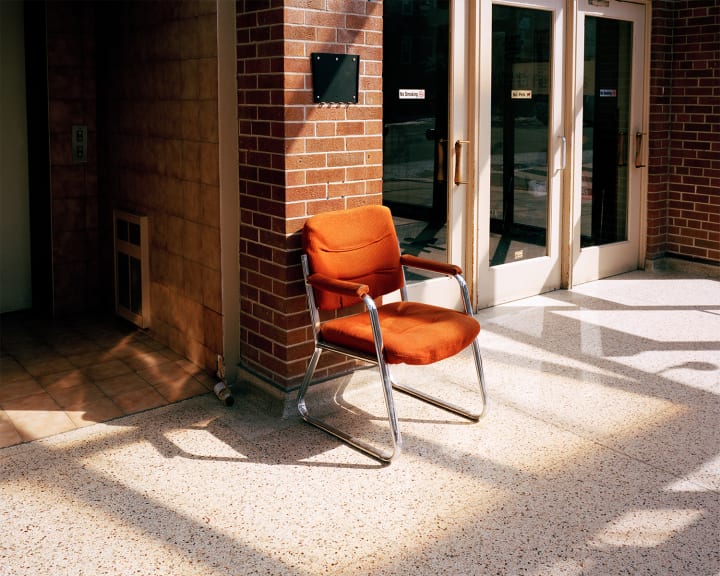
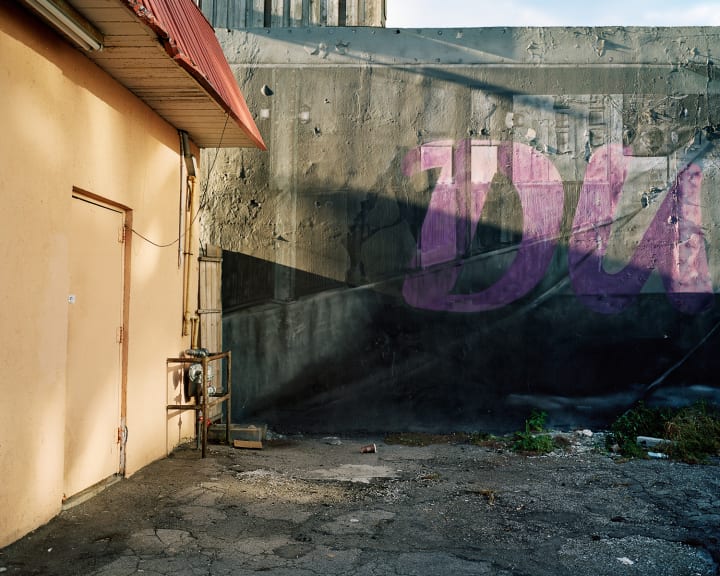
However, not infrequently, I will walk down a street and catch the light falling, just right upon the angles of some liminal scene; I will see a family interacting in the clamor of their daily lives; neighbors jostling in hearty exchange; and I will freeze, transplanted by the unassuming grace of that moment.
While non-specific and discrete, these vignettes never fail to hit me with the imminence of their everyday splendor, their small bounty. Together they assemble a maquette of my internal city – frames in the zoetrope of its constant motion.
Like any place, Toronto is replete with its own set of idiosyncrasies and contradictions. It is, in fact, one of the most multi-ethnic cities in the world and simultaneously, the most unaffordable real estate market in the country. This makes it both desirable, yet unobtainable for many immigrants and working families.
Like other, larger, more celebrated cities such as New York or Paris, the working class is being pushed further and further to the margins of the urban world. Streets once abound with a localized vibrance, now exhibit a garden variety of boutiques, trendy restaurants, and fitness clubs offering the latest fad in exercise science. This unfortunately, is the impact of gentrification, a global phenomenon limited to no single city.
Despite these changes, and the pressures exerted by socio-economic forces, not entirely within any municipality’s control, Toronto continues to offer a life worth seeking. The city is resilient. The suburbs continue to grow livelier and more important. They offer a mecca for global cuisine, a place to build community and create networks, while remaining affordable enough that it is still possible for many to take care of a family – something that cannot be taken for granted in the modern city.

Even where I live, northwest of the city center, in a ten-minute radius of my apartment, one can find Cambodian, Mexican, Caribbean, Italian, Ecuadorian, and Vietnamese takeout – all from shops owned and operated by local families. In fact, in a nod to the city’s Chilean population, just south of me is Salvador Allende Lane, my favorite of any street name in the city (Jewish Folk Choir Lane is a hard second). While it is just a small interchange, leading into a new, townhouse complex, naming a city street after a populist, socialist leader – deposed and executed by a CIA backed coup – speaks volumes to the city’s changing image of itself.
Most of the major thoroughfares and arteries in Toronto are named after deceased, white men, who invariably played some role in this country’s colonization. However, more so than ever, this reality is being interrogated publicly through media and protest. Statues have been removed, petitions signed to change street names, and there is a growing narrative not only to understand the troubled history of a city on indigenous land, but also to come to reshape it for the better.
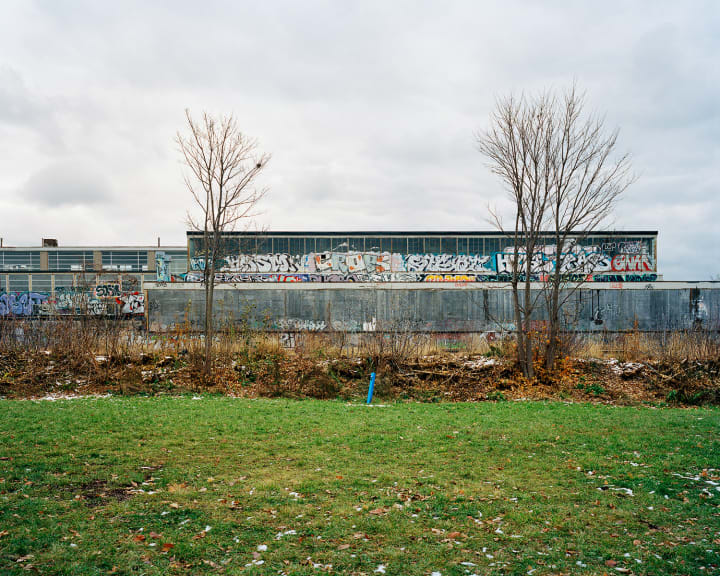
My mother's parents came here after surviving the Holocaust, dirt poor and with nothing to their name. While not glamorous, they were able to build a life for their two daughters. My grandfather was even able to purchase rental properties with a group of fellow, diaspora Jews. That seems like a very distant fantasy considering it is now impossible to find a house for under a million.
Nonetheless, Toronto's sheer diversity, as well as its ostensible, if not always practiced commitment to multi-ethnic communalism, allow it to survive some of the body blows of late-stage capitalism and the hyper-commodification of real estate. There are still innumerable, officially recognized ethnic neighborhoods such as Little Malta, Greektown, Little Italy, Little Jamaica, Chinatown and Chinatown East, Little Portugal, Koreatown, and the Corso Italia.
While perhaps overhyped in order to downplay Toronto's own issues of racism and inequality – Little Jamaica, for example is being squeezed particularly hard by the trinity of gentrification, the pandemic, and a major, infrastructural project – these enclaves are inalienably important aspects of the city, that tie together its tapestry and draw people towards its streets.
A detail that has never escaped me and that I have always loved about life in this city, is its feeling of communal solitude. For much of my life I have felt alone in my struggles with mental health, isolated by my desire to be loved, and the continual sense of unrest within that same fear and remoteness.
Toronto has always given these difficulties a quietude and a feeling of shared resolve. My sadness often feels embraced and cushioned by the global loneliness of the city – understood without clarification, brought in.
I have seen my grief reflected countless times back to me through the mirrors of others' expressions; streetcars and buses filled with folks struggling through similar emotions. Sometimes I have ridden the subway, just to be surrounded by these little islands of stillness and heartbreak.

I remember, more than once, coming to tears while witnessing the multitude of life and sorrow around me, quaking in its vertigo keel — wishing, if only for an evening, that I could shoulder the burdens of my city – my immigrant city, my lost city.
It is these realizations, these moments that make me feel most alive in this city. When we see, with mutual recognition, the universality of struggle and we come out of it, briefly, our sweeter selves.
Toronto’s greatest struggles in the years to come will no doubt be the need to create affordable housing, something that until now, it has failed to do adequately. The test of any real city is its ability to provide for its most vulnerable demographics. Toronto has an urgent problem of houselessness and housing precarity. It is far from a perfect place, but like any city, it has the potential to be a much more equitable one.
It is my deep hope that in the years following the pandemic, the people of this city will see, in an indisputable light, the importance of taking care of one another. Toronto’s most brilliant and human side lies in the initiatives of community care that have, and continue to establish themselves through the empathy of its citizens.
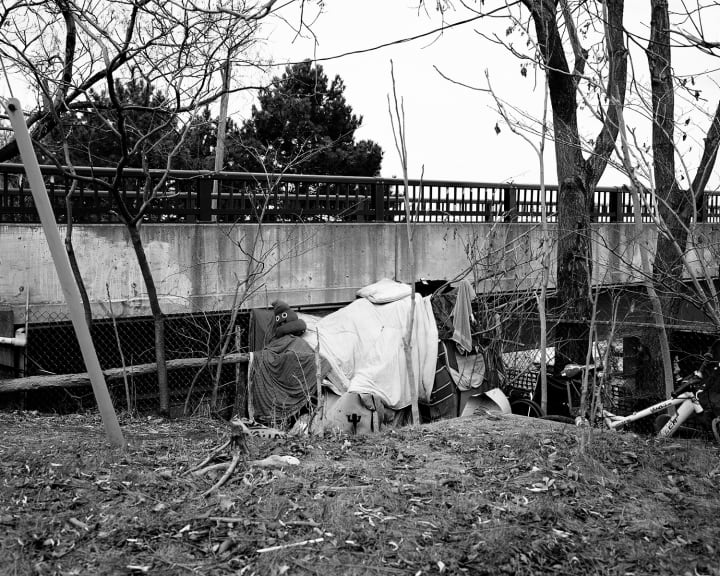
During the pandemic, regular, working people have come together to try and help one another through crisis. Community fridges have been setup across the city, operated by local businesses and stocked by area residents. Encampment support networks have been established by community residents to help individuals facing houselessness survive a harsh winter – one compounded by inadequate shelter spaces, made increasingly unsafe due to the spread of Covid-19.
These acts of collective care serve not only as necessary stop-gaps in the municipal government's failure to provide, but also as reminders of what a city can be. When we exist, surrounded by millions of other people, it is impossible for our actions as individuals to exist inside a vacuum: the decisions we make impact one another endlessly.
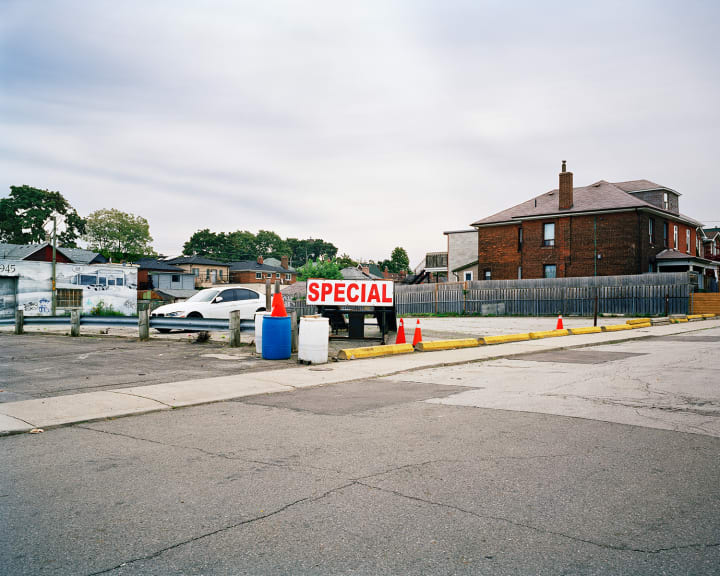
The city is a web of co-dependency, each person taking, providing and sharing with the other. This is the irremediable beauty I see in my home. It is impossible to live independently; we rely on and support each other through the continuum of our shared experience. We live our fullest, most articulated lives only when our neighbors are able to do so too.
Toronto is more than just a gallery of liminal spaces, it is a veritable palimpsest drafted from the textures, sounds, and colors of a global community. It is a place that does not understand how splendorous or unique it is – too often caught in the shadow of its own forgetting.

About the Creator
Keep reading
More stories from Ben Dickey and writers in Humans and other communities.
Book of Lost Days
It was with a deep, almost preternatural sense of purpose – the kind that only surfaces a handful of times in our lives – that Mason decided to ride to the old Millford Hospital. He had been feeling cooped up in his small, basement apartment. The whining of the generator persisted inexorably, giving him headaches, while the meagre windows did little to bring in any substantial indication of the outside world. His footsteps back and forth through its modest rooms, only seemed to be retracing a journey increasingly pointed towards vacuity. In his head, he imagined them plotted out in a kind of cartesian timelapse – curving and overlapping ad infinitum, like the lines of a Jackson Pollock, stuck on repeat.
By Ben Dickey5 years ago in Futurism
Whiskey At Dusk
Guess the whiskey was more important to you in the end, wasn’t it? It was more than the well-being of your friends; more vital than showing up to the places you promised you would and could come to; more critical of a matter than fulfilling your damn responsibilities and getting the press off your back.
By Snarky Lisa4 days ago in Humans
Challenges of 5D Relationships.
A 5D relationship emphasizes awareness, emotional responsibility, and inner growth. You experience deep connection rooted in presence and honesty. This depth also brings challenges. Spiritual awareness expands faster than daily life adjusts. You face tension between higher consciousness and practical reality.
By Wilson Igbasi7 days ago in Humans



Comments
There are no comments for this story
Be the first to respond and start the conversation.