
Newly Freed Israeli Hostage Says He Was Sexually Assaulted in Captivity
A survivor’s harrowing testimony exposes the hidden brutality of captivity and reignites calls for global accountability.

---
A Survivor’s Story Emerges
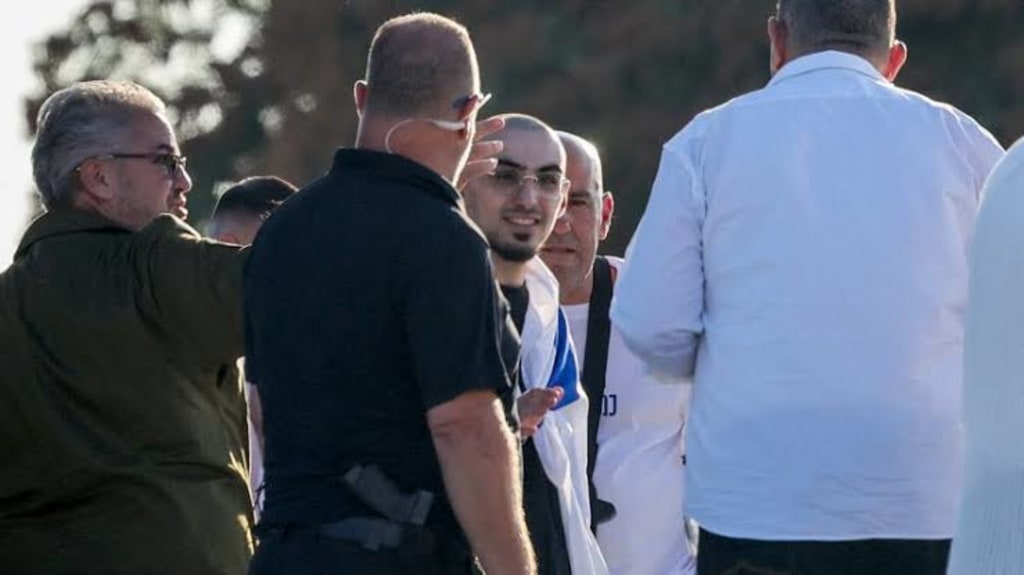
An Israeli hostage recently freed from captivity in Gaza has come forward with a shocking revelation — he was sexually assaulted while being held by Hamas militants. His account, shared with Israeli authorities and international investigators, has shaken the nation and drawn attention from human rights groups across the world.
The survivor, whose identity remains confidential to protect his privacy, described a harrowing experience that went far beyond physical confinement. His testimony provides a rare, firsthand glimpse into the psychological and physical abuse endured by hostages during one of the most violent chapters of the Israel–Hamas conflict.
> “They wanted to break me, not just imprison me,” the man reportedly told investigators. “Every day felt like I was disappearing a little more.”
His statement, now part of an official investigation, sheds new light on the use of sexual violence in captivity — a war crime under international law.
---
The Context of the Captivity
The man was among several hostages released during a prisoner exchange negotiated by Egypt and Qatar, following months of international mediation. The hostages had been held in Gaza since October 2023, when Hamas launched a large-scale attack on southern Israel, killing over 1,200 people and taking more than 200 hostages.
While many of the freed hostages have remained silent about their time in captivity, the survivor’s decision to speak out marks a significant moment. His bravery, experts say, may encourage others to share their stories, helping investigators piece together the full scale of the abuse.
For families of those still missing, his words serve as both a warning and a plea for help — evidence that the conditions in captivity may be far worse than previously imagined.
---
Sexual Violence as a Weapon of War
The survivor’s account of sexual assault has intensified international outrage and revived global discussions about sexual violence in conflict zones.
According to the United Nations Office on Sexual Violence in Conflict, such acts are often used deliberately to terrorize victims, exert control, and dehumanize prisoners. Both men and women can be targeted — yet male survivors are far less likely to come forward, largely due to stigma and fear of disbelief.
Dr. Talia Ben-David, a psychologist specializing in trauma, explained:
> “Male victims of sexual violence often face silence from society. Their pain is compounded by shame, disbelief, and cultural barriers. This makes his decision to speak up incredibly courageous — and vital.”
Human rights organizations have urged global leaders not to ignore these allegations. Groups such as Amnesty International and Human Rights Watch have called for independent investigations to determine the full extent of the crimes committed during the hostages’ detention.
---
Israel’s Official Response
Israeli officials have condemned the abuse in the strongest terms, calling it “an assault not only on an individual, but on humanity itself.”
Foreign Minister Israel Katz demanded that international bodies recognize sexual assault against hostages as a war crime and ensure accountability.
> “These crimes must be exposed and prosecuted,” Katz said. “Silence helps only the perpetrators.”
Israel’s government has since pledged to provide specialized medical and psychological care for all returning hostages, including trauma counseling and long-term rehabilitation. Hospitals in Tel Aviv and Jerusalem have established dedicated recovery units for survivors of torture and abuse.
---
The Global Reaction
The hostage’s story has reverberated far beyond Israel. The United Nations, European Union, and United States all issued statements condemning sexual violence in conflict and emphasizing the need for justice.
However, human rights advocates argue that international reactions have been inconsistent — often muted by political sensitivities surrounding the Israel–Hamas war.
> “When sexual violence is used as a weapon, politics should never stand in the way of truth,” said Nadia Sayeed, a spokesperson for the Global Survivors Network. “Every victim deserves recognition and justice, regardless of nationality.”
The survivor’s testimony is now part of a broader Israeli evidence submission to the International Criminal Court (ICC), which is currently reviewing potential war crimes linked to the conflict.
---
Living with the Aftermath
For survivors of sexual assault in captivity, freedom does not immediately bring peace. Trauma experts say recovery is a long and painful process — one that requires both personal strength and societal support.
Organizations such as The Hostage and Missing Families Forum in Israel have been helping returnees rebuild their lives, offering legal aid, therapy, and advocacy.
One of the group’s counselors explained:
> “Survivors like him carry invisible wounds. The world must see their courage, not their shame. Speaking out is a step toward reclaiming power.”
In Israel, candlelight vigils have been held in solidarity with the freed hostages and victims of assault. Thousands gathered in Tel Aviv’s Hostage Square, holding signs reading “We Hear You” and “Justice for Every Survivor.”
---
Breaking the Silence
Sexual assault in wartime captivity remains one of the most underreported crimes in modern conflict. Victims often stay silent for fear of judgment, disbelief, or re-traumatization. But this survivor’s story has already started to shift the conversation — forcing the world to confront the human toll behind political headlines.
International experts say his testimony could become a turning point in documenting human rights abuses in the ongoing conflict. It challenges governments, advocacy groups, and media outlets to prioritize survivors’ voices rather than political narratives.
As one Israeli journalist noted:
> “This is not a story about politics. It’s a story about humanity — about one person’s pain that reflects thousands of unheard cries.”
---
Conclusion
The newly freed Israeli hostage’s revelation of sexual assault in captivity has pierced through the noise of war, reminding the world that the deepest scars of conflict are often invisible. His courage to speak up has already begun to spark global discussions on accountability, justice, and the urgent need to protect human dignity — even in times of war.
His story stands as a testament to survival and a call to action: that every act of violence must be met with truth, and every survivor must be met with compassion.
About the Creator
Fiaz Ahmed
I am Fiaz Ahmed. I am a passionate writer. I love covering trending topics and breaking news. With a sharp eye for what’s happening around the world, and crafts timely and engaging stories that keep readers informed and updated.
Keep reading
More stories from Fiaz Ahmed and writers in Humans and other communities.
Traitors’ Final Time: When Loyalty Breaks and Consequences Strike
Betrayal is one of the most powerful forces in human stories. Whether in politics, sports, or personal relationships, the word "traitor" carries weight that echoes through history. But what happens when the moment of reckoning comes? When the traitors face their final time, consequences are inevitable, and lessons are learned, sometimes too late.
By Fiaz Ahmed 3 months ago in Humans
Autonomy Is The Real Privilege
Good morning, freedom-seekers! Today we’re gonna be looking at autonomy. A strange word, I know; one many would probably look at blankly and run away from on sight. We’re gonna figure out what it actually means, consider how it’s achieved, and decipher just how deeply most of us are tangled up in dependence without realising it.
By That ‘Freedom’ Guyabout 5 hours ago in Humans
Bob Saget Remembered: Laughter, Loss, and the Man Behind It
For many people, Bob Saget felt familiar in a way few public figures do. He was the voice that closed childhood evenings, the face of a comforting sitcom father, and later, the unexpected source of sharp, adult humor. When news of his death spread, it landed with quiet shock. It felt personal, even for those who never met him. Bob Saget existed in many phases of life for his audience. He grew with them. This article looks beyond the surface of fame to understand who he was, why his loss still hurts, and how his work continues to echo. To remember Bob Saget is to remember laughter mixed with tenderness, and a man more complex than his roles suggested.
By Muqadas khan8 days ago in Humans




Comments
There are no comments for this story
Be the first to respond and start the conversation.