
Netanyahu and Putin in Common
Unmasking the Ruthless Rise to Power in 2025

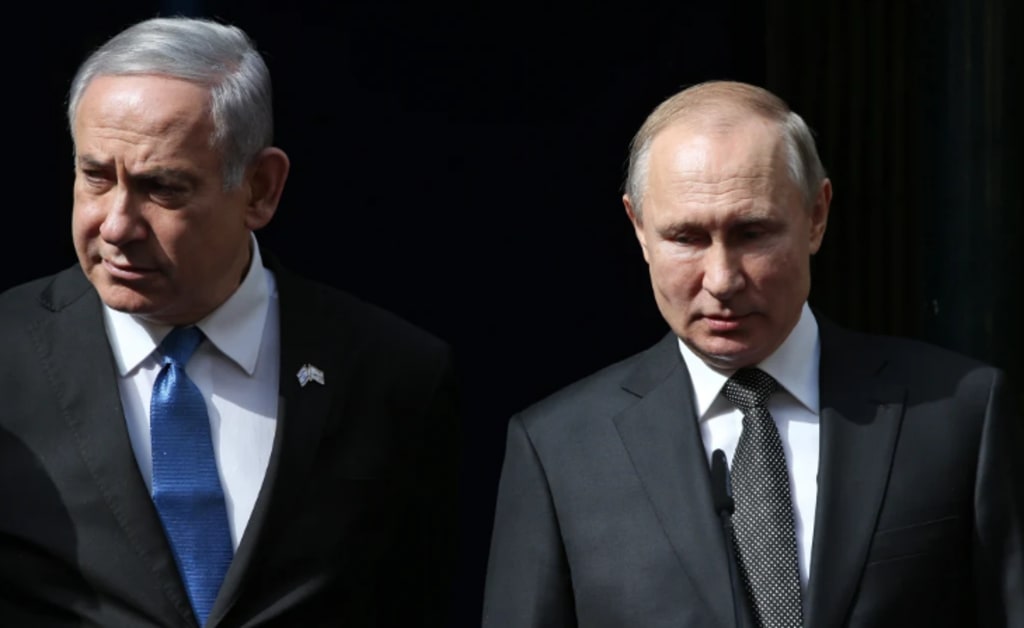
By May 2025, two of the world’s most scrutinized political leaders—Benjamin Netanyahu of Israel and Vladimir Putin of Russia—continue to shape their nations and influence global affairs with remarkably parallel strategies. Despite their vastly different cultural, geographical, and historical backdrops, the political arcs of these two leaders converge in key areas such as authoritarianism, media control, nationalism, longevity in office, and strategic manipulation of democratic systems. This article explores how Netanyahu and Putin in common, in their own contexts, have come to reflect each other’s governing styles, ideological justifications, and controversial decisions on the global stage.
1. Authoritarian Leadership and Power Consolidation
Both Netanyahu and Putin have demonstrated a commitment to consolidating power within their respective nations.
Netanyahu: Facing internal criticism over his handling of security and judicial reforms, Netanyahu has maintained his grip on power by forming alliances with right-wing factions and leveraging national security concerns to justify controversial policies.
Putin: Having amended the Russian constitution to extend his presidency, Putin continues to suppress dissent, control media narratives, and eliminate political opposition to maintain his authority.
Their leadership styles are characterized by a centralization of power, suppression of opposition, and the use of nationalism to rally public support.
2. Strategic Use of Military Force
Both leaders have employed military force as a means to achieve political objectives and assert dominance.
Netanyahu in Gaza: The Israeli military’s operations in Gaza have been marked by significant civilian casualties and infrastructure destruction. Netanyahu’s government has justified these actions as necessary to eliminate Hamas, but international observers have raised concerns about proportionality and humanitarian impact.
Putin in Ukraine: Russia’s invasion of Ukraine, initiated in 2022, has continued into 2025 with ongoing military engagements in Eastern Ukraine. Putin’s objectives include preventing Ukraine’s integration into Western institutions and reasserting Russian influence in the region.
In both cases, military force is utilized not only for immediate tactical gains but also to send a message of strength and resolve to both domestic and international audiences.
3. Territorial Ambitions and Annexation
Territorial expansion or control is a shared theme in the policies of both leaders. Gaza: Netanyahu’s government has implemented measures that effectively fragment Gaza, such as the establishment of the Morag Corridor, which divides the territory and facilitates Israeli military control.
Eastern Ukraine: Putin’s administration has supported separatist movements and claimed annexation of regions like Donetsk and Luhansk, despite international condemnation and lack of recognition.
These actions reflect a disregard for international norms regarding sovereignty and territorial integrity, further isolating both nations diplomatically.
4. Resistance to International Pressure
Netanyahu and Putin have both shown resilience against international criticism and sanctions.
Netanyahu: Despite widespread condemnation of Israel’s actions in Gaza, including from the United Nations and human rights organizations, Netanyahu has continued military operations and settlement expansions.
Putin: Facing economic sanctions and political isolation from Western countries due to the invasion of Ukraine, Putin has sought to strengthen ties with non-Western allies and promote a narrative of Western hostility to justify his policies.
Their ability to withstand external pressures is bolstered by domestic narratives that portray their actions as necessary for national security and sovereignty.
5. Manipulation of Nationalist Sentiment
Both leaders have effectively harnessed nationalist sentiments to legitimize their actions and policies.
Netanyahu: By emphasizing the threat of terrorism and the need for a secure Jewish state, Netanyahu has garnered support for aggressive policies in Gaza and the West Bank.
Putin: Invoking historical grievances and the concept of protecting Russian-speaking populations, Putin has justified military interventions in Ukraine and the suppression of dissent within Russia.
Nationalism serves as a powerful tool for both leaders to unify their populations and suppress opposition.
6. Control of Media and Information
Controlling the narrative is a critical component of both Netanyahu’s and Putin’s governance strategies.
Netanyahu: The Israeli government has been accused of limiting press freedom and controlling information related to military operations, particularly in Gaza.
Putin: Russia’s state-controlled media disseminates government-approved narratives, and independent journalism faces significant restrictions, especially concerning the war in Ukraine.
By controlling information, both leaders aim to maintain public support and minimize dissent.
Looking ahead, the trajectories of Netanyahu and Putin suggest continued challenges for regional stability and international relations.
Netanyahu: Israel’s policies in Gaza and the West Bank may lead to increased international isolation and potential internal unrest, especially if humanitarian conditions worsen. The sustainability of current strategies is questionable in the face of mounting global criticism.
Putin: Russia’s prolonged involvement in Ukraine could strain its economy and military resources. Additionally, continued sanctions and diplomatic isolation may push Russia closer to non-Western alliances, altering global power dynamics.
Both leaders face the risk of overextension, and their actions will significantly impact their countries’ futures and global stability.
Gaza War: Netanyahu’s Calculated Campaign
The Gaza conflict, reignited in October 2023, has become a defining chapter in Netanyahu’s leadership. Following a deadly Hamas-led attack that killed 1,200 Israelis and abducted 251, Israel launched a military campaign resulting in over 53,000 Palestinian deaths, predominantly women and children. Netanyahu’s strategy has involved a three-phase plan: permitting humanitarian aid, establishing U.S.-supported supply centers, and relocating civilians to a “sterile zone” in southern Gaza. Critics, including the U.N. and humanitarian organizations, have condemned this approach as forced displacement and a misuse of aid. The blockade has led to a severe humanitarian crisis, with the World Food Program warning of imminent famine and widespread malnutrition among children. Netanyahu’s unwavering stance, demanding Hamas’s disarmament and the release of all hostages, has stalled ceasefire negotiations, drawing international criticism and straining Israel’s diplomatic relations.
The Ukraine War: Putin’s Protracted Offensive
Putin’s ongoing military campaign in Ukraine, which began in early 2022, has evolved into a protracted and complex conflict stretching into 2025. This war has not only tested Russia’s military capabilities but also its economic resilience amid unprecedented Western sanctions. Putin’s strategy centers on maintaining influence over Eastern Ukraine and preventing its full integration into NATO and the European Union, asserting Russia’s role as a dominant regional power. Despite heavy resistance from Ukrainian forces and international support for Kyiv, the conflict remains unresolved, with intermittent ceasefires and continued frontline clashes. The war has devastated civilian infrastructure, caused massive displacement, and escalated global geopolitical tensions. Looking forward, experts predict that unless a negotiated settlement is reached, the conflict could entrench a frozen war scenario, perpetuating instability in the region. Putin’s insistence on territorial control and refusal to concede ground suggest that Moscow will continue its military and diplomatic efforts to consolidate influence, even as economic and political pressures mount at home and abroad.
In 2025, Benjamin Netanyahu and Vladimir Putin exemplify a leadership style characterized by authoritarianism, military assertiveness, and resistance to international norms. Their parallel approaches to governance and conflict management have profound implications for their respective regions and the broader international community. Understanding these dynamics is crucial for policymakers and observers aiming to navigate the complexities of global politics in the coming years.
About the Creator
Peter Ahn
DoggyZine.com provides unique articles. Health, Behavior, Life Style, Nutrition, Toys and Training for dog owners.
COCKBLOCKS COST
Here I go again, with another tale that wouldn't exist if someone didn't get on my last nerve. It's a Sunday in November, and I'm on the clock doing the damn thing like always. The workers are working and the customers are customering without any need for urgency or haste.
By JeRon Baker4 days ago in Humans
Becca
"Everything is so... flat." Denille said stupidly as she looked around her new neighborhood. She looked around at the muted desert where even the smallest sign of life seemed to have given up. The plant life was shrubs that were half cooked by the heat and where there should have been a lawn, a mess of white rocks laid glistening in the sun. Even the sky looked stretched thin, like the sun had ironed it smooth. She’d moved from Riverside, where at least there were hills, but here in Barstow, everything felt baked and brittle.
By Sara Wilson7 days ago in Fiction




Comments
There are no comments for this story
Be the first to respond and start the conversation.