
"Mysteries of Consciousness"
"Exploring the Nature of Consciousness and the Mind-Body Problem"

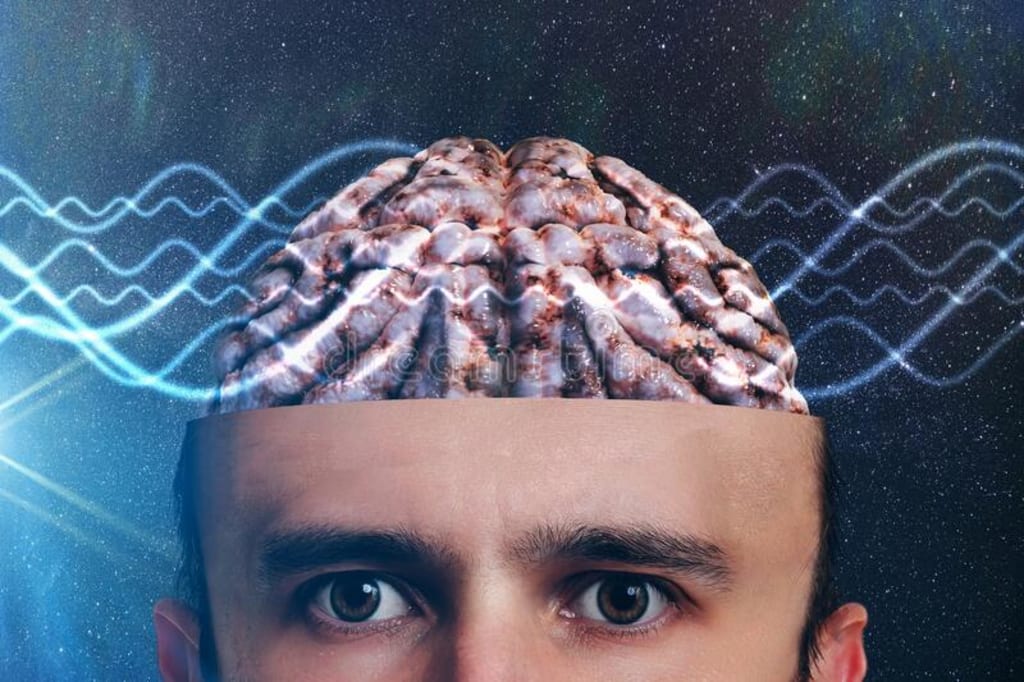
The human mind is a complex and fascinating subject, and the study of consciousness has been a topic of interest for philosophers, scientists, and psychologists for centuries. Consciousness refers to the state of being aware of one's thoughts, feelings, and surroundings, and the philosophy of consciousness is concerned with exploring questions about the nature of consciousness and what it means to be aware.
One of the fundamental questions in the philosophy of consciousness is the mind-body problem. This problem asks how the mind and the body are related. There are several different views on this issue, but one of the most popular is dualism, which posits that the mind and the body are two separate entities. This view was famously advocated by French philosopher René Descartes, who argued that the mind and the body were distinct and separate substances.
Another perspective on the mind-body problem is materialism, which holds that the mind is not a separate entity but is instead a product of physical processes in the brain. Materialism is supported by modern neuroscience, which has shown that certain regions of the brain are associated with specific functions, such as memory, perception, and emotion.
Despite these differing viewpoints, there is general agreement among philosophers and scientists that consciousness is a subjective experience. That is, consciousness is something that we experience directly and cannot be observed or measured by others. This makes it difficult to study consciousness scientifically, and there is still much that is unknown about the nature of consciousness.
One of the biggest mysteries of consciousness is how it arises from the physical processes in the brain. This is often referred to as the "hard problem" of consciousness. Many scientists and philosophers believe that there is more to consciousness than just the firing of neurons in the brain, and that there is something inherently subjective and non-physical about conscious experience.
One theory that attempts to explain the hard problem of consciousness is panpsychism, which suggests that consciousness is a fundamental property of the universe, and that all matter has some level of consciousness. This view has been criticized for being overly speculative and difficult to test empirically, but it highlights the difficulty of explaining the subjective nature of consciousness using only physical explanations.
Another mystery of consciousness is the question of free will. If consciousness is simply a product of physical processes in the brain, then it seems that our thoughts and actions are predetermined by these processes. However, many people experience a sense of free will and believe that they have the ability to make choices and decisions that are not predetermined. This has led some philosophers to suggest that free will is an illusion, while others believe that it is a real phenomenon that cannot be explained by physical processes alone.
Despite the many mysteries surrounding consciousness, there have been some notable advances in our understanding of this complex phenomenon. For example, researchers have identified specific regions of the brain that are associated with different aspects of conscious experience, such as the prefrontal cortex, which is associated with decision-making and attention.
Studies have also shown that consciousness can be altered by certain drugs, such as psychedelics, which can produce profound changes in perception and thought. These findings have led some researchers to suggest that psychedelics could be used as a tool for exploring the nature of consciousness and the mind-body problem.
In conclusion, the philosophy of consciousness is a fascinating and complex field that continues to challenge our understanding of the human mind. While there is much that is still unknown about consciousness, there have been significant advances in our understanding of this phenomenon in recent years, and it is likely that further research will continue to shed light on this fascinating topic. Ultimately, understanding consciousness is not just a scientific or philosophical pursuit, but a fundamental aspect of what it means to be human.
About the Creator
Muneeha Khalid
"Passionate [insert profession/hobby/interest] with a thirst for knowledge. Always on the lookout for new opportunities to learn and grow, both personally and professionally. Follow me as I explore the world and pursue my dreams."
Keep reading
More stories from Muneeha Khalid and writers in Humans and other communities.
Build Innovative ideas step by step
Here, we will provide a step-by-step guide on how to take your innovative ideas and turn them into tangible products or services. We will discuss the importance of research, brainstorming, prototyping, and testing to ensure success. This blog outlines the steps necessary for turning your innovative ideas into reality and offers helpful tips and advice along the way. With this guide in hand, you can be sure that your project will be a success!
By Muneeha Khalid3 years ago in Humans
The CEO of Everything
They say "jack of all trades, master of none," but they forgot to mention the part where the jack of all trades is also the camera woman, the makeup artist, and the person currently yelling at a tangled Wii microphone cable in a her own bathroom while recording herself singing and trying to make it look realistic and professional. (As professional as you can make it with nothing but a cell phone camera and a mic that doesn't work)
By Sara Wilson6 days ago in Humans
Why so Little is Known About Pakistan’s Shanzeh Ali, the New Member of Nawaz Sharif’s Family?
In mid‑January 2026, Pakistan’s political and social media landscapes were set ablaze with photographs and commentary surrounding the wedding of Junaid Safdar, son of Punjab Chief Minister Maryam Nawaz Sharif and grandson of three‑time former Prime Minister Nawaz Sharif. The bride, Shanzeh Ali — now officially part of one of Pakistan’s most influential political families — became the subject of intense interest. Yet despite the buzz, many Pakistanis are puzzled: **Why is so little known about her?**
By Salaar Jamali3 days ago in Humans
Affection and Healing for Yourself
During the night of the last quarter moon, I gathered my ritual supplies. I carefully handled the chunk of black tourmaline that would protect me from your overall negative and narcissistic energy. I carefully walked the house with my stick of selenite in hand, asking the universe to cleanse our working space.
By Alisha Wilkins ✒️🦋🖋️4 days ago in Fiction


Comments
There are no comments for this story
Be the first to respond and start the conversation.