
"Moments That Made Us: The Brighter Side of History"
How Kindness, Innovation, and Courage Shaped a Better World—One Story at a Time
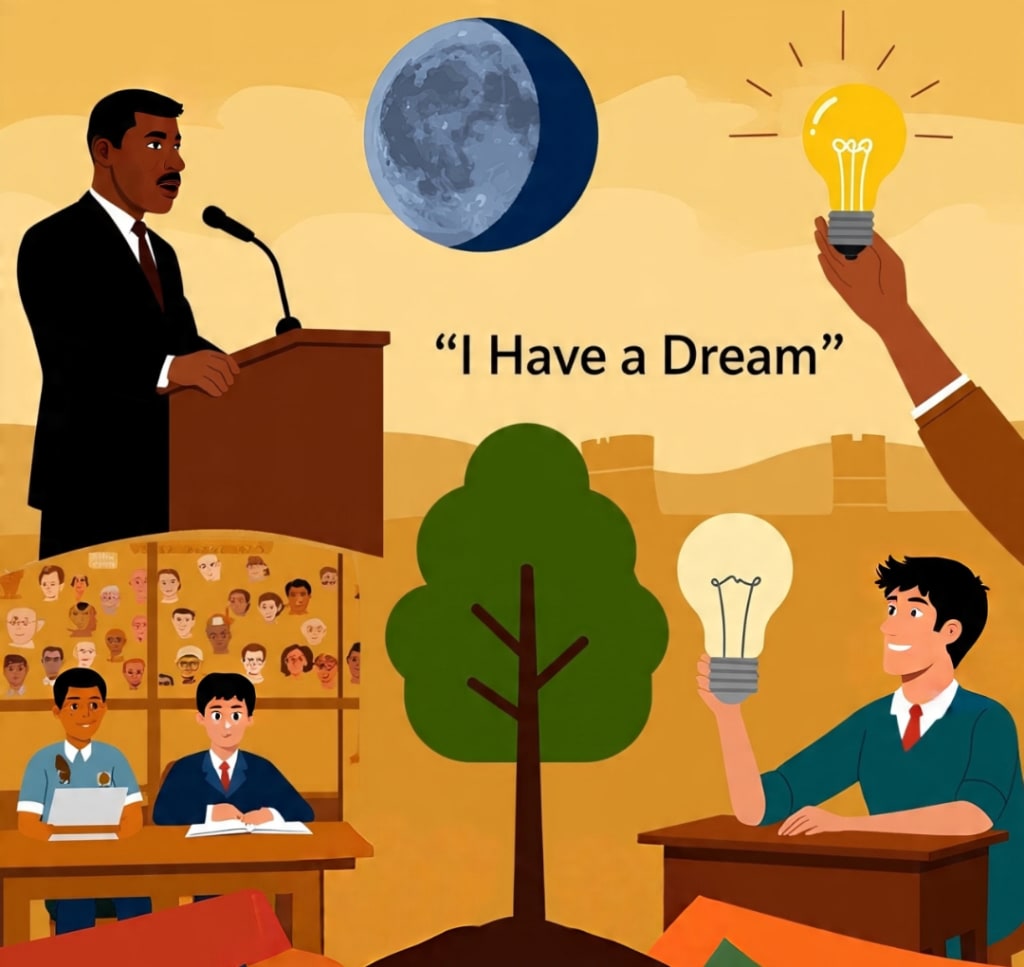
Moments That Made Us: The Brighter Side of History
History is often told through the lens of war, conquest, and conflict. But if you look closely, scattered across centuries, there are shining moments where kindness, courage, and collaboration quietly reshaped the world for the better. These are the stories that rarely make headlines, yet their impact echoes through time. This is one of them.
In a quiet village in the Netherlands during World War II, a schoolteacher named Elise van den Berg found herself surrounded by darkness—Nazi occupation, fear, and uncertainty. But instead of giving in to despair, she turned her tiny classroom into a haven of hope. By day, she taught math and literature. By night, she helped hide Jewish children in the attic above her classroom, sneaking them warm bread and stories to keep their spirits alive.
She wasn’t a soldier. She had no weapons. Just a chalkboard, a heart full of compassion, and the courage to resist hatred in the only way she could—by protecting innocence. Elise’s actions weren’t recorded in textbooks, but one of the boys she saved grew up to become a doctor, whose medical breakthroughs later saved thousands of lives.
Sometimes, the smallest acts of bravery create ripples that grow into waves of change.
Fast forward two decades and another moment was quietly reshaping the world—not through rebellion or resistance, but through collaboration.
In 1962, during the height of the Cold War, a small group of scientists from the United States and the Soviet Union met at a neutral conference in Geneva. Tensions between their countries were dangerously high, and the threat of nuclear war loomed.
But in a quiet corner of the conference hall, over coffee and broken English, the scientists discovered a shared dream: curing polio. Setting aside politics, they agreed to share research, data, and even live samples of the virus. What came from this unlikely collaboration was the development of a more effective, affordable polio vaccine—distributed globally, saving millions of children.
That year, polio cases dropped dramatically. And for a brief moment, enemies found common ground in compassion.
History marched on. The Berlin Wall fell. Apartheid crumbled. The Internet was born. Each of these milestones is often framed in political or technological terms. But look again, and you’ll see the human spirit behind them.
When the Berlin Wall came down in 1989, it wasn’t just a political victory—it was a celebration of unity. As East met West, strangers hugged, wept, and danced together. In the middle of this joyful chaos was a 21-year-old East German woman named Anika who crossed into West Berlin for the first time. Instead of rushing to buy Western goods like many others, she joined a volunteer group handing out food and water to the elderly struggling in the crowd.
“Freedom,” she said later in an interview, “only matters if we use it to lift others up.”
It’s easy to overlook these moments—the teacher in hiding, the scientists in Geneva, the young woman with a sandwich in her hands—but they’re the threads that hold history together.
In 2015, when the Ebola virus broke out in West Africa, another such moment unfolded. Amid fear and global hesitation, a small team of volunteers from around the world—doctors, nurses, engineers—arrived in Liberia. They weren’t looking for fame. Many had left their families behind. But they brought medicine, knowledge, and most importantly, hope.
One of the nurses, Aisha from Kenya, comforted patients not just with treatments but with music. She sang softly in multiple languages, learning songs from each culture represented in the crowded hospital tents.
Her music became a symbol of shared humanity. When a 10-year-old boy named Joseph finally recovered, he asked if he could sing too. That moment sparked a nightly tradition where patients and staff sang together under the stars. Grief still existed—but joy found a way to stand beside it.
---
These are the moments that made us.
Not grand speeches or historic treaties alone, but the quiet courage of everyday people who chose compassion over indifference, who built bridges instead of walls. Their stories may not dominate history books, but they define what it means to be human.
So the next time history feels too heavy—too full of pain and division—remember Elise, the teacher. The scientists with coffee-stained papers. Anika with her open arms. Aisha with her songs. And Joseph, singing into the night.
Because history isn’t just about what happened. It’s about who we chose to be when it mattered most.
About the Creator
Keep reading
More stories from Muhammad Saad and writers in Humans and other communities.
The Power of Rest: Unlocking the Psychological Benefits of Quality Sleep
The Power of Rest: Unlocking the Psychological Benefits of Quality Sleep When Maya started her new job at a fast-paced design firm, she felt energized—at first. But as the weeks passed, late-night deadlines, early-morning meetings, and a steadily growing to-do list began to chip away at her sleep. “I’ll catch up on rest this weekend,” she told herself each Friday. But the weekend never seemed long enough. Eventually, her energy dipped, her mood darkened, and even her creativity—the very skill she was hired for—began to falter. What Maya was experiencing is something millions face daily: the psychological toll of poor sleep. While most of us recognize sleep as a biological need, science increasingly shows that it is also a pillar of mental well-being and psychological health. In fact, sleep isn't just something we do when everything else is done—it's a fundamental process that actively restores our minds, balances our emotions, and strengthens our ability to think, learn, and cope. The Brain on Sleep Sleep is more than just rest. It is a dynamic period during which the brain engages in critical activities that impact mood, memory, and mental clarity. During deep stages of non-REM sleep, the brain consolidates memories, processes information, and clears out waste proteins that accumulate during the day—a sort of nightly cleaning service for our neurons. Then there’s REM (Rapid Eye Movement) sleep, a stage rich with dreams and emotional processing. Studies have shown that during REM sleep, the brain replays emotional events in a safer, dream-like environment, helping us regulate our feelings and reduce stress. That’s why after a solid night’s sleep, a problem can feel smaller or a difficult conversation less upsetting. It’s not just “sleeping on it”—it’s the brain doing emotional housekeeping. Sleep and Mental Health: A Two-Way Street Psychologists often describe the relationship between sleep and mental health as bidirectional. Poor sleep can contribute to mental health issues like anxiety and depression, and those same conditions can in turn disrupt sleep. It becomes a cycle that, if left unchecked, can lead to chronic emotional distress and cognitive decline. But there’s a bright side: improving sleep can directly improve mental health. Cognitive-behavioral therapy for insomnia (CBT-I), for instance, is a highly effective treatment that not only helps people sleep better but often reduces symptoms of anxiety and depression in the process. Dr. Emma Rodriguez, a clinical psychologist specializing in sleep disorders, puts it simply: “Sleep is like a mirror for your mental health. When sleep improves, so does your emotional resilience.” The Hidden Power of Naps and Routines Not all sleep happens at night. Short naps—10 to 20 minutes—can refresh the brain without causing grogginess. In fact, research shows that a well-timed nap can boost memory, enhance creativity, and reduce stress. It’s no surprise that companies and schools in some parts of the world are experimenting with nap pods and flexible rest breaks. But beyond naps, the key to better psychological health through sleep lies in consistency. A regular sleep-wake cycle helps regulate your body’s internal clock, or circadian rhythm, which in turn supports hormone regulation, mood stability, and attention span. Small changes can lead to big improvements: Keeping a consistent bedtime—even on weekends Limiting screen time before sleep Creating a calming pre-sleep routine (like journaling, reading, or meditating) Making the bedroom a sanctuary for rest—cool, dark, and quiet Maya’s Turnaround Maya eventually visited a therapist who specialized in sleep and mental health. Together, they identified how stress and poor sleep were feeding off each other. With some gentle structure, mindfulness practices, and a consistent bedtime, Maya began to feel better—more focused, more hopeful, and, yes, more creative. “I didn’t realize how much sleep was affecting everything,” she says now. “Once I made it a priority, everything else started falling into place.” A Final Thought Sleep is not a luxury. It’s a biological necessity and a psychological superpower. In a culture that often glorifies hustle and late nights, choosing to sleep might feel like falling behind—but the science is clear: sleep helps us show up as our best selves. So tonight, when you rest your head, know that you're not being lazy or unproductive. You're healing. You're growing. And you're giving your brain the care it needs to face tomorrow with clarity and strength.
By Muhammad Saad 7 months ago in Humans



Comments
There are no comments for this story
Be the first to respond and start the conversation.