
Mary Fairfax Somerville: The Woman Who Helped Define "Scientist
The Woman Scientist

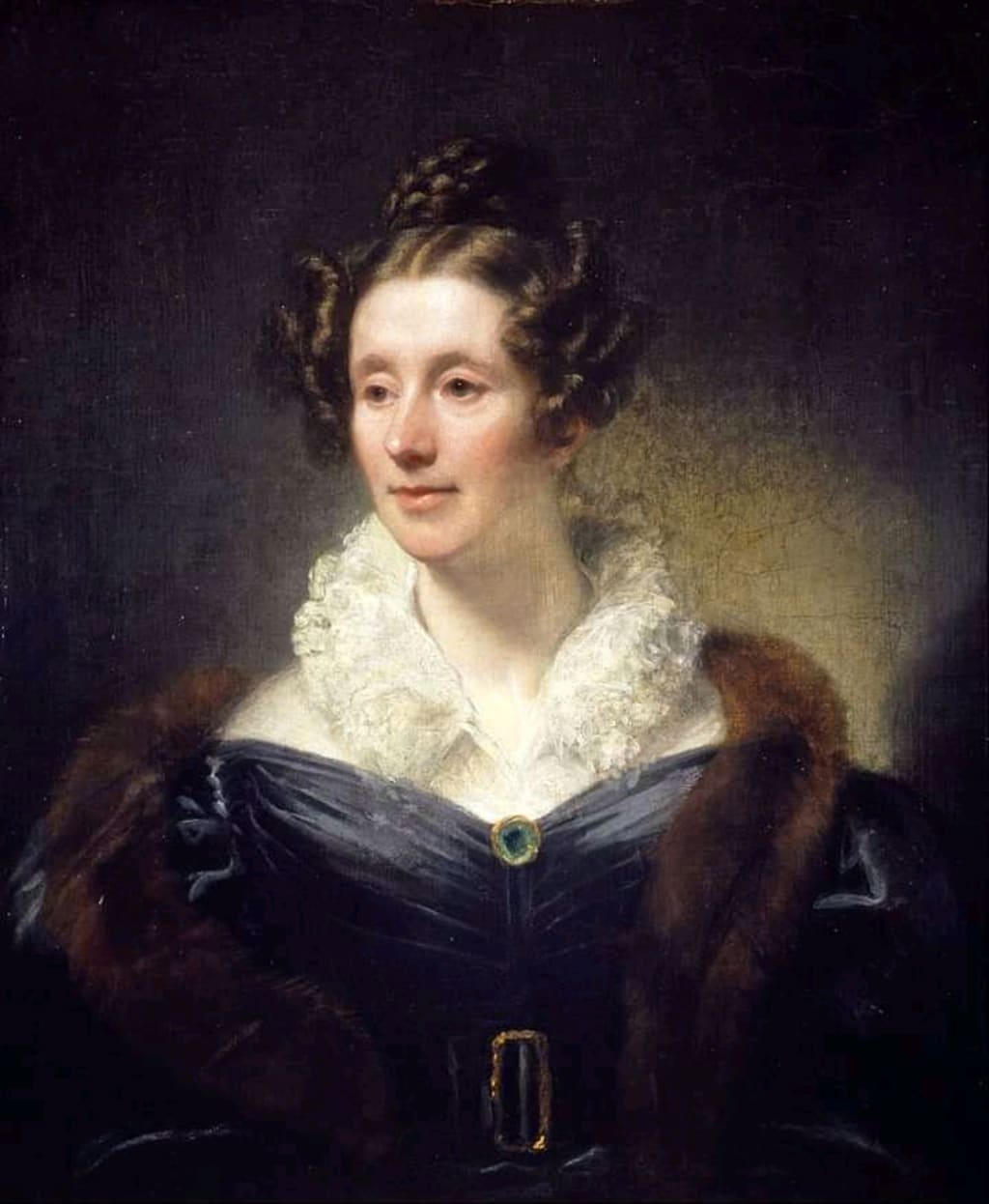
"
On November 29, 1872, the world bid farewell to Mary Fairfax Somerville, a mathematician, astronomer, geographer, and science writer whose intellect and contributions earned her the title of "the most extraordinary woman in Europe." She was a pioneer whose work bridged disciplines, advanced scientific thought, and changed how the world viewed women in science.
Somerville's influence extended beyond her groundbreaking research. She inspired the coining of the term “scientist,” a word that has since come to define those dedicated to the pursuit of knowledge. Today, as we reflect on her legacy 152 years after her passing, we celebrate her remarkable achievements and lasting impact on the world of science.
---
A Trailblazer in Science and Mathematics
Mary Fairfax Somerville was born on December 26, 1780, in Jedburgh, Scotland. Despite growing up in a time when formal education for women was rare, she showed an early aptitude for mathematics and the sciences. Encouraged by her family to pursue these interests, she studied mathematics through self-directed learning, reading the works of luminaries like Euclid and Isaac Newton.
Her intellectual curiosity and tenacity led her to develop a deep understanding of calculus, astronomy, and other advanced subjects, areas largely dominated by men during her time.
---
Somerville’s Contributions to Science
Mary Somerville's works were both profound and far-reaching, influencing various fields of science:
Mathematics and Astronomy
In 1826, she published her first scientific paper, “On the Magnetizing Power of the More Refrangible Solar Rays,” which explored the relationship between magnetism and sunlight. This publication made her one of the first two women to be published in the Philosophical Transactions of the Royal Society.
She gained wider recognition with her 1831 book, The Mechanism of the Heavens, a translation and expansion of Pierre-Simon Laplace’s Celestial Mechanics. Somerville’s ability to explain complex scientific concepts in clear and accessible language earned her acclaim. Her work was so well-received that it became a standard textbook for students of mathematics and astronomy.
Her later works, such as On the Connection of the Physical Sciences (1834), were groundbreaking in their scope. This book examined the interconnections between disciplines like astronomy, physics, chemistry, and geology, helping lay the foundation for modern interdisciplinary scientific research. It was during the review of this book that the term “scientist” was coined.
Geography
Somerville’s scientific curiosity also extended to geography. Her studies contributed to the understanding of planetary motion and were instrumental in the discovery of Neptune. Her calculations and predictions, though often overshadowed by others, showcased her precision and analytical skills.
---
The Birth of the Word "Scientist"
One of Somerville’s most enduring contributions to science is tied not to her discoveries but to the very language used to describe practitioners of science. In 1834, William Whewell, a British polymath, reviewed her book On the Connection of the Physical Sciences. At the time, practitioners of science were referred to as “natural philosophers” or “men of science.”
Whewell faced a conundrum: Mary Somerville could not be described as a "man of science," and there was no existing term to accurately capture her role. To resolve this, Whewell coined the term “scientist.” Though the word was slow to gain acceptance, it is now universally used to describe individuals devoted to the study and advancement of science.
In a symbolic sense, Mary Somerville became the first person to be called a “scientist,” forever linking her legacy to this transformative term.
---
Advocating for Women in Science
Somerville’s life and work also served as a powerful testament to the intellectual capabilities of women at a time when societal norms often barred them from academic pursuits.
She was a vocal advocate for women’s education and rights. Her example inspired generations of women to pursue careers in science, defying the restrictive gender roles of the 19th century. Her advocacy found institutional recognition when she and Caroline Herschel became the first women to be elected honorary members of the Royal Astronomical Society in 1835.
Somerville’s name was also chosen for Somerville College, Oxford, one of the first women’s colleges in England, which continues to honor her legacy.
---
A Life Well-Lived
Mary Fairfax Somerville’s achievements extended well into her later years. She continued writing, researching, and publishing well into her 80s. Her final book, On Molecular and Microscopic Science, was published in 1869 when she was 89 years old.
Despite her fame, Somerville remained humble, describing herself as “an old woman who loves to learn.” She passed away at the age of 91, leaving behind a legacy of brilliance, determination, and trailblazing achievements.
---
Why Somerville’s Legacy Matters Today
Mary Somerville’s contributions to science were not only foundational to various fields but also transformative in breaking barriers for women in academia. She proved that intellectual brilliance knows no gender, and her life’s work continues to inspire scientists around the globe.
In naming her the world’s first “scientist,” we honor not only her pioneering spirit but also the countless individuals she has inspired to pursue scientific inquiry. As we celebrate her legacy, let us remember Mary Fairfax Somerville as a woman ahead of her time—a thinker, a trailblazer, and a scientist whose work continues to illuminate the path for others.
---
Mary Fairfax Somerville’s story is a reminder of the power of perseverance, curiosity, and passion for knowledge. Her legacy endures, not just in the term "scientist," but in the countless discoveries and innovations her work has inspired.
About the Creator
Keep reading
More stories from Deji Akomolafe and writers in Humans and other communities.
A Royal Escape: When Kurt Russell and Goldie Hawn Gave Princess Diana and Her Sons a Break from the Spotlight
In a world that never seemed to stop following her, Princess Diana’s every move was watched, recorded, and scrutinized by the media. The intensity of this constant public gaze became increasingly taxing, especially as she tried to navigate her life and raise her sons, Prince William and Prince Harry. In an unexpected turn of events, however, Hollywood stars Kurt Russell and Goldie Hawn offered Diana and her young boys a rare chance for respite, providing a place where they could truly escape from the limelight.
By Deji Akomolafeabout a year ago in Humans
It's not my story anymore
There's a Taylor Swift song called the Manuscript it's about closing a Dark chapter of one's life. Or any chapter for that matter. I wanted to write about this because I think it's important to realize that yes while the things I write about on here are personal and about things I have dealt with. But that does not mean I am that person forever. I'm not the girl I was 5 years ago or even last year. I am NOT the niave women I was back then. I know better now. MUCH better. In fact I cringe at the person I was. I will NEVER tolerate the shit I did back then.
By Amanda Nicole5 days ago in Humans
Wild Card Weekend Recap: What Happens Now?
I think I figured out why I love Wild Card Weekend so much. It's because it's the first playoff anything of the calendar year. The NFL season starts in the fall, and once upon a time, the champion was crowned either on or slightly before New Year's. The evolution of the NFL schedule has resulted in the playoffs starting just into the New Year, and currently, the final week of the season falls on the first weekend of the New Year, with Wild Card Weekend coming a week after that. So yes, chronologically, the NFL's Wild Card Weekend serves as the first playoff anything of the calendar year.
By Clyde E. Dawkins6 days ago in Unbalanced




Comments
There are no comments for this story
Be the first to respond and start the conversation.