
Making Every Second Count
How death, time, and a notebook gave a man back his voice.

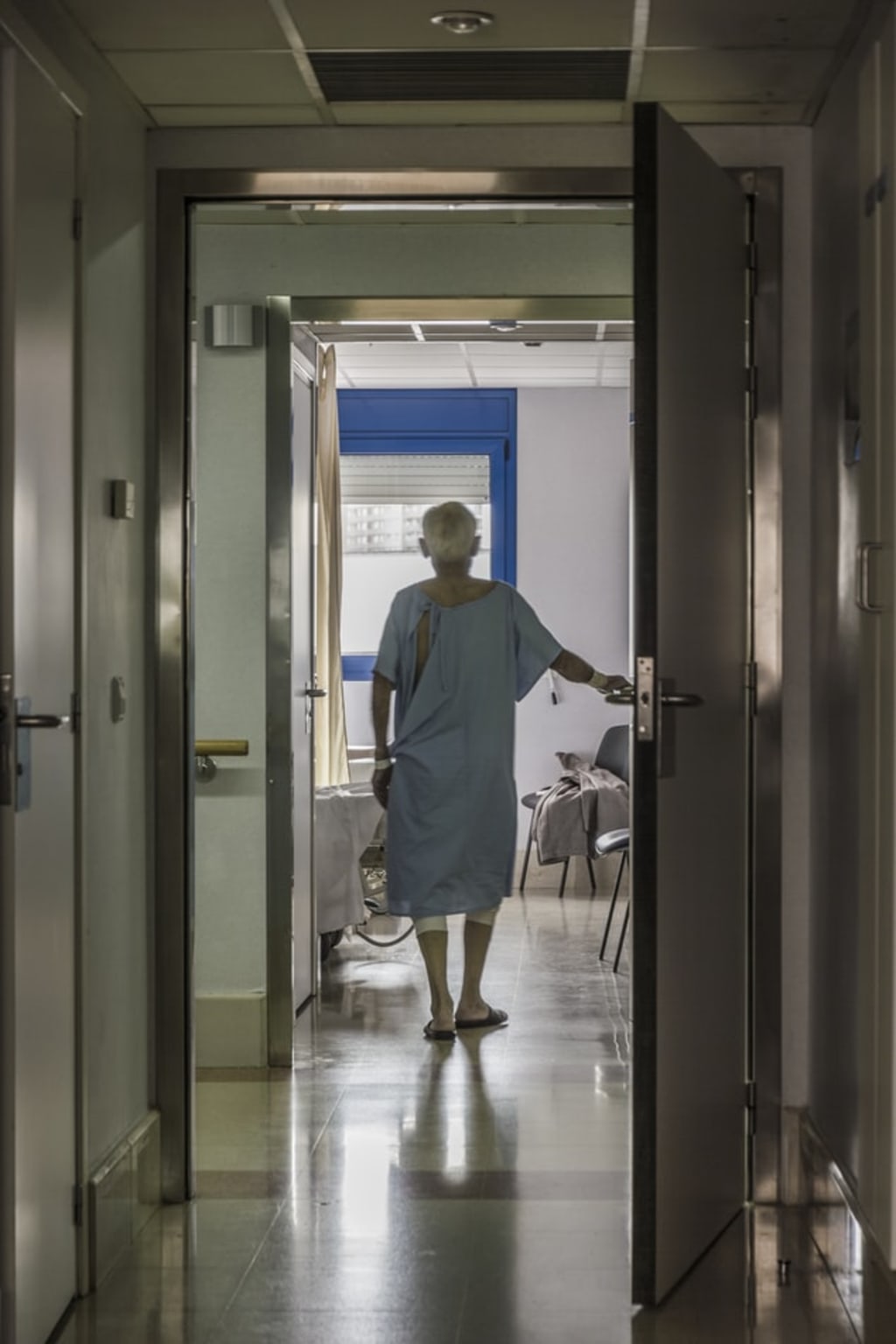
The notebook arrived shortly after the news of my death. I was lying upright in my hospital bed, the fluorescent light casting a clinical glow over the room while a choir of doctors and nurses, all dressed in white delivered the news.
“We’re sorry Mr. Lewis. There’s nothing else we can do.” Dr. Jensen had placed a tentative hand on my shoulder, a practiced motion, while the nurses made an array of wincing, sympathetic smiles. The surgery that had taken my voice had been a waste of time, it seemed. Now, all it left was more time to waste.
I nodded behind them, my eyes resting on the large clock rimming the doctor’s head like a halo.
“Four weeks, maybe a little longer. Is there anyone we can call?” The ticking of the clock seemed to grow, and I shook my head, listening as the ticks counted down seconds, minutes, hours, days. With individual nods, my white consort departed. Outside in the hall, I heard my doctor make a call, and eager for distraction I eavesdropped. It was his wife, something about a forgotten gift for their son. His replies struck a balance between pacifying and exhausted.
…
I awoke after in the early hours of the morning to the flittering sounds of rushed footsteps echoing down the hall. In the dark, my bleary eyes just caught a vague shape slipping away into the hall. A nurse doing her rounds, I thought, and rolled over, hearing the doctor’s words echo in my skull.
“Four weeks…”
Sleep didn’t come. I sat up, groaning on stiff muscles. My eyes caught a flat, black object resting on my bedside table. Drunkenly, I reached for it, feeling soft leather on my fingertips, and hard, rectangular edges. I pulled it closer and turned it over in my hands.
A notebook? Perhaps a sympathetic gift left by one of the nurses, one of the few for whom death wasn’t yet routine. I opened it, hearing the rich crack of its spine loosening as if it were an old man stretching.
There was no note or addressee. Instead, on the first page in bold ink were two lines.
“YOUR BALANCE - $20,000”
I turned the page, bemused, but it was blank. As was the next, and the one after that. I hadn’t the energy for discerning why those two strange lines were printed on the first page, and I chalked them up to a typo, something left over from the first recipient. Maybe this notebook was making its rounds on the ward.
But, grateful for another distraction, I decided to jot down things to ask for in the morning. Focus was something I rarely enjoyed anymore, the painkillers blurred my brain, making even the simplest thought a struggle at times.
“A cup of tea, milk, no sugar.”
“Biscuits from the canteen.”
With a smirk, I added:
“A pack of Marlboro Golds.”
I smiled at the image of me stitched up to my IV, in nothing but my gown, my legs resting on a few pillows, blowing back smoky plumes to the envy of my wardmates.
As I mulled over my list, thinking what else to add, something shifted at the top of the page. The “$20,000” at the top had blurred, becoming illegible. I rubbed my eyes, then the page, to see if perhaps the ink had smudged, but the number remained blurred, at least momentarily. Suddenly, the numbers came refocused, but it was no longer the same amount. Instead, “$19,987.30” was now legible.
I squinted, but the new value stubbornly remained. I shook my head, too tired to spend the energy discerning how it had happened and chalked it up to my meds. I clapped the book closed with a thump and laid it on the table next to me.
A hollow thud followed. I looked down to see a small carton on the floor. I strained, reaching with all the strength my thin body could muster and picked it up. I knew what it was before the plastic-covered carton caught the dim light. A 20-pack of Marlboro Golds, unopened. I peeled off its wrapping, and popped it open, 20 white cigarette butts nesting in foil stared up at me. I made to put it on the tabletop, but as I did, I saw something else gently steaming next to the notebook. A fresh cup of tea with three chocolate biscuits.
I pinched myself, hard. Then shook my head like a madman. The new items on my tabletop didn’t disappear. I picked up the warm cup and sipped. It was tea, milk, no sugar. The biscuits accompanying it were my favourite, chocolate-covered bourbons. I took a bite, and rich chocolate filled my mouth. Still munching, still confused, I re-opened the notebook and jotted down two more items.
“Whiskey on the rocks.”
“A lighter.”
The numbers blurred once more, then reappeared.
“$19,879.”
I reached to my right, and felt cold, perspired water over a rimmed glass, accompanied by the clink of a few ice cubes. I cupped my whiskey and took a sip. I could have cried; it was so good. Putting it down, I stared at the notebook. Hurriedly, I snatched the pen, and scribbled down:
“Let me live.”
The numbers blurred once more, interminably it seemed, while my heart pounded. They came back into focus but hadn’t changed.
I tapped my pen nib absently on the paper. Once more I noticed the clock, ticking above the door.
I pulled myself from under my covers, the icy floor making me shiver. I crept to the window, Marlboros and lighter in hand, and opened it delicately. I lit the cigarette timidly, leaning out into the cool air, and blew thick billows of smoke into the dusky sky.
Below me, I heard a curse echoing through the hospital parking lot. A nurse, still in her scrubs, was standing by a small hatchback, its door open and her tiny frame hunched over the wheel. The car was whinnying like a dying horse as she twisted the ignition, again and again. With another string of curses, she slapped the door frame, and pulled herself out, whirling her head around, as if for help.
I took my notebook in hand.
“Fix the nurse’s car.”
The value blurred.
“$19,000”
The car revved into life, its engine humming like a happy bee. The nurse leapt three feet in the air, and turned around, gaping. I flicked my cigarette and closed the window gently, smiling.
I put pen to paper once more and tried to think what my next purchase would be. Cake? A Motorcycle?
I remembered the doctor’s call from the day before, his tired face, exasperated tone - the missed birthday present.
“Deliver a gift-wrapped football to Dr. Jensen’s son with a signed card, from him.”
The value burred…
...
Doctor Jensen was beaming the next morning, and practically skipped into the ward to do my check-up. I cocked my head at him quizzically.
“Let’s just say, happy wife, happy life, Mr. Lewis.” He giggled, almost like a schoolgirl. “You seem in good spirits today, yourself.” He phrased it almost as a question, while examining the reading on my blood pressure meter.
I glanced at the notebook and gestured with an imaginary pen.
“Well, keeping occupied is the best thing you can do. Maybe set yourself a challenge, see how much writing you can do in a week.”
He unwrapped the blood pressure kit from my arm, a small widening to his eyes indicating things still weren’t alright.
I was writing almost before he’d left the room, the sound of pen on paper drowning out the ticking of the clock.
…
The weeks passed, my condition worsened, but my writing continued.
A fresh set of pillows for my new wardmate. A cheque to the daughter paying his bills. A new pair of shoes for one of the nurses. My pen and paper were a hammer, and the struggles of those around me were nails.
Each day I grew thinner, frailer. But the world around me grew happier, cheerier. Dr. Jensen insisted on upping my pain medication, but each time he suggested it, I would simply shake my head and tap my pen.
But then, one day, inevitably, as I was etching another line in my book, I saw my balance drop to a fatal “$0”.
I rubbed the value with my thumb, just to be sure, but it didn’t change. For a moment, it seemed like a spell had lifted. All the pain rushed back into my body, all the fatigue, all the anxiety. The clock ticked louder than ever.
As I stared at the pen and paper with the almightiest sense of writer’s block, a cup of tea loomed into view, held by a delicate hand. I looked up and saw one of my nurses, smiling.
I pinched the saucer with shaky fingers. It was milk, no sugar. Just the way I liked it. As I did, I spied her new pair of trainers, pristine and neatly laced, and gestured down.
“New shoes, I feel like I’m gliding along these halls now.” She rolled on the balls of her feet, beaming.
I gave her a thumbs up.
“I know!” She said, leaning in. “I think I’ve got a secret admirer; they were waiting in my locker for me the other day. No note, nothing.”
I feigned puzzlement, taking a larger gulp from my tea than I intended and nearly choking.
A coughing fit racked my body and I doubled over, spilling the tea on my blanket. The nurse rubbed my back, her cool hands like a balm on my feverish skin. She waited until it was over, telling me to breathe, then began stripping the stained, wet blankets off me.
She bundled them up, “I’ll get some fresh layers for you in a jiffy.” She turned, her sneakers squeaking happily over the linoleum, and strode out.
I sat in silence, taking up the notebook once more and thumbing through the list-stacked pages, thinking over my “purchases”.
“How’s the writing?” I looked up at another nurse, but one I didn’t recognise.
I shrugged.
“Because you’ve run out of your balance?” She asked, a wry smile on her face.
I took my pen and wrote, “Who are you?”
“I’m the one who gave you the notebook, of course.”
I practically fainted. Taking a moment to gain my composure, I wrote a “+” next to the “$” symbol.
She shook her head, “Is that all the book is worth to you?”
I stared blankly.
“I gave you that book to teach you a lesson, Mr. Lewis. The balance was just a way to get you started.”
“Which was?” I wrote.
“That you still have a voice, Mr. Lewis, that you still matter. Your remaining days shouldn’t be spent in desperate silence. And, with just a bit of paper, and a pen, they haven’t been. Although, the Marlboros were a funny idea – if a bit naughty.” She scolded.
I laughed, and tears came with it, streaming from my tired eyes.
“I’m scared,” I wrote.
“I know. But were you scared before? When you had your balance, your purpose?”
I shook my head.
She held my hand, “Then keep writing. Make every second matter.”
“How?”
She pursed her lips, “You can thank that lovely nurse for cleaning up your mess for a start,” she winked. “Lord knows they don’t get enough of gratitude. After that… The world’s your oyster, and you’ve got a heck of an oyster knife right there.”
“That’s a terrible metaphor.”
“Then think of something better and write it down.”
I tried to scrawl down one more question, but felt a gentle breeze touch my face, heard the fluttering of footsteps, and when I looked up, the nurse was gone.
The other nurse returned, carrying in fresh, folded linens.
“Oh?” She remarked, “You're powering away aren't you, Mr. Lewis?”
I smiled but barely looked up. There wasn’t a second to waste.
About the Creator
Bertie Nuttall
I'm a budding writer who enjoys a variety of genres, including Fantasy, Horror, Romance and the odd bit of Classical literature, purely to feel intellectual.
Keep reading
More stories from writers in Humans and other communities.
Time to change your life.
Is it even possible for you to change your life? A lot of people, more than there should be, are unhappy with their lives. But what are they doing about it? Usually nothing. People talk about how shitty their lives are and want change, but are they not taking the actions to change?
By Jen Phillipsabout 15 hours ago in Humans
Dating Burnout Is Real And Breaking Hearts Across Generations Worldwide
Dating used to be interpreted as a romantic adventure to love and friendship. Nowadays, it is a draining emotional process of uncertainty, disappointment, and confusion to many people. Dating burnout is being witnessed among various age groups and cultures. Such emotional burnout is a result of numerous unsuccessful relationships, lack of intention, and a demand to discover love in a digitalized world full of hurry. Rather than being optimistic, most people are exhausted, disappointed and willing to surrender. The problem of burnout dating is not only my problem, but a world-wide emotional crisis of all people with fiery hearts.
By Grace Smith5 days ago in Humans
Off the Book
It ended like every other stupid idea. Badly, and alone. I’m researching digital confession ethics, he said. A tech ethicist. He gestured at floating data I couldn’t see then pulled out a physical notebook. Actual paper, fountain pen. He held it up like he was showing me scripture.
By Nicky Frankly2 days ago in Fiction


Comments
There are no comments for this story
Be the first to respond and start the conversation.