
Labyrinth: A Powerful Symbol for the Journey of Life
How the act of walking its path, with its twists and turns, can offer moments of reflection and insight

Labyrinths are intricate and sometimes confusing networks of passages through which one must find a way, and they have intrigued humans for millennia. Exploring a labyrinth yourself, whether for spiritual, meditative, or purely recreational reasons, can be a unique experience.
Let's delve into their history, symbolic meanings, and some prominent examples. Then, we will explore this concept through different lenses and how it permeates various fields of study.
History & Origins
The word "labyrinth" is derived from the ancient Greek "λαβύρινθος" (labýrinthos). The most famous labyrinth from ancient times was the Cretan Labyrinth, which, according to myth, housed the Minotaur – a creature half-man and half-bull.
Labyrinths have been found in various cultures worldwide, from ancient Greece and the pre-Colombian Americas to India and Scandinavia.
Difference between Labyrinths and Mazes
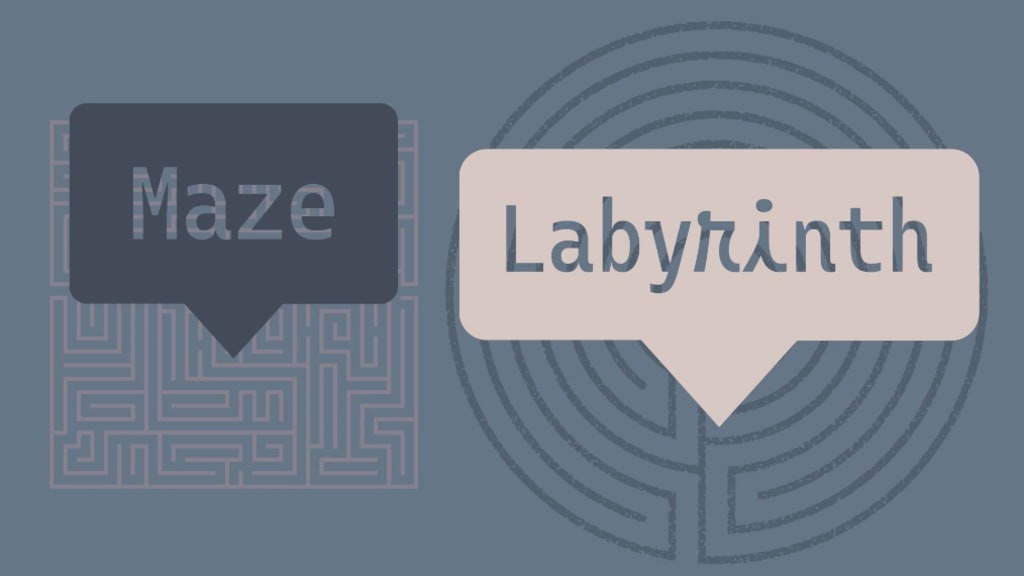
Although the terms are often used interchangeably, there's a difference.
Mazes are multicursal (multiple paths), where one has to choose between different paths, some of which might be dead ends.
Labyrinths are unicursal – there's only one path, which leads to the center and then out again.
Symbolism
Spiritual Journey: In many cultures, walking a labyrinth is seen as a pilgrimage. It can represent the journey of life or the path to enlightenment.
Wholeness & Unity: The intricate but singular path can symbolize unity and wholeness.
Death & Rebirth: Entering the labyrinth can symbolize death or the underworld while emerging can represent rebirth or resurrection.
Prominent Examples
Cretan Labyrinth: Linked to the myth of Theseus and the Minotaur, it's often depicted as a complex branching multicursal path.
Chartres Cathedral Labyrinth: Located in France, this medieval Christian labyrinth served as a pilgrimage path for those who could not travel to Jerusalem.
Nazca Lines: Some believe that certain geoglyphs in the Nazca Desert in Peru are labyrinths, though their exact purpose remains a mystery.
Modern Use
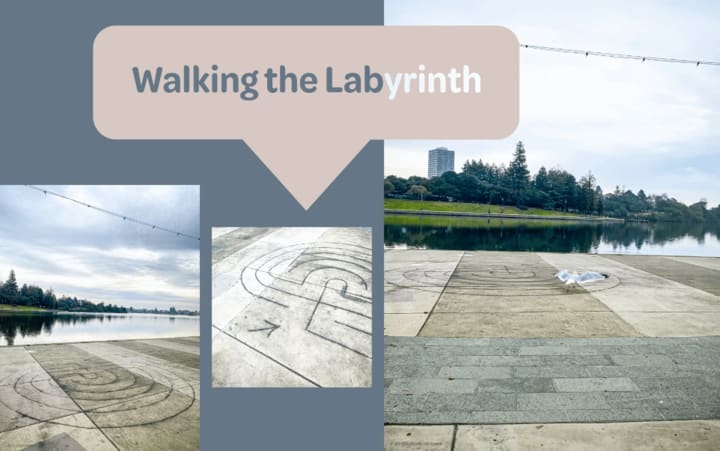
Spiritual & Meditation Tool: Many people use labyrinths as tools for meditation and reflection. Walking the winding path can help focus the mind.
Landscaping & Garden Design: Modern garden designs sometimes incorporate labyrinths as aesthetic and contemplative elements.
Art & Entertainment: Labyrinths have inspired various art forms, including literature, movies, and games.

Construction & Types
Classical or Cretan: 7 circuits, or rings, and is based on an ancient design.
Chartres: Found in the Chartres Cathedral, it has 11 circuits and is designed in a circular fashion.
Contemporary: Modern interpretations, which may not adhere to historical designs but are created for various purposes like art installations or community projects.
Various Fields of Study | Understanding Through Different Lenses
Here's how it relates to some other areas:
Biology and Anatomy
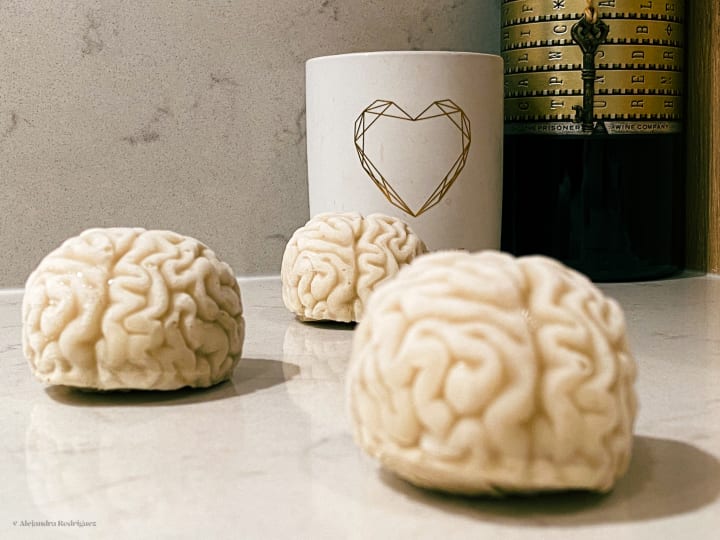
Brain: The intricate folding and winding pathways of neurons in the brain can be likened to a labyrinth. The brain's structure is complex yet purposeful, similar to the labyrinth's paths.
Inner Ear: There's an actual "labyrinth" in our inner ears, comprising the cochlea and the semicircular canals, which are responsible for hearing and balance, respectively.
Psychology
Mind & Thoughts: Carl Jung, the Swiss psychiatrist, often equated the process of individuation (personal growth and self-discovery) to navigating a labyrinth. Our unconscious mind can seem like a maze of feelings, memories, and desires that one has to navigate to achieve self-awareness.
Physics and Mathematics
Chaos Theory: Just as it's challenging to predict the exact path in a maze or labyrinth, chaos theory deals with systems that appear disordered but are, in fact, governed by underlying patterns and deterministic laws.
Fractals: These are intricate structures or patterns that look similar regardless of the level of magnification. Their recursive complexity can be reminiscent of the recursive patterns in some labyrinth designs.
Computer Science
Algorithms: Maze-solving and maze-generation algorithms are common problems in computer science, helping students and professionals understand pathfinding and graph theory.
Networks: The internet, with its complex interconnection of servers, can be seen as a digital labyrinth.
Cultural Studies
Narratives & Stories: The labyrinth's concept is a common motif in literature and films, symbolizing the complexities and challenges of life, relationships, or personal growth.
Geography and Urban Studies
Cities: The intricate streets of ancient cities or the alleys of medinas can be seen as real-world labyrinths. Navigating them requires local knowledge and can lead to discoveries at every turn.
Astronomy
Galaxy Structures: The vast interstellar medium, with its intricate networks of gas, dust, and stars, can be likened to a cosmic labyrinth.
Comparatively, while a labyrinth in its traditional sense serves as a tool for meditation, introspection, or ritual, its representation in various fields often symbolizes complexity, intricacy, and the challenge of finding a clear path or solution amidst seeming chaos.
Whether you're navigating the neuronal pathways in the brain, the complex algorithms in computer science, or the winding streets of an ancient city, the labyrinthine nature of these systems challenges, mystifies and often rewards the persistent seeker.
Start your journey towards inner peace and global harmony today. Join the peace movement.
About the Creator
Aly G
Multidisciplinary Creative-Strategist | Experience Creator | Journey Lover | Adventure Journalist | Jesus' Diplomat 🏳🕊| Striving to spread Peace through exploration & unity from a loving-kind perspective || Views and opinions are my own.
Autonomy Is The Real Privilege
Good morning, freedom-seekers! Today we’re gonna be looking at autonomy. A strange word, I know; one many would probably look at blankly and run away from on sight. We’re gonna figure out what it actually means, consider how it’s achieved, and decipher just how deeply most of us are tangled up in dependence without realising it.
By That ‘Freedom’ Guyabout 9 hours ago in Humans



Comments
There are no comments for this story
Be the first to respond and start the conversation.