
KETO DIET VS OUR BRAIN
Researched: How Keto Diet Benefits The Brain

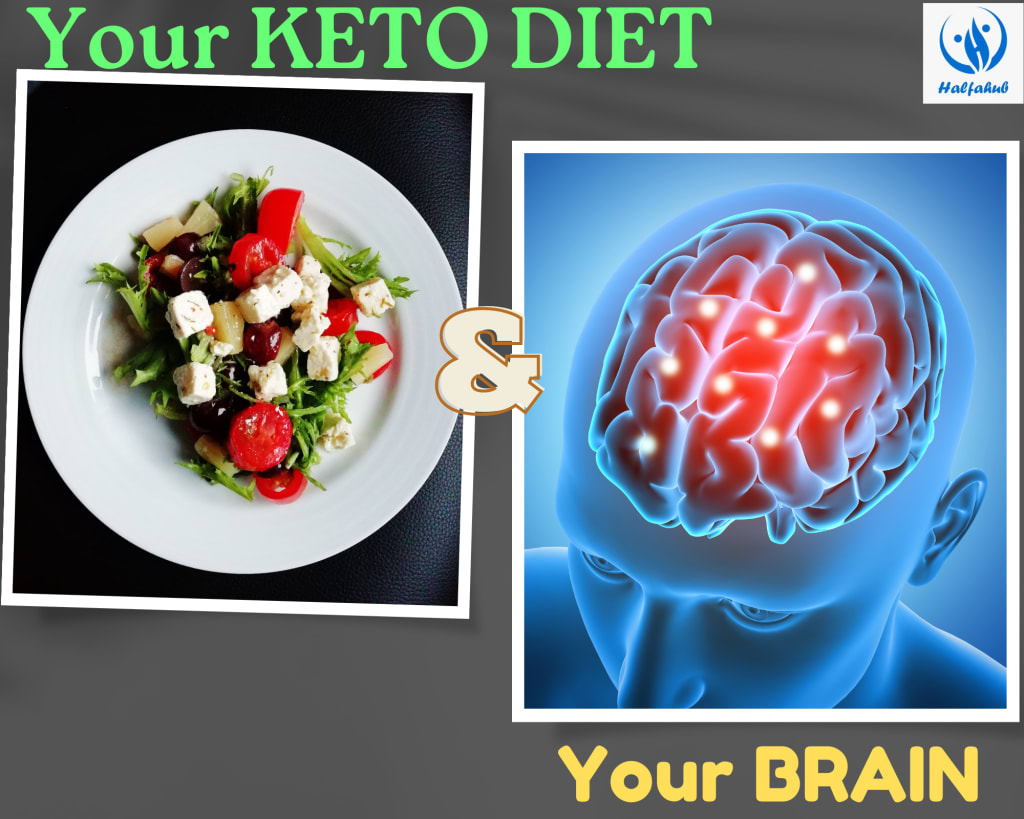
The ketogenic diet, or simply "keto" diet, is a low-carbohydrate, high-fat diet that has gained popularity in recent years. While it is often associated with weight loss, the keto diet has also been found to have potential benefits for brain health. In this article, we will explore some of the ways the keto diet can benefit the brain.
- MAY IMPROVE COGNITIVE FUNCTION
One of the most notable benefits of the keto diet is its potential to improve cognitive function. This is because the diet promotes the production of ketones, which are molecules produced by the liver when the body is in a state of ketosis. Ketones are able to cross the blood-brain barrier and provide an alternative source of energy for the brain, in addition to glucose.
Several studies have found that the use of ketones as a source of fuel for the brain can improve cognitive function, including memory and attention. In fact, one study found that a ketogenic diet improved cognitive function in patients with mild cognitive impairment.
- MAY HELP PREVENT NEUROLOGICAL DISORDERS

The keto diet has also been found to have potential benefits for preventing neurological disorders. This is because the diet can help reduce inflammation in the brain, which is thought to play a role in the development of neurological disorders such as Alzheimer's disease, Parkinson's disease, and multiple sclerosis.
In addition, the production of ketones may have a protective effect on the brain. Studies have found that the use of ketones as a source of energy can reduce oxidative stress and improve mitochondrial function, which are important factors in preventing neurodegenerative diseases.
OVERCOME BRAIN DISORDERS TODAY

The keto diet was originally developed in the 1920s as a treatment for epilepsy, and it is still used today as an alternative therapy for individuals with drug-resistant epilepsy. The diet works by mimicking the metabolic state of fasting, which has been found to reduce seizure activity.
In fact, one study found that a ketogenic diet reduced the frequency of seizures in patients with drug-resistant epilepsy by more than 50%. Another study found that the diet was effective in reducing seizures in children with epilepsy, with some children becoming seizure-free.
- MAY IMPROVE MOOD
Finally, the keto diet may also have potential benefits for improving mood. This is because the diet can help stabilize blood sugar levels, which can reduce mood swings and improve overall mood.
In addition, the production of ketones may have a positive effect on the brain's neurotransmitters, including serotonin and dopamine, which are important for regulating mood. Several studies have found that a ketogenic diet can improve symptoms of depression and anxiety.
CONCLUSION
Overall, the keto diet has potential benefits for brain health, including improved cognitive function, prevention of neurological disorders, treatment of epilepsy, and improvement of mood. While more research is needed to fully understand the effects of the keto diet on the brain, these findings suggest that the diet may be a promising therapy for a range of neurological conditions.
However, it is important to speak with a healthcare professional before starting a ketogenic diet, as it can have potential risks and side effects.
GET YOUR CUSTOM KETO DIET PLAN TODAY

Can keto help autism? Ellis’ story
After writing an article about the impact a keto diet might sometimes have on ADHD and autism, Anne Mullens received an email from a woman named Holly Franks. Her son Ellis has Asperger’s syndrome and started a keto diet in 2015. - Dr. Andreas Eenfeldt, MD
Has the diet switch helped his autism? This is their experience:
Hi Diet Doctor,
We were really happy to see the recent post by Anne Mullens about the ketogenic diet for autism. My son and I live in West Texas and I want to tell you about our experience.
My son Ellis, 11, was always a little different. I just thought he was gifted and talented. He did not speak until he was three years old and then he could suddenly read without my knowledge.
His early teachers would say you can always depend on Ellis to tell the truth. The concept of lying and manipulating people never occurred to him. Also, he couldn’t read people’s faces or moods, either, so he didn’t adjust his behavior as a neurotypical child would, causing adults to think he was being uncooperative.
Looking back, I can see that his anxiety started to build in the first grade. He started to show signs of distress. I thought he was being defiant, but now I know he was unable to regulate his world.
In third grade, we tried a new type of unregimented school, but as he never knew what to expect, his anxiety went through the roof. He began acting out, having meltdowns, breaking things, wrapping his head in a blanket, getting in his bed under the covers, pushing me etc. I became fearful that he was going to hurt me. He grew more angry and seemed to head towards violence.
I could not figure out why my child was struggling so much. I felt lost. I took him to another school where he was tested for ADHD and I thought this must be what was going on with him.
Well, no it wasn’t ADHD — it was Asperger’s syndrome. It made perfect sense. His world was overloading him and now everything had to change.
We first started keto about three years ago, when he was eight. I had seen a magazine at Natural Grocers about women my age losing weight and balancing the hormones using it.
I told my son we were going to try this for three weeks to see what happened and he agreed to do it. I purchased a Bento type lunch box. If I had put everything in a separate container, he would never have eaten all the food, so the Bento box was perfect for someone who is autistic. He could see all the food in one place. I would put meat (like sausage, meatloaf, ham, steak), a cheese stick, tomatoes or cucumbers or green olives and a chunk of sugar-free chocolate.
Within three months, he had lost about 15 lbs (7 kg) and was proud of fitting in old clothes. He is about 5’6″ now at age 11 — so he is a big boy. All his weight was in his belly, a sure sign of insulin resistance and blood sugar dysregulation.
When we started the ketogenic way of eating I began researching and found Diet Doctor. I thought that the platform was easy to understand and gave guidance on a healthier way to do keto. Facebook groups are notorious for know-it-alls and shaming. I advise people to find one or two groups and take what you need and leave when it gets too much.
Diet Doctor has everything right there, intelligent videos, food lists, it’s not a one size fits all. I think it is an awesome resource especially for beginners. Diet Doctor does not bombard you with asking you to buy stuff every 5 minutes nor does it proclaim best seller-itis.
No doctor has ever suggested the ketogenic way of eating for me or my son. I know now that Ellis had a carbohydrate addiction and that controlling his blood sugar alleviates the competition between his sensory world and his different way of thinking. It is very important that his anxiety be as low as possible.
Sugar/carbohydrate consumption and blood sugar dysregulation contribute greatly to his anxiety and unstable moods. My son is a carboholic and does not know when to stop eating carbohydrates. I now know that there is a gut-brain connection between what he eats and his symptoms.
We had our ups and downs doing the diet. We came off it for a while and he gained excess weight back. But then last year we decided to really do it and stick to it. He, again, lost about 15 lbs (7 kg) in three months. I am happy to say that it is now going very well. He loves to cook. I have taught him how to check his blood sugar and check his ketones with a ketone meter in order to teach him to be in charge of his health.
We love bacon and homemade ice cream. Our favorites are zoodles with spaghetti sauce, and fat head pizza, of course! Another GREAT improvement is that he now has no problem trying new foods. He devours homemade Italian dressing and loves deviled eggs. He will even eat pork rind nachos!
"This is a huge win on all levels: nutrient dense food, blood sugar control, anxiety issues down, his personality shining through."
Another easy part of keto is when we go to the store we know what we can eat, so it doesn’t take nearly as long to shop. He knows how to read labels and determine carbohydrates and serving size. So, for us this is a huge win on all levels: nutrient dense food, blood sugar control, anxiety issues down, his personality shining through. He has a great sense of humor, he is a real comic now, and he is empowered to be his own advocate.
When we are following keto tight, I notice that he is more focused, has a much better sense of humor, has a stable mood, has many, many more conversations. We home-school now, and I’m sure that plays a part in the management of his anxiety.
The largest adjustment with keto is all the temptations. Everywhere we go, fast food and junk food make up the majority of our society. Most keto food has to be prepared at home. However, everyone now knows that Ellis brings his own snacks to get-togethers. He does not ask for junk very often at all. I will let him carb up with some french fries or a regular burger maybe once a month.
One of the easiest parts of keto is not having to eat so often and the unintended intermittent fasting because you’re just not hungry upon waking.
We don’t really think of it as a diet anymore, we just think of it as the way we’re really supposed to be eating, he calls it the “keto way of life”. He knows full well that eating this way could help other autists better deal with life. I know I am lucky because my son does not have the sensory issues about food to the degree like a lot of autistic people have.
The only advice I give to people is DO NOT believe all the bad hype about keto, educate yourself, do your research, you will not regret it.
If you have an autistic child, my experience has been that meltdowns disappear, personality comes back, and a greater understanding of social issues ensue.
Give it a try, include your child in the decisions, let them cook, empower them to take charge, this will carry over into their adult life as well.
Oh, it is not just him that has benefited! I’ve lost about 30 lbs (14 kg) and now experience greater clarity of mind, less searching for words! At 56 that’s a huge deal. My moods are better, blood sugar is under control, my eyebrows are growing back as well. I feel great and am so so happy I discovered keto — for him and for me!
Sincerely,
Holly Franks
This article contain affiliate links that gives your direct access to keto diet products that can duly benefit your health and hereby appeal to you to click on links to purchase your product without extra cost. However, article content is only a healthy tip on your choice of healthy diet plan suggestions and hence would recommend to consult a physician if have any further questions on keto diet plan.
About the Creator
HALFAHUB
Happy Life Fitness Associate Hub (HALFAHUB) is a general health and fitness poised group enthused with desire to bring every refined, researched and approved knowledge on health and wellness through all niches that encourages everyone.
Finding Your Tribe: How to Be 'Spiritual But Not Religious' and Find Community.
For many, the traditional framework of organized religion no longer provides the satisfying spiritual nourishment they crave. Dogma, strict rules, and historical baggage can often feel restrictive, leading them to identify as "spiritual but not religious" (SBNR). This path emphasizes personal experience, intuition, and a connection to something larger than oneself, often rejecting the institutions and doctrines of established faiths. While this individual journey can be incredibly fulfilling, it can also feel isolating. The comfort and support traditionally found within religious communities might seem out of reach. However, it is possible to cultivate a rich spiritual life while remaining unattached to organized religion, and crucially, to find meaningful community along the way.
By Wilson Igbasi5 days ago in Humans




Comments (1)
This is true