
"Israel’s Recent Airstrikes on Syria: Protection or Power Play?
The Druze Dilemma: Victims of War or Political Leverage? Global Silence or Strategic Support? The World's Role in the Chaos
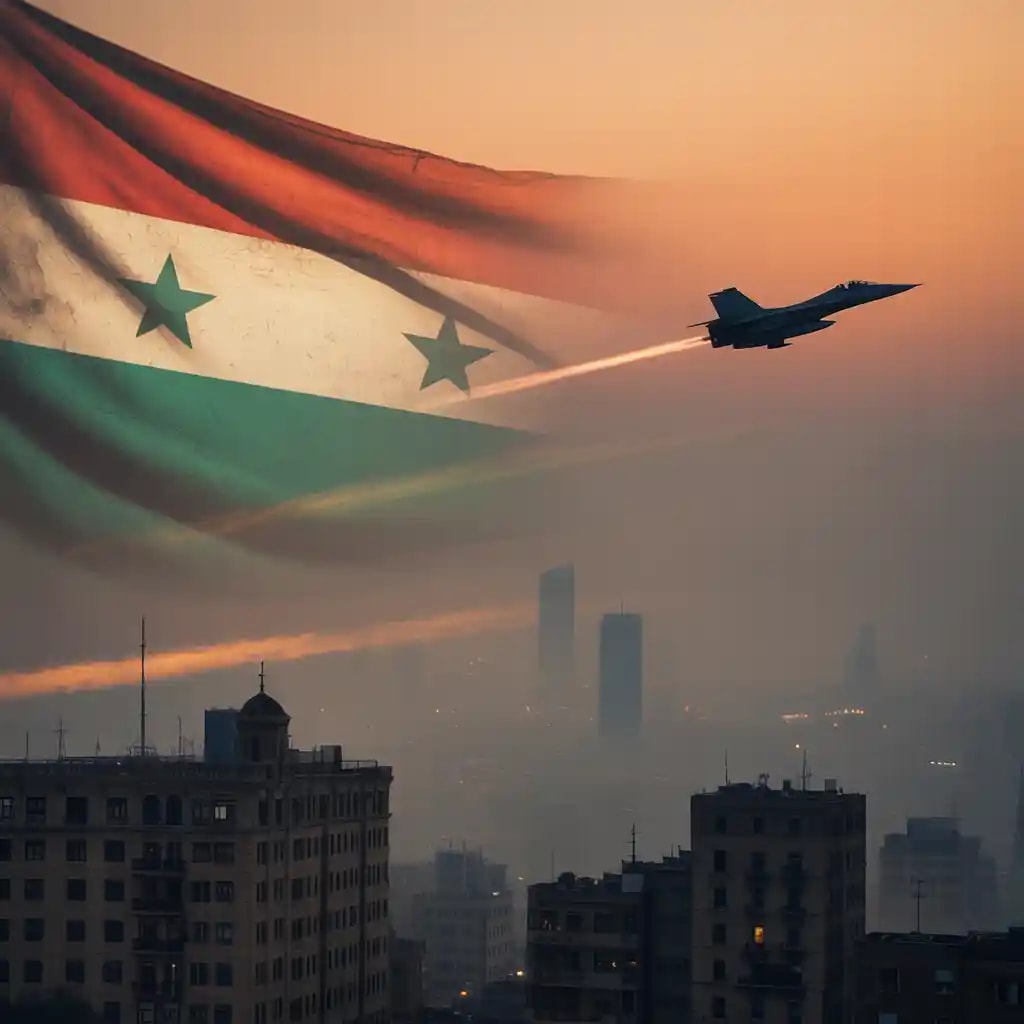
The Middle East rarely finds itself away from the headlines, but Israel’s latest military actions have reignited questions that echo far beyond the borders of Syria. On July 16, 2025, Israeli warplanes launched intense airstrikes on several locations in Syria, including the capital Damascus and the southern province of Sweida home to the country's Druze minority. The Israeli government claims the attacks are meant to protect the Druze community from growing violence in the region. But critics and observers are asking: is this really about protection, or a deeper political move?
The Context: A Region Already in Flames
Syria has been entrenched in civil conflict for over a decade. What began as a popular uprising turned into a battleground involving global powers, sectarian militias, and regional ambitions. In this chaotic mosaic, the Druze an ethnoreligious minority have often found themselves caught in the crossfire.
Recently, tensions escalated in the Sweida province where local Druze militias clashed with pro-government forces and Bedouin tribes. Reports emerged of tanks moving into the region, gunfire in residential areas, and an alarming death toll. Israeli officials responded by launching what they described as "defensive" air raids, aimed at protecting the Druze community.
But how much of this is about protection? And how much is strategic calculation?
The Druze Dilemma
The Druze, though a minority, hold unique significance in the region. Scattered across Syria, Lebanon, and Israel, they are known for their strong communal identity and secretive religious practices. In Israel, they serve in the military and are considered loyal citizens. This makes the Druze a unique bridge n and perhaps a political tool between rival nations.
In Sweida, the Druze have largely remained autonomous, resisting both opposition and government control. Their recent clashes with Syrian forces, however, may have opened the door for Israel to step in under the banner of humanitarian intervention.
Yet, many question whether the Druze truly invited or desired such intervention, especially when it risks turning their province into a new front in a long-standing regional struggle.
Damascus Under Fire
The Israeli strikes weren’t limited to Sweida. Damascus the political and symbolic heart of Syria was also targeted. Several airstrikes reportedly hit military compounds near the Defense Ministry and the Presidential Palace. These weren’t just humanitarian strikes; they were direct messages to the Assad regime.
Israel has long maintained a policy of targeting Iranian-backed groups in Syria, especially Hezbollah. But striking the capital in such a dramatic fashion raises the stakes significantly. It signals not just defense of minorities, but a potential shift toward broader military engagement with all the risks it carries.
Protection or Provocation?
Israel insists it was acting in defense of human rights a rare justification in the realm of hard geopolitics. But critics argue that such justifications are often used to mask deeper motives.
Was Israel truly protecting the Druze, or using them as a pretext to hit Syrian military targets without international backlash?
This question becomes more complex when considering the timing: domestic unrest in Israel, pressure from far-right factions, and growing tensions with Iran all create incentives for outward military projection.
In short, what looks like humanitarianism may well be strategy.
Global Response: Quiet or Complicit?
International reaction has been relatively muted. The United States expressed concern over civilian casualties but stopped short of condemning Israel. The United Nations called for restraint but offered no concrete actions. Meanwhile, Arab states often vocal on Syrian sovereignty remained mostly silent.
Why the quiet?
Partly because many global powers also see the Druze situation as a manageable crisis that does not threaten their direct interests. Partly because Israel remains a key strategic ally for the West in an increasingly unstable region. And partly because the Syrian regime, already mired in accusations of war crimes, lacks international sympathy.
This silence or strategic tolerance may enable further actions without consequence.
The Human Cost
Beyond the politics, real lives are being affected. Local reports indicate at least 3 people killed and dozens wounded in the latest strikes. Infrastructure in Sweida is damaged, civilians are fleeing, and fear is growing among the population.
These aren't just statistics they’re people trapped in a geopolitical chess match. For them, whether the bombs fall under the label of “protection” or “provocation” is irrelevant. The devastation is real either way.
What Lies Ahead?
Israel's strikes on Syria may seem like a limited military operation, but they could have wider consequences:
Escalation with Syria or Iranian-backed militias
Destabilization of Druze communities across borders
New precedents for intervention under humanitarian pretext
Increased geopolitical tension in a fragile region
Ultimately, the question remains: can military force ever be a true tool of protection, or does it always carry the shadow of power?
Final Thoughts
The line between protection and provocation is thin, especially in a region where history is written in blood and borders shift with every airstrike. Israel’s recent actions may be seen by some as a necessary defense of minorities and by others as a dangerous expansion of influence.
For the global community, the challenge lies not just in watching from afar, but in recognizing that silence in the face of conflict often speaks louder than condemnation.
Because when protection becomes a weapon, who really feels safe?
About the Creator
How Astrology Affects Twin Flame Attraction and Separation Cycles.
Twin flame attraction feels instant and consuming. Separation feels confusing and painful. Astrology explains why these cycles repeat. Planetary movements influence timing, emotional intensity, and personal growth. You experience pull and distance through energetic patterns reflected in birth charts and transits.
By Wilson Igbasia day ago in Humans
Wild Card Weekend Recap: What Happens Now?
I think I figured out why I love Wild Card Weekend so much. It's because it's the first playoff anything of the calendar year. The NFL season starts in the fall, and once upon a time, the champion was crowned either on or slightly before New Year's. The evolution of the NFL schedule has resulted in the playoffs starting just into the New Year, and currently, the final week of the season falls on the first weekend of the New Year, with Wild Card Weekend coming a week after that. So yes, chronologically, the NFL's Wild Card Weekend serves as the first playoff anything of the calendar year.
By Clyde E. Dawkins5 days ago in Unbalanced




Comments
There are no comments for this story
Be the first to respond and start the conversation.