
Iran's Nuclear Gamble
Caught between unrelenting adversaries and a weakened regional hold, Iran faces a stark choice: restore its waning influence or risk the perilous path of nuclear escalation.

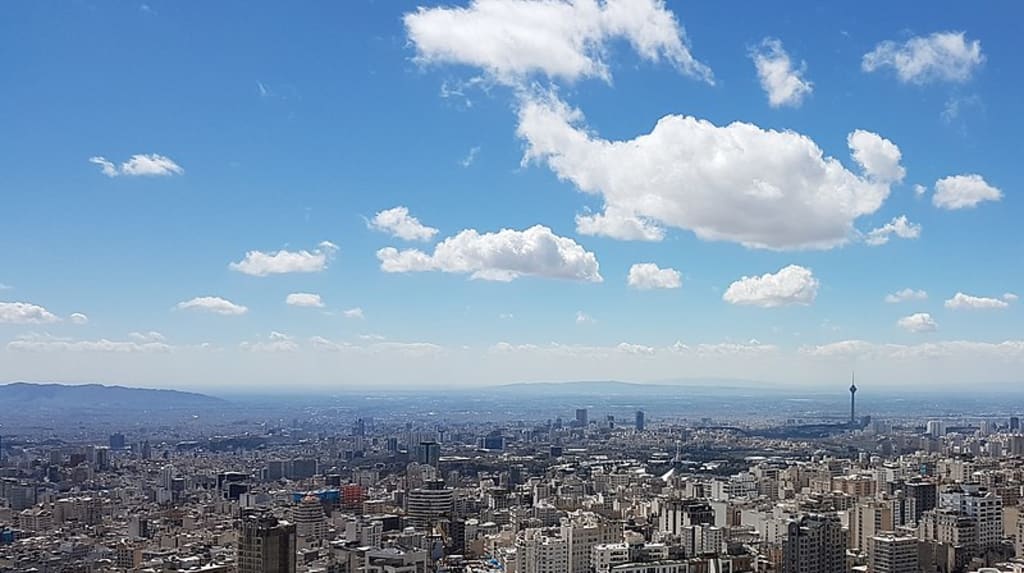
Iran and Israel have emerged as the most adversarial in the Middle Eastern geopolitical theatre.
Iran, a Shia-majority state with regional influence pretensions, has supported a wide range of proxies across the region for decades in a bid to create a counterbalance to Israel with strategic footholds.
At the same time, however, over the past years, Iran's influence and military posture have been severely challenged. The killing of high-profile Iran-allied leaders, especially combined with sustained Israeli strikes against Iranian infrastructure, has some asking critical questions about Iran's future strategy.
Every time Iran faces a setback, there are growing numbers of analysts who question whether Iran might speed up its nuclear ambitions as last-resort deterrence.
Iran's nuclear ambitions always loomed large in Middle Eastern geopolitics, with that country steadfastly maintaining its program was intended for peaceful purposes. With it in a weakened state, however, the nuclear option may start to look more viable for Iran as a means of restoring security and leverage. Here we will try to take a look into some of the most recent military defeats of Iran, how such defeats have affected its regional influence, and what possible consequences may arise if there is any shift in focus toward nuclear development.
Military and Strategic Setbacks for Iran
Support for proxy forces has for a long time underpinned the regional strategy of Iran.
Through groups such as Hezbollah in Lebanon, the Houthis in Yemen, and various Shia militias in Iraq and Syria, Iran has projected power and secured influence across the region. This method has enabled Iran to control territory without engaging directly, provided it with plausible deniability, and tested regional adversaries through indirect means.
But of late, this has proved quite vulnerable. Israel, finding these proxies as an immediate threat to its security concerns, has launched a series of airstrikes and covert operations against such groups. The killings of high-profiled leaders, such as Hamas' Ismail Haniyeh and Hezbollah's Hassan Nasrallah, have been the heaviest blow to Iran's network. These losses, besides weakening the operational capability of these organizations, also gave a psychological dent to Iran and its allies, bringing about an atmosphere of uncertainty and morale breaks among the Iran-backed groups.
Besides the loss of key figures, Israel has conducted hundreds of strikes on Iranian infrastructure in Syria and Iraq, targeting supply routes, weapons depots, and command centers.
These operations, which Israel has seldom publicly acknowledged, have sought to disrupt the logistical networks of Iran and reduce its overall ability to support proxy forces. The strikes underlined the fragility of Iran's own defenses and inability to protect its assets with effectiveness beyond the borders. As these attacks have increased in frequency, it has called into question Iran's ability to maintain control over its sphere of influence after such Israeli aggression.
The reality of these challenges has exposed the fragility of Iran's regional strategy and undermined the perception of Iran as an unshakeable force in the Middle East.
As a consequence, Iran's regional influence was reduced considerably, while its adversaries, including Israel, the United States, and various Gulf states, were given a more confident feeling in their capability to defeat Iranian influence.
Iran's Regional Influence and Proxy Strategy
Although these setbacks have occurred, the employment of proxy forces has remained one of the mainstays of Iranian foreign policy.
Indirect control by proxies of territories deemed important and intervention to impact political dynamics are ways that Iran projects its power and challenges its adversaries. Such a strategy has helped Iran, too, in reducing the threat of a direct confrontation with far more powerful states, such as Israel and the United States.
This strategy has been the most relevant with respect to Iran's national security. The proxy forces grant asymmetric warfare capabilities to Iran, offsetting the conventional military superiority of its adversaries. For example, Hezbollah's rocket-and-missile-equipped arsenal is considered highly critical against northern parts of Israel, while the Houthis' ability to target ballistic missiles at Saudi Arabia has, at times, created situations involving security concern on the part of Iran's regional rivals.
However, the wave of setbacks that has recently occurred has also brought several problems to the fore in the proxy strategy built up by Iran. The loss of key leaders and infrastructure has degraded operational effectiveness, whereas the impact on morale among Iran's allies has simultaneously been deteriorating. Furthermore, the increased frequency of the Israeli strikes has confronted Iran with the need to shift resources to asset protection and to rebuild lost infrastructure, hence overstretching military and financial capacity.
These challenges come with quite a dire economic consequence. For a long time, years of sanctions and mismanagement have weakened the Iranian economy, struggling to provide sufficient funding to proxies. This has come at a price in that it has forced Iran into very tough choices in limiting the ability of Iran to properly support its allies, while undermining influence in key regions. In fact, its regional ambitions have become increasingly circumscribed, and the ability to project power significantly diminished.
Domestic Pressure and the Nuclear Question
There is much pressure internally within Iran, as there is a rather tired populace facing economic hardship and a government trying to cling onto legitimacy.
These economic sanctions, especially by the United States have devastated the economy of Iran characterized by high inflation, unemployment, and declining standards of living. These will, in turn, produce growing discontent among the populace reflected in protests that further weaken the Iranian government.
In this environment, Iran's regime would view the attainment of a nuclear deterrent as a way to safeguard national security, and thereby alleviate internal pressures. Indeed, a nuclear arsenal will not only be a good deterrent against external threats but also increasingly consolidate Iran's position internally by providing the government with an opportunity to rally public support around a symbol of national strength.
The nuclear capability would fundamentally change, from a strategic perspective, the balance of power in the Middle East. Israel, which is widely believed to possess nuclear weapons, has long been the region's sole nuclear power, giving it a significant strategic advantage over its neighbors. If Iran is ever to acquire nuclear weapons, it would challenge Israel's nuclear monopoly and force its adversaries to reconsider their approach to the region.
The nuclear option does not come without risks. Any move toward nuclear development would surely raise eyebrows among the international community-most particularly from the United States and its allies.
Economic sanctions-already a huge burden on Iran-could be stepped up, placing further isolation on the country from the global economy. More than this, a nuclear Iran would surely precipitate a regional arms race, as neighboring states, instead of working to develop their own nuclear capability, would try to deepen their security alliances with the United States.
The JCPOA and Diplomatic Efforts
The Joint Comprehensive Plan of Action, otherwise known as the JCPOA or Iran nuclear deal, was underpinned by this very doctrine of ensuring that Iran would not acquire nuclear weapons through the setting of strict limitations on its nuclear program in exchange for relief from sanctions.
This landmark nuclear deal between Iran and the P5+1, reached in 2015, was an important diplomatic breakthrough which offered a possible path towards regional stability.
But then, in 2018, the Trump administration pulled the United States out of the JCPOA and imposed even more sanctions, prompting the deal's collapse. Since then, Iran has gradually rolled back its compliance with the agreement, restarting some enrichment activities and expanding its nuclear program. These moves have heightened concerns about Iran's intentions and raised the specter of a renewed nuclear crisis.
It has been complicated by a breach of confidence between Iran and America, besides outright opposition from regional actors such as Israel and Saudi Arabia.
The Biden administration had shown its readiness to go back to the deal, but negotiations were slow and bedeviled with difficulties. On its part, Iran has made the lifting of all sanctions a precondition of its return to compliance, while it has at the same time asked for guarantees that the United States will not unilaterally withdraw from the deal again in the future.
The inability so far to restore the JCPOA has left Iran with limited options. Although a diplomatic solution remains arguably the best path toward stability, a lack of progress in negotiations has led some to speculate that Iran could soon turn its back on diplomacy and pursue a nuclear deterrent.
Such a scenario could have wide-ranging implications in terms of regional security, most ominously entailing confrontation with Israel and the United States.
The Regional Response to a Nuclear Iran
A nuclear-armed Iran would send far-reaching ramification for the Middle East.
Israel, which has made it that it would not see a nuclear Iran and survive, would take pre-emptive action to forestall Iran from acquiring nuclear weapons.
One of the options of such a move is an attack similar to those Israel conducted against Iraq's Osirak reactor in 1981 and Syria's Al-Kibar reactor in 2007. Indeed, an attack against Iran would be far more difficult because its nuclear facilities are dispersed and hardened.
A nuclear Iran has also become a looming terror for the Gulf states, especially Saudi Arabia and the United Arab Emirates. Those countries, which consider Iran as one of the big rivals in the region, would most likely try to reinforce their defenses against an already nuclear-armed Iran, whether by pursuing nuclear programs of their own or through strengthened security links with the United States. In either case, such a development would raise the risks of a nuclear arms race within the Middle East itself-a sure means of further destabilizing an already unstable region.
A nuclear Iran would pose difficult choices for the international community, first and foremost for the United States and Europe. Economic sanctions would no doubt be tightened further, but the impact would be limited-as Iran proved to be resilient to economic pressure. Military options are technically feasible but highly risky, given that a possible prolonged conflict would have disastrous implications for the region.
Iran at the Strategic Crossroads
This makes Iran stand at a crossroads, where regional influence and national security have never been more daunting. Indeed, the loss of main stalwarts and infrastructure weakened its military posture and exposed the limitations of its proxy strategy.
The nuclear option can thus increasingly assume the aspect of a panacea in terms of securing Iran's position and deterring its adversaries. However, such a nuclear deterrent would be highly risky, raising the potential for an arms race in the region and earning serious international ire.
For Iran, in turn, the question of either a deterrent against the external threats or a search for a diplomatic settlement will determine the future of the Middle East. Under the JCPOA, there was one possible direction toward stability; otherwise, in default, there is little option to move further. Of course, everything depends upon Iran's evaluation of risks and benefits from nuclear development, and upon the will to make contact with the international community for the sake of a peaceful solution.
It is in this region of age-old rivalries and profound tension that the consequence of such a decision will have the most important effects: it will rebound within the balance of power and the chances for peace in the Middle East.
(dpa, reuters)
About the Creator
Tanguy Besson
Tanguy Besson, Freelance Journalist.
https://tanguybessonjournaliste.com/about/
Keep reading
More stories from Tanguy Besson and writers in Humans and other communities.
Journalistic Integrity vs. Corporate Interests: How Bezos' Choices Affect Democracy
Over the past weeks, Jeff Bezos-an increasingly powerful and influential entrepreneur in the world-has faced unprecedented criticism over one of his decisions regarding The Washington Post, which he bought in 2013.
By Tanguy Bessonabout a year ago in Humans
Time to change your life.
Is it even possible for you to change your life? A lot of people, more than there should be, are unhappy with their lives. But what are they doing about it? Usually nothing. People talk about how shitty their lives are and want change, but are they not taking the actions to change?
By Jen Phillips6 days ago in Humans
When Seeking Comes Home
Most of us begin the spiritual journey believing we are headed somewhere. We imagine a distant horizon where peace waits for us, a place we will finally reach once we have learned enough, healed enough, surrendered enough. We picture nirvana as a destination, a state of perfection that lies far beyond the life we are living now. It feels like something we must earn, something we must chase, something we must become worthy of.
By Julie O'Hara - Author, Poet and Spiritual Warrior5 days ago in Humans



Comments
There are no comments for this story
Be the first to respond and start the conversation.