
Inequality in Society: A Personal and Global Reflection
Understanding the Roots of Inequality and How We Can Grow a Fairer Society Together

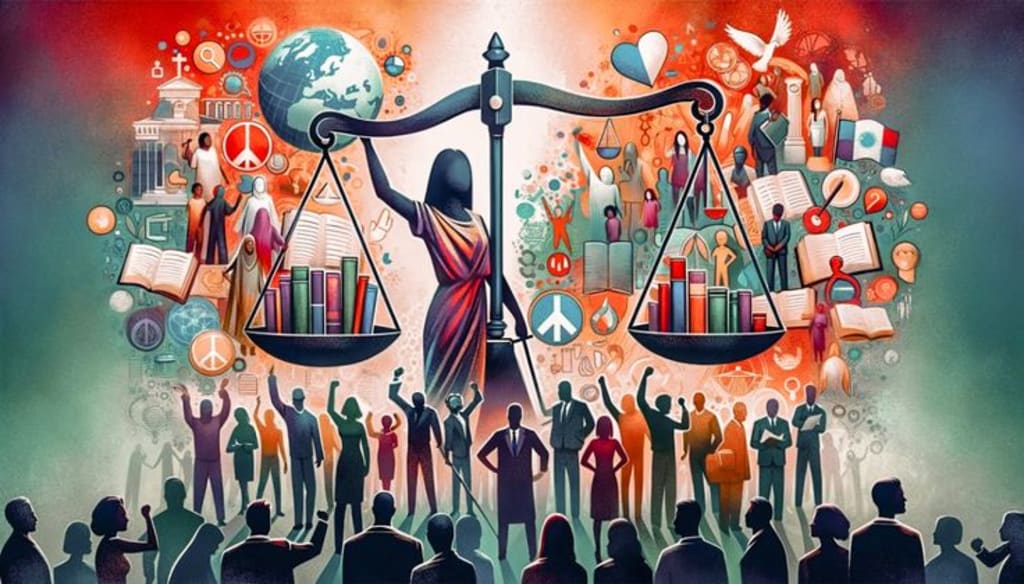
Inequality, in its many forms—economic, social, racial, or gender-based—casts a long shadow over our world. It’s not just numbers on a spreadsheet; it's lives affected, opportunities muffled, and dreams deferred. In this article, I’ll share not only facts and stories but also a personal anecdote—yes, even vegetables get to star—because understanding inequality becomes clearer when we ground it in everyday experiences.
1. What Inequality Looks Like Today
0-1Globally, the richest 1% now own more wealth than the rest of the world combined . 697-0In the G7 alone, the U.S. leads with the highest income inequality (Gini coefficient of 0.434), while France is far more equal with 0.326 . These gaps aren’t abstract—they reflect disparities in education, healthcare access, political influence, and even life expectancy.
856-1Gender inequality also remains pervasive. Girls around the world still receive less education and more unpaid labor, with legal equality for women projected to take centuries more without real effort .
2. Why It Hurts Us All
1221-0Harvard philosopher T. M. Scanlon outlines four foundational reasons society should tackle inequality :
Compassionate justice: Even small sacrifices from the wealthy can create massive improvements in poorer lives. In extreme cases, this can translate into life and death.
Social stability: Persistent gaps breed resentment, eroding trust, and increasing political extremism—something already visible in modern democracies.
1378-2Economic inefficiency: When opportunity is hoarded, innovation suffers. As economist Jason Furman highlighted, middle-class stagnation hinders overall productivity .
Undermining democracy: Wealthy individuals and corporations wield grossly disproportionate power, steering policy away from the collective good.
3. A Vegetable Tale
A few years ago, I volunteered at a community urban garden in my city. The amazing thing wasn’t the tomatoes or the kale—it was who tended them. Each morning, neighbors of very different backgrounds converged. Some arrived on bicycles straight from office jobs, others on foot after a long shift at a local factory. All working, all hopeful.
I once overheard someone joke, “This zucchini is like inequality—some of us get more seeds to plant than others.” But that zucchini became a lesson: even when resources are shared at eye level—sunlight, soil, seeds—external factors (time, knowledge, access) lead to uneven harvests.
It reminded me that structural inequality often trumps good intentions. Even when systems aim for fairness, lived realities still separate those who flourish from those who merely survive.
4. The Deep Roots of Inequality
1903-4Inequality isn’t incidental: it is systemic. Race and wealth gaps have historic roots in colonialism, discriminatory laws, and persistent segregation. According to Investopedia, White families in the U.S. hold many times the assets of Black and Hispanic families—and that gap has worsened since the Civil Rights era .
3280-0On top of that, pandemic-era impacts were not equally shared. Studies show that COVID hit low-income and minority communities far harder, both health- and wealth-wise .
5. Solutions That Work
Addressing inequality requires multi-layered action:
1. 3482-1Tax and fiscal reform: Progressive taxes on capital gains, wealth, and inheritance can redistribute resources to public goods. The UK’s report suggests aligning capital gains with income tax to help close the gap .
2. Universal education access: Early childhood programs, affordable quality schooling, and lifelong learning help level the playing field.
3. 3810-1Labor-rights and living wages: A living wage, secure contracts, and union protections not only support individual families but invigorate broader economic growth .
4. Targeted social policies: Benefits like universal child allowances and affordable housing can lift vulnerable populations strongly and quickly.
4156-1Countries like India, with a relatively low Gini coefficient (around 0.255), show that more equal income distribution is achievable—but perceptions, fueled by regional and societal contrasts, remain critical .
6. Why We Should Care
4536-0Inequality corrodes social trust and cohesion. Julian Richer warns that unchecked disparities could push voters toward extremist politics . The pandemic underscored this: when public health risk is uneven, none of us is safe.
Moreover, inequality erases potential. A child growing up in poverty, without nutrition, education, or support, is likely to remain trapped—not from lack of will, but due to circumstances.
7. A Garden of Hope
Returning to my garden: by the end of the season, I witnessed thriving produce and community bonds. Yet, I also saw some beds outperforming others, due to experience, tools, or simply time. We countered by sharing knowledge, seeds, and compost.
That simple act—neighbors helping neighbors—mirrors the bigger picture. Policies can only go so far. True change happens when we care for each other, planting seeds of fairness wherever we can.
8. Final Thoughts
Inequality is not a statistic—it’s a lived experience that touches families, neighborhoods, and nations. But within this challenge lies an opportunity: to build communities that put shared well-being front and center.
By reforming policies and nurturing empathy—whether through urban gardens or social investments—we grow a future where everyone has a chance to thrive, not just survive.
About the Creator
Sherooz khan
I write emotional stories, real-life experiences, and motivational thoughts that touch the heart and mind. Follow me for content that inspires, connects, and makes you feel seen, heard, and understood. Let’s tell stories that matter.
Keep reading
More stories from Sherooz khan and writers in Humans and other communities.
Pollution and their Effects on the Environment
Pollution: Ang unwanted and undesirable change in the environment that affects the atmosphere and disturbs the ecosystem is called pollution. The addition of certain contaminants or pollutants to the environment is also called pollution Animals, plants, humans and all other organisms suffer due to pollution. The major types of pollution can be categorized as follows. Air Pollutants and their sources: Pollution began to be recognized as a serious threat during the industrial revolution of the 19" century. During this period, burning of fossil fuels in the factories and industries led to a high level of waste gases in the air. Like other forms of pollution, air pollution has dangerous effects on the environment. During air pollution, harmful pollutants are released into the air. These harm all living organisms. It may be man made of natural Carbon monoxide (CO), sulphur dioxide (50,), oxides of nitrogen (NO and NO) chlorofluorocarbons (CFCs), etc, are the main air pollutants, produced by human activities and natural sources. Harmful effects of air pollutants: 1. Acid rain: Chemical reactions involving air pollutants can create acidic rain compounds which con cause damage to vegetation and buildings. Acid rain can destroy leaves of plants 2. Eutrophication: Rain can carry oxides of nitrogen to rivers and soil. This can cause abnormal growth of algae in water bodies making conditions for ather aquatic organisms very difficult to live. 3. Ground level ozone: Chemical reactions involving air pollutants create poisonous ozone (O3) gas, which effect People's health and can damage plants and animal's Life. Effect of Human Activities on Human environment: Generally human activities such as ute of vehicles, burning of fuels, aerosol sprays, fertilizers, water products, insecticides and deforestation are affecting environment. These actions con cause degradation of habitats and also result in the depletion of natural resources. Green House Effect: When the UV (ultraviolet) radiations enter the earth, a part of it is absorbed by the earth and the rest are reflected back to the atmosphere. Some gases present is the atmosphere eg: carbon dioxide, methane, asides of nitrogen, water vapors, etc. trap a part of the heat reflected by the earth, causing an increase in the atmospheric temperature. This atmospheric effects is known as greenhouse offer. The gases involved in the green house effect are called green house gases. e.g carbon dioxide, carbon monoxide etc. An increase in greenhouse effect can lead to global warming and climate change. Cool burned in power stations contains carbon, which combines with oxygen to form carbon dioxide. Which is also a cause of increase of carbon dioxide concentration in air. Global Warming: Global warming refers to the rise in overage temperature on earth. Due to human activities like burning of fuels, industries vehicles etc, the green house games are continually increasing in the atmosphere and speeding up the green house effect. As result, the earth is getting warmer and warmer this phenomenon is known as global warming Global warming causing the glaciers to melt at an alarming rate. The show on Polar Regions and the mountains melts faster, causing floods and raise in the level of seawater. The climate of many regions of the world is also changing due to global warming. Global warming a serious threat to the life on earth, especially to future generations. Acid Rain: When the quantity of acids increase in the atmosphere, it leads sa acid rain during rainfall. Acid rains are the result of sive carbon dioxide, sulphur dioxide, smoke and nitrogen dioxide in the atmosphere. When these gases come in contact with water vapours, acids such as sulphuric acid, were said t ere formed. These acids make the rain water acidic. Acid rain harms a lot of living and non living things. For example. • Kills the aquatic life in rivers, ponds and lakes. • Destroys the leaves and bark of trees. • Corrodes the metals and stones used in buildings. • Damages the crops. ∆ Depletion of Ozone Layer: The word "Ozone is a Greek ward which means strong odour. Ozone is a gas made up of three oxygen atoms (0, Ozone is formed when sunlight hits oxygen molecules (0) and breaks up them into individual atoms. These individual atoms then combine with O. molecules and make O, or ozone molecules. The upper porn of atmosphere has a fairly high concentration of ozone molecules, known as the ozone layer (Ozone sphere). The ozone layer protects us from harmful ultraviolet (UV) rays of the sun. Chlorofluorocarbons (CFCs) which are used in air conditioners, refrigerators, spray, etc enter the air due to leakage from these appliances. On reaching the ozone layer they break down the ozone molecules and thus cause depletion of the ozone layer. This phenomenon of the ozone layer depletion is not only harmful to human beings but also damages other organisms. Deforestation: Deforestation refers to the cutting and removal of forests for human use. Forests bring favourable characteristics to an area. They stop storms, soil erosion and bring rain. Forests are the main source of timber, firewood, resins, gums, medicines and habitat for large number of plants and animals. However, increasing human population has resulted in the need for increased demand for firewood, construction and more area for harvesting. Human beings are therefore engaged in deforestation. Increase in trade and possibilities of exporting wood items like furniture etc. have speed up the process of deforestation. However, the effects of deforestation are more severe than just the loss of trees. Deforestation is affecting human life to a great extent by bringing about negative changes in the environment and atmosphere. Deforestation causes many problems some of which are: *Air Pollution *Green House effect. *Destroy habitat for wildlife. *Global warming and increasing sea level. *Soil erosion. *Less rain. *Sea animals dying.
By Sherooz khan6 months ago in Earth
Day 4 of Quitting
If this is how sobriety feels, maybe it’s better to go through life a little buzzed… this, along with other hits like, I want to kill myself, I wish I was dead, and I’m going to throw myself off a bridge have been the only thoughts on rotation these past few days. I promise myself that if, in a month, I still feel like this (‘this’ meaning despondent, full of rage, and simultaneously numb) I can go back to smoking. Until mid-February though? Nicotine is off the table.
By sleepy drafts6 days ago in Longevity


Comments
There are no comments for this story
Be the first to respond and start the conversation.