
Ilona Maher’s Dance Journey: Challenging Beauty Standards and Facing Body Bias in Dancing with the Stars
They Are Still Not Ready for the Goddess Body Type!

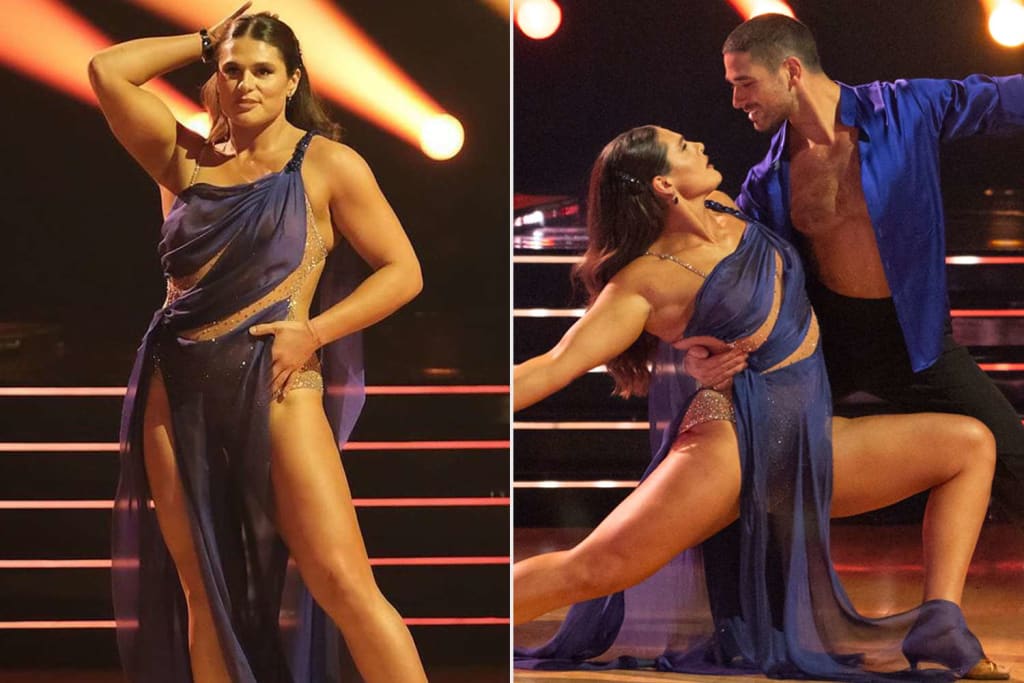
In the competitive world of Dancing with the Stars, where precision and artistry dominate, few contestants stand out as much as Ilona Maher, the rugby Olympian whose unique strength and powerful athleticism bring something refreshingly different to the dance floor. Yet, as Maher takes on a series of challenging routines, the feedback she receives often seems to underscore unspoken biases about her body type and physical presence — biases deeply rooted in long-standing expectations for female dancers and performers.
Dancing in a Body-Conscious World
Maher’s time on Dancing with the Stars has not been without struggle. While her athleticism is undeniable, she has faced critiques that, at times, seem rooted in subtle disapproval of her build and movements. Her muscular, rugby-trained physique starkly contrasts the lithe and slender bodies traditionally associated with ballroom dance, which may not be overtly addressed but seems to influence the type of feedback she receives.
Following a performance of Quiet Riot’s “Cum On Feel the Noize,” Maher made some technical missteps, losing rhythm and faltering in timing. Judge Carrie Ann Inaba, while offering encouragement, noted how hard it can be to recover from going off-tempo. Meanwhile, Bruno Tonioli mentioned that while he loved her enthusiasm, she “went wrong so many times” that points had to be deducted, subtly implying that her mistakes stemmed from something larger than technical error. In many ways, the feedback felt rooted in an unspoken set of expectations regarding how a female dancer should move and appear, perhaps less flexible in appreciating Maher’s powerful movements and unique physicality.
The Silent Expectations of Female Dancers
While seemingly straightforward, the comments directed at Maher can carry deeper, subconscious biases. In ballroom dance, female performers are often expected to embody grace and fluidity, reflecting a narrow ideal that favors thin, long-limbed bodies capable of executing movements that appear light and effortless. These standards, embedded in the dance culture, can make it difficult for women with muscular builds to gain acceptance in genres traditionally valuing slender physiques. Historically, ballroom and competitive dance often impose stringent beauty standards, which have been linked to higher rates of body image issues and eating disorders among female dancers and contestants. When competitors like Maher step into this realm, the underlying cultural biases inevitably color perceptions, even if inadvertently.
In ballroom dance competitions, female bodies are often praised for their “delicate” and “graceful” movement. In contrast, stronger, athletic bodies are labeled “intense” or “too powerful,” subtly undermining the effort and skill they bring. Although the judges’ feedback is centered around Maher’s technique and rhythm, it may also carry undertones of discomfort with her strength and power. This perception might stem from traditional notions of femininity in dance. These standards could explain why Maher’s performances are often critiqued for accuracy and failing to align with an unspoken aesthetic ideal.
Rewriting the Narrative: Maher’s Powerful Vulnerability
Maher has publicly acknowledged the challenges she faces, sharing her own frustrations and emotional struggles after harsh feedback from the judges. After one of her performances, Maher admitted to feeling overwhelmed, expressing her disappointment at falling short of her expectations. Her openness has been met with immense support from fans, who find her relatable and inspiring, especially as she breaks boundaries for women with athletic builds in ballroom dance.
Maher’s vulnerability has resonated with audiences in a unique way. Her emotional honesty and openness show a different side of strength, one that challenges traditional ideas about who belongs in dance and what a dancer’s body should look like. Her courage in expressing vulnerability, coupled with her physical strength, is beginning to redefine perceptions of femininity on the dance floor. By challenging these norms, she subtly pushes back against a culture that too often favors a narrow set of characteristics and appearances.
The Impact of Body Bias in Dance
Body bias in dance is far from new. In both ballet and ballroom, rigid standards have long dictated not only how dancers should move but also how they should look. Research on female athletes and performers highlights how societal expectations surrounding femininity can create barriers, as muscular and athletic builds are sometimes seen as “too masculine” for genres that prioritize elegance. For contestants like Maher, these biases are a reminder that traditional ideals about women’s bodies continue to influence who is seen as “fit” for dance — even if these biases are often unspoken.
As a rugby player, Maher brings an undeniably powerful presence that showcases the athleticism often undervalued in female dance competitions. Her ability to blend athletic power with emotional openness offers a new perspective on what female dancers can bring to the stage. As viewers continue to support her journey, her performances may begin to reshape expectations within the dance world, inviting a more inclusive perspective that values skill over size and strength over slenderness.
Moving Forward: Embracing Strength and Diversity
Ilona Maher’s experience in Dancing with the Stars illuminates the subtle, often unacknowledged biases in perceiving women in performance art. Her journey sheds light on a need for broader acceptance in dance — a space where all body types are celebrated and athleticism is as valued as elegance. In moving forward, the show and its judges have an opportunity to embrace the diversity Maher represents, setting a precedent for contestants who defy traditional molds and redefine what it means to dance.
If Maher’s presence on the show encourages even a fraction of this change, it could significantly shift how we view female athletes and dancers. By recognizing the artistry within her strength and embracing diverse body types on the dance floor, shows like Dancing with the Stars can pave the way toward a more inclusive future in which every kind of body is appreciated for its unique ability to bring movement to life.
About the Creator
Nazgol Rasoolpour
An emerging researcher with a passion for horror narrative. My focus revolves around the captivating subgenres of religious horror and techno horror.
Reader insights
Outstanding
Excellent work. Looking forward to reading more!
Top insights
Eye opening
Niche topic & fresh perspectives
On-point and relevant
Writing reflected the title & theme
Keep reading
More stories from Nazgol Rasoolpour and writers in Humans and other communities.
The Perils of Politeness: How *Speak No Evil* and *Woman of the Hour* Expose Society’s Dangerous Expectations on Women
In recent years, a strikingly relevant theme has emerged in horror and thriller films: the consequences of prioritizing politeness over self-protection. Two notable examples, *Speak No Evil* (2022) and *Woman of the Hour* (2023), explore how societal expectations surrounding politeness and deference can place individuals, especially women, in vulnerable and dangerous situations. These films highlight a pervasive issue women face in real life — the pressure to be polite, even when their instincts tell them otherwise. By analyzing these films through a feminist lens, we can better understand how societal conditioning often inhibits women from asserting boundaries in situations that demand self-preservation.
By Nazgol Rasoolpourabout a year ago in Humans
Autonomy Is The Real Privilege
Good morning, freedom-seekers! Today we’re gonna be looking at autonomy. A strange word, I know; one many would probably look at blankly and run away from on sight. We’re gonna figure out what it actually means, consider how it’s achieved, and decipher just how deeply most of us are tangled up in dependence without realising it.
By That ‘Freedom’ Guyabout 7 hours ago in Humans
Technology Effects on Humans
Introduction Technology has become a very important part of human life. From the moment we wake up until we go to sleep, we use technology in many ways. Mobile phones, computers, the internet, and machines have made life easier and faster. Technology helps humans to learn, work, travel, and communicate. However, along with its benefits, technology also has some negative effects on human health, behavior, and relationships. In this essay, we will discuss how technology affects humans in both positive and negative ways.
By LegacyWords3 days ago in Humans



Comments
There are no comments for this story
Be the first to respond and start the conversation.