
I Saw Hell as an Introvert
Life of an introvert

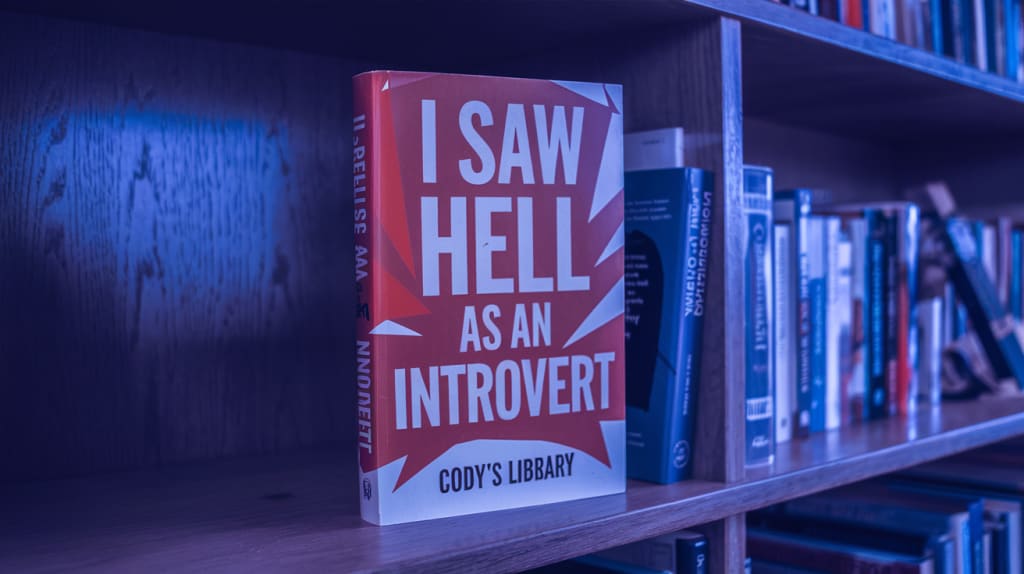
Have you ever been dragged to a party where you knew no one, stood in a corner pretending to text, and prayed for a sudden power outage so you could leave unnoticed? If so, congratulations—you might be an introvert! And if you're an introvert, you’ll understand when I say that navigating a world designed for extroverts sometimes feels like a one-way ticket to hell.
I know this because I’ve been there. Not in the fire-and-brimstone way, but in the "Why am I in this networking event surrounded by small talk and loud laughter?" kind of way. The kind of hell where people ask, "Why are you so quiet?" as if it’s a personality flaw, or when your mind goes blank during a group conversation, and you start nodding like a malfunctioning robot.
But over time, I learned that being an introvert isn’t a curse. It’s actually a superpower—if you know how to use it. So, if you’ve ever felt like an outsider in a world that celebrates the loudest voices, let me share my journey, my struggles, and how I found a way to be myself without feeling like I had to change.
The Struggle of Being an Introvert in an Extroverted World
Being an introvert doesn’t mean you hate people—it just means that social interactions drain you faster than your phone battery at 5% with no charger in sight. But society often misinterprets introversion as being anti-social, unfriendly, or even arrogant.
I remember one particular nightmare—my first day at a new job. My manager introduced me to a room full of colleagues, all chatting enthusiastically. “Say something about yourself,” he prompted. My brain froze. What do I say? “I like books”? “I prefer texting over calling”? Instead, I just smiled awkwardly and muttered, “Umm... nice to meet you.” Not exactly an award-winning introduction.
Then came the lunch breaks. Groups formed like clockwork, and I, the lone wolf, ended up eating at my desk. Not because I didn’t want company, but because the thought of trying to join a conversation felt more exhausting than running a marathon.
Weddings, birthday parties, and family gatherings weren’t much better. There’s always that one aunt who asks, “Why don’t you talk more? You’ll never find a spouse like this.” (Thanks, Aunt Carol, I was totally waiting for that life-changing advice.)
But the worst part? The guilt. The feeling that maybe I should be more outgoing, more social, more talkative. That maybe something was wrong with me.
Learning to Accept Myself
The biggest turning point came when I realized that being an introvert wasn’t something to "fix." It was just a different way of experiencing the world. I didn’t need to force myself to be the life of the party—I just needed to find a way to be comfortable in my own skin.
Here’s what helped me:
1. Stop Apologizing for Being Quiet
Society glorifies extroversion, but that doesn’t mean introversion is a flaw. You don’t owe anyone constant conversation. Silence isn’t awkward—it’s just space between words. If someone asks, “Why are you so quiet?” just smile and say, “I’m a great listener.” Watch them scramble to fill the silence.
2. Find Your Strengths as an Introvert
Introverts are deep thinkers, great listeners, and fantastic at one-on-one connections. Instead of forcing myself into loud, energy-draining situations, I focused on using my strengths. I had meaningful conversations instead of trying to keep up with fast-paced group banter. I became the person people confided in. And I realized that my quietness wasn’t a weakness—it was my power.
3. Set Boundaries Without Feeling Guilty
It’s okay to say no to social events that drain you. You don’t have to attend every party, answer every phone call, or engage in small talk just to fit in. Your energy is valuable—spend it wisely.
4. Find Your People
Not everyone will understand your need for solitude, but the right people will. Instead of trying to fit in with the loudest voices in the room, I started looking for those who appreciated deep conversations, quiet moments, and the joy of simply existing together.
5. Push Your Comfort Zone—But on Your Own Terms
Growth doesn’t mean forcing yourself to become someone you’re not. It means learning to navigate the world in a way that aligns with your personality. I started speaking up in meetings—not because I wanted to be the center of attention, but because I had ideas worth sharing. I attended social events—but I gave myself permission to leave when I felt drained. Small, intentional steps made a difference.
Embracing the Power of Being an Introvert
Being an introvert isn’t about avoiding people; it’s about managing your energy. It’s about knowing when to engage and when to recharge. It’s about finding value in deep connections rather than surface-level interactions.
So, if you’re an introvert struggling to navigate an extroverted world, remember this: You don’t need to change who you are—you just need to embrace it. The world needs listeners as much as it needs talkers. It needs deep thinkers, quiet observers, and people who can see beyond the noise.
And if anyone ever tells you to "just be more outgoing," ask them this: “Would you tell a cat to bark?”
Because honestly, that’s what trying to force an introvert to become an extrovert feels like. And personally, I’d rather be a quiet, mysterious cat than a barking dog trying to fit in.
About the Creator
Author kelechi
Discover insightful content that blends expertise with fresh perspectives. Whether you're seeking in-depth analysis or practical advice, our page offers valuable information tailored to your interests. Dive in and stay informed.
Keep reading
More stories from Author kelechi and writers in Humans and other communities.
You Can’t Take Val Serious
Have you ever met someone who could make you question reality itself? Someone who tells you a story so convincingly that you’re halfway through believing it—until they burst into laughter and say, “I was just joking!”? If you haven’t, then you haven’t met Val.
By Author kelechiabout a year ago in Humans
The Shift From Pisces to Aquarius: From Following to Connecting
Astrological ages describe long arcs of cultural development, each lasting roughly two thousand years. These eras are not defined by single events but by gradual changes in consciousness, values, and collective orientation. The transition from the Age of Pisces to the Age of Aquarius marks one of the most significant shifts in human history, not because of a change in the stars themselves, but because of the change in how humanity interprets meaning. The Piscean era emphasized devotion, sacrifice, and hierarchical spiritual authority. The Aquarian era emphasizes connection, shared intelligence, and the dissolution of hierarchy. This shift can be summarized in a simple contrast: in Pisces, the savior said “Follow me.” In Aquarius, the savior says “Connect.”
By Julie O'Hara - Author, Poet and Spiritual Warriorabout 10 hours ago in Humans
Bomb Scare
It was 2027, and the world never thought it would happen. A missle hit the United States, but it wasn't where they had anticipated. A little town in the northeast was hit by a missile strike, they didn't know why, and they didn't know exactly where it hit, but they did know it was a coastal community, somewhere between Maine and Delaware.
By Gregory Payton6 days ago in Fiction


Comments (1)
Omg I have been there to that party long ago lol pretending it’s fab lol nice work ♦️♦️♦️♦️✍️