
I’m Feeling the Generation Gap
It is more like a chasm!

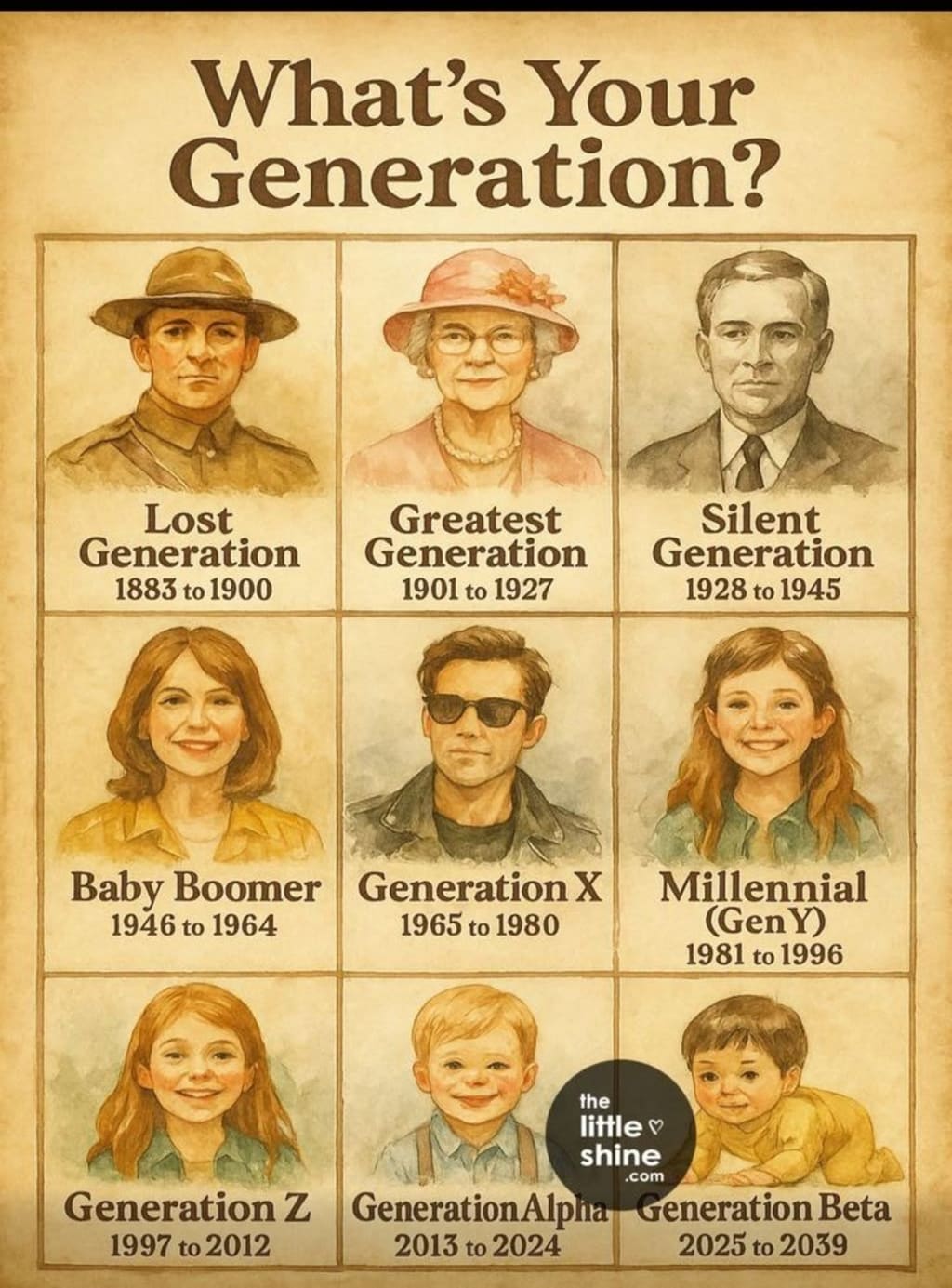
Funny thing, as you get older, everything changes. We start to regress. I call it the cycle of life. We start out as infants who are dependent on our parents. As we get older, we regress and become dependent on our children. Now, I don’t have children, so I am going to be in real strife in the not-too-distant future.
We also go backwards in our behaviour. Some call it senility. I prefer to think it is more a problem of data overload. I have accumulated so much data (knowledge) over the years that it takes me longer to find it in my brain. That may also be why you go deaf: all that data puts extra pressure on your inner ear, so it does not work as well.
Aging gracefully is just a nice way of saying you’re slowly looking worse. However, when you consider the alternative, it’s not really that bad.
I tell people that I am becoming a grumpy old man. Truth is, I am already there. I just don’t get the younger generation. For me, the generation gap is becoming more of a chasm than a gap.
Baby boomers vs. the rest of the world
I’m a baby boomer (1946-1964). Hardworking, loyal, competitive, and goal-oriented, I am motivated by recognition and achievement.
Looking back on my years, I would say I spent too much time focused on success. I spent over 16 years (full-time and part-time) at the university to earn qualifications. Yes, they served me well in terms of employment, but I missed out on a lot of life in doing so.
I was definitely goal-oriented and hardworking. At university, I was a workaholic. I got my qualification more from hard work and persistence than anything else. At the height of my career, I spent way too much time working. My average day started at about 6 a.m. and went until after 7 p.m.
I grew up with significant technological change and learned to leverage available resources. Resource options are so much greater these days than when I was growing up. Technology has spoiled younger generations. They expect it as an answer, not a privilege. Cars, phones, and computers are a few examples.
Later generations have no concept of life without a mobile phone, for example. The thought of not having fifty TV channels to select from does not compute.
I came from a generation where, for the most part, ethics were an important behavioural trait. Violence was much lower back then. People respected each other's lives and property. Graffiti was non-existent. Today, it is rampant.
I don’t judge anyone, but I’ve struggled with the idea of two people of the same sex being “married” and having kids. I do not frown upon, nor am I saying anything negative. Simply, it is a different world now, and I accept that. Growing up and in my early work years, homosexuality was hidden. It was frowned upon and rarely discussed.
Baby boomers believed it was important to do their best and get the most out of life. Success was measured by the size of your house, the make of the car you drove, and the amount of money that you had.
You had to be successful unless you were left an inheritance from your family. You purchased a house through hard work and saving, and it is a priority.
The next generations
Later generations—Gen X, Millennials, Gen Z, and Gen Alpha—each have unique traits. Their key behaviours and beliefs naturally arise from changing global circumstances.
Gen X (1965 – 1980) was born into a world of change. AIDS hit the world. Divorce rates rose in many countries. Both partners began to work more out of need and survival, not just desire. They became the glue of society. Many Gen Xers later became key leaders in tech.
Millennials (1981-1996) are today the biggest component of the global workforce. Hey are just entering the phase of their wealth accumulation. Many are burnt out from the relentless pursuit of getting ahead, such as buying a house. They also have a false sense that everything will be alright.
This is also the generation where many still live at home. As a baby boomer, moving out of home was one of those goals that you wanted to achieve as soon as possible. Today’s millennials do not have, either by desire or necessity, the same luxury.
Gen Z (1997 – 2012) has the biggest challenges. They have been born into a world of technology and social media, and all the influences that come with them. They question everything and trust nothing. Who can blame them with the state of the world as it is?
A lot is made of the generation gap. The term “generations” was coined in the 1960s by sociologists. They tried to explain why people of different ages think and believe differently.
I certainly do not envy the most recent generations. Things are different now, and that is probably the best way to explain the generation gap (chasm). It is nobody’s fault. It is simply life in motion. We all respond to circumstances differently; that is human nature.
Generational differences in beliefs, politics, language, and values can cause misunderstandings and tension.
The generation gap results from differences in how we see the world based on our experiences. They will always be different. I see the world differently than a 25-year-old would. A ten-year-old now will see the world very differently in fifty years.
Then again, maybe I'm just becoming a grumpy old man!
Till next time,
Calvin
About the Creator
Calvin London
I write fiction, non-fiction and poetry about all things weird and wonderful, past and present. Life is full of different things to spark your imagination. All you have to do is embrace it - join me on my journey.
Keep reading
More stories from Calvin London and writers in Humans and other communities.
Autonomy Is The Real Privilege
Good morning, freedom-seekers! Today we’re gonna be looking at autonomy. A strange word, I know; one many would probably look at blankly and run away from on sight. We’re gonna figure out what it actually means, consider how it’s achieved, and decipher just how deeply most of us are tangled up in dependence without realising it.
By That ‘Freedom’ Guyabout 16 hours ago in Humans
Marc Guéhi
Marc Guéhi is a professional football player who is known for his calm defending, strong leadership, and smart decision-making on the field. He plays as a central defender and represents both club football and the England national team. Over the years, Marc Guéhi has become one of the most trusted young defenders in modern football.
By Farhan Sayed5 days ago in Humans
Smart phones, Humans and Aliens.
WARNING. I will be tapping into one of your favorite creative tensions: The absurdity of humans worshipping their glowing rectangles as if they were tiny oracles. There’s something deliciously poetic about that contradiction, and it lends itself beautifully to an instructive proviso.
By Novel Allen5 days ago in Poets




Comments (3)
Very accurate I love them your the best 🦋🙏🦋
I'm a Millenial but even for me it is so hard to keep up with the changes that's happening
Boy, these are spot on, Calvin. I’m moving into that crabby old lady…I’m afraid it’s an easier fit than I’d like to admit. Lol