
I didn't act recklessly. How could I have contracted AIDS?
There are 1.3 million new cases of AIDS! Many innocent people have been affected! In public places, always adhere to the "4 Don 'ts" principle


I didn't act recklessly. How could I have contracted AIDS?
Since Xiao Li was diagnosed with AIDS, he has been unable to figure out how he suddenly got involved with AIDS.
In fact, he had already shown symptoms several months ago. At that time, rashes appeared in many parts of his body. Even after taking medicine, they didn't improve and often recurred. However, he just thought it was eczema and didn't pay much attention to it.
Later, he developed low fevers one after another, and with repeated oral ulcers, he had no choice but to go to the hospital for a blood test. To his surprise, this test diagnosed him with AIDS.

Many people think that AIDS is a disease that only certain special groups can get and that ordinary people have no chance of encountering it. Some even think that AIDS is far from their lives. But the reality is that almost every year, there are innocent people getting infected, and some people don't even know how they got it.
Today, let's talk about those things related to AIDS.
I. The Current Situation of AIDS Infection Globally and in China
In 2023, the Joint United Nations Programme on HIV/AIDS released a set of AIDS data. According to statistics, there were approximately 1.3 million new AIDS patients worldwide, 630,000 people died from AIDS-related diseases, and the total number of global infections was about 39.9 million.
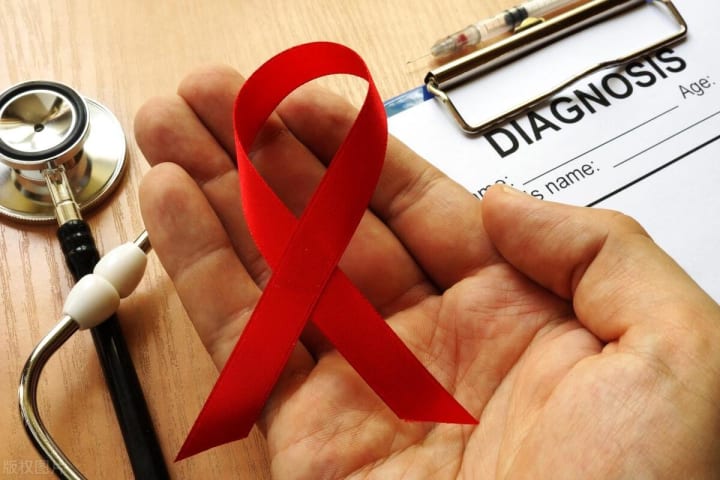
In China, the current number of AIDS patients has reached over 1.32 million, equivalent to nearly 1% of the country's population.
AIDS is actually a disease caused by being infected with the immunodeficiency virus. This virus does not kill you directly but gradually damages the human immune system, causing immune cells to lose their ability to resist pathogens. This exposes the body to the risk of infection and disease, making it easy to contract diseases that are not usually contracted but are very serious, ultimately dragging down one's health.
This virus can be transmitted through many channels. Processes such as the exchange of body fluids like blood, semen, vaginal secretions, amniotic fluid, and breast milk may all be stealthily acquired.
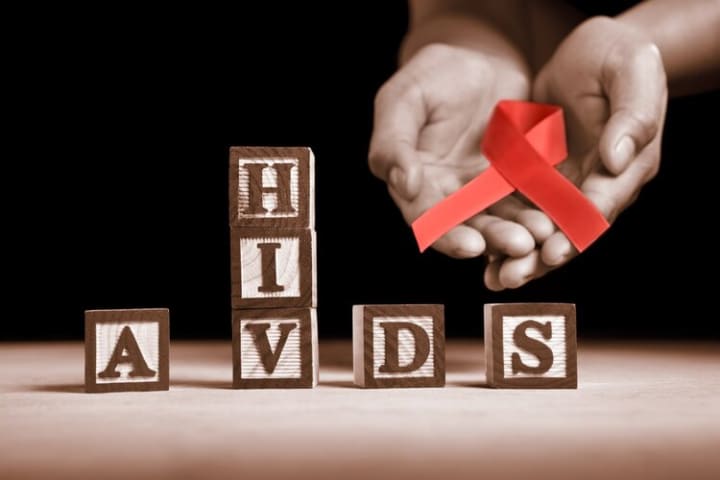
Many people think that AIDS is only a matter for young people?
In fact, the elderly are also a high-risk group for AIDS. According to the relevant data released by the Chinese Journal of Epidemiology, the number of AIDS patients over 50 years old in China has been increasing year by year. From 2015 to 2022, the number of confirmed cases rose from 32,850 to 51,856.
The high incidence of infection among this group is actually due to the habitually overlooked sexual needs of the elderly. Especially for elderly men, when their sexual needs are not met, it is very easy to force them to engage in illegal sexual services or same-sex behaviors, thereby increasing the risk of HIV infection. Additionally, during sexual life, the elderly have a preconceived notion that they do not need contraception when they are old. Therefore, the incorrect failure to use condoms for protection has also greatly increased the risk of HIV infection.

Second, after being infected with AIDS, these symptoms will be very clear
AIDS is not a disease that emerges suddenly. As a chronic progressive disease, AIDS patients go through three main stages from infection to onset.
1.Acute infection stage
About half of the infected people may present with obvious symptoms, mainly including low fever, rash, nausea, fatigue, abdominal pain, diarrhea or muscle and joint pain, etc. The symptoms in the acute stage usually improve on their own within 1 to 3 weeks.
From infection to the production of antibodies and then to the detection of positive antibodies, this process usually requires an interval of 2 weeks to 3 months, which is known as the window period. Patients may be infected but not detected, and there is also a risk of transmission.

2. Asymptomatic infection period
It is also the incubation period after HIV infection. Patients may have no clinical symptoms for up to 10 years or even longer, but they are still contagious. Through testing, the HIV virus and antibodies in the body can be detected.
3. The onset period of AIDS
After the incubation period ends, as the immune system continues to collapse, the patient will enter the early stage of the disease, where abdominal lymph node enlargement or lymph node enlargement in more than two other parts of the body may occur. Until the immune system completely collapses, simple pneumonia or other infectious diseases can kill the patient.

Three, to stay away from AIDS, there are four things you must avoid
The high incidence of AIDS in recent years has also sounded a resounding alarm for us. How can we avoid possible infection risks in our daily lives? The following "4 Don 'ts" principle is the key to staying away from AIDS.
1.Avoid improper sexual behavior
One of the main sources of AIDS infection is chaotic sexual life. Many people may have no awareness of prevention and fail to take safety measures during sexual life, exposing both themselves and their partners to the risk of viral infection. Therefore, the first step to staying away from AIDS is to reduce improper sexual behavior.
2. Do not share toothbrushes and razors with others
Personal items must be used separately, especially tools like toothbrushes and razors that are prone to fluid exchange. If not careful, viruses may spread through the bloodstream. It is also important to distinguish between partners and family members.

3. Avoid unnecessary blood contact
Some private medical institutions, plastic surgery and beauty parlors, and tattoo parlors may have certain issues with disinfection or improper operation, which may unintentionally increase the risk of HIV infection. The virus may spread through blood through surgeries, blood transfusions and other activities. Therefore, one must be cautious about these forms of blood contact in daily life and try to choose qualified, professional and reliable institutions for operations.
4. Stay away from drugs
Many people share syringes when taking drugs, especially through intravenous injection, which is more likely to spread through blood and increase the risk of HIV infection. Staying away from drugs is also an important part of staying away from the risk of HIV.
In general, for any daily fluid exchange activities that may occur, it is necessary to be aware of the potential risk of HIV transmission. By learning more about relevant protection knowledge, your life can better stay away from the HIV virus.
About the Creator
Luna
Love writing and reading
💖Write down what you feel, think, wish and think
The inner thoughts of a married man: No matter how much my wife gives, I won't be grateful, the reason is very practical.
01 I know saying this will make many people feel uncomfortable. AC But this is a very genuine feeling that I, as a husband, have kept deep in my heart for a long time.
By Luna10 months ago in Confessions



Comments
There are no comments for this story
Be the first to respond and start the conversation.