
Human Wisdom in a Modern World
Balancing technology, morality, and the timeless search for meaning

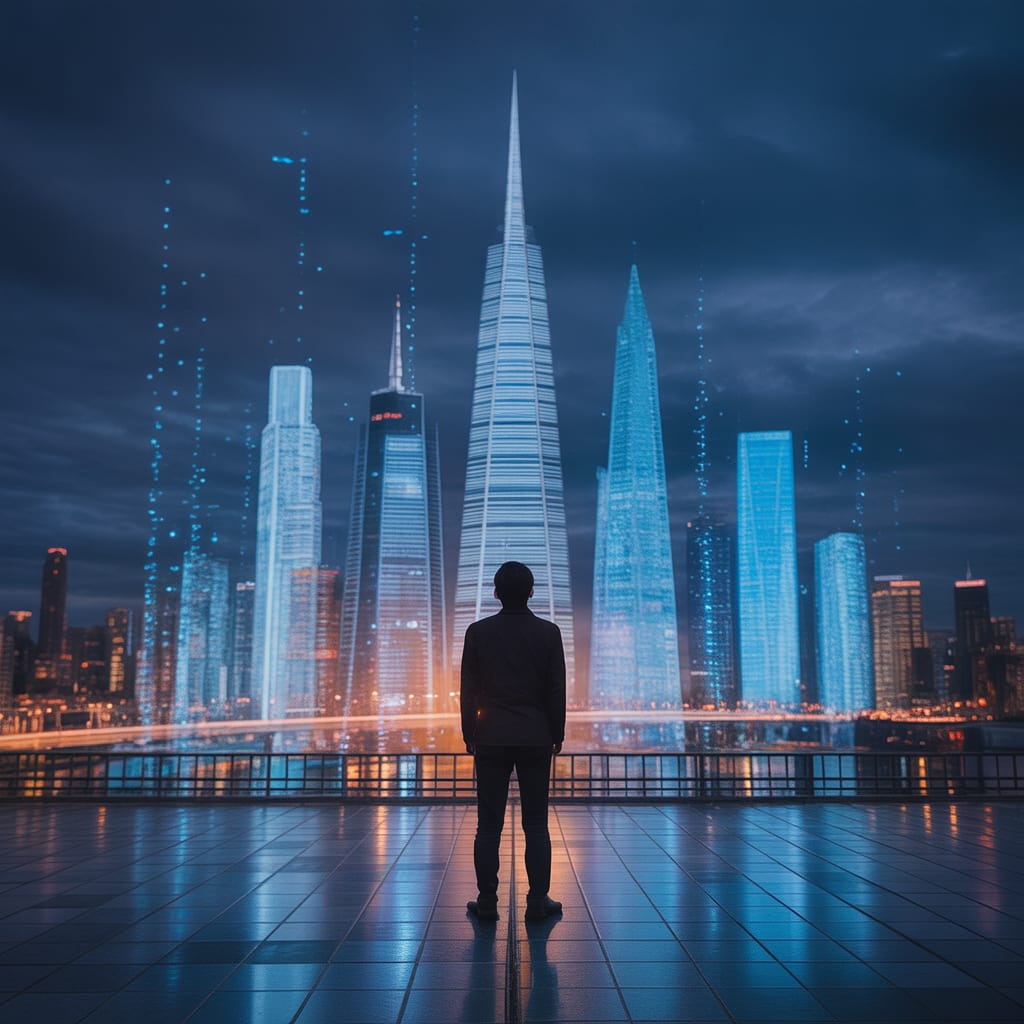
In every era of human history, wisdom has stood as the guiding force that shapes civilization. From the ancient philosophers of Greece to the sages of the East, wisdom has always been the light that distinguishes knowledge from understanding. In our modern world, however, the meaning of wisdom faces a new test — a test born from the rapid advancement of technology, the complexity of moral choices, and the never-ending human search for purpose. We live in an age where information is abundant, yet true understanding seems increasingly rare. In this vast digital landscape, the question arises: how can human wisdom survive and thrive in a world ruled by machines, data, and speed?
Technology has undoubtedly revolutionized the way we live, work, and communicate. It connects people across continents, enables innovation, and solves problems once thought impossible. Yet, this same technology also challenges the very foundation of human thought. With artificial intelligence making decisions, algorithms shaping opinions, and social media defining values, the human mind often finds itself lost in a maze of constant stimulation. The danger lies not in technology itself, but in our dependence on it. When machines begin to think for us, we risk forgetting how to think deeply for ourselves. True wisdom is not found in quick answers or instant results; it grows through reflection, patience, and the ability to question.
Morality, too, faces new challenges in this digital era. The speed of progress has outpaced our ethical understanding. From data privacy and online manipulation to artificial intelligence and genetic engineering, we are constantly faced with questions that demand moral clarity. What does it mean to be human when technology can replicate our voices, faces, and even emotions? How do we define right and wrong when our virtual actions have real-world consequences? Wisdom in this context becomes more than just knowledge; it becomes the moral compass that helps humanity navigate the grey areas of progress. Without it, technology can easily turn from a servant to a master.
The timeless search for meaning remains the deepest part of this discussion. No matter how modern the world becomes, humans continue to ask the same eternal questions: Who am I? Why am I here? What gives my life purpose? These questions cannot be answered by machines or measured by data. They belong to the realm of consciousness — the space where reason meets emotion, and experience meets reflection. In a world full of noise, wisdom allows us to listen to the quiet voice within. It reminds us that while we may build machines that think faster, only humans can feel, empathize, and find meaning in existence.
Balancing technology and morality requires a return to mindful living. We must learn to use technology as a tool, not as a replacement for thought. The goal should not be to reject progress, but to humanize it. This means developing technologies that enhance compassion rather than greed, that connect people rather than isolate them. It also means teaching future generations not just how to code or analyze data, but how to think critically, question ethically, and live meaningfully. Schools and societies must prioritize emotional intelligence and moral reasoning as much as technical skill. Wisdom grows where knowledge meets empathy.
Another crucial aspect of wisdom in the modern world is humility. The more advanced we become, the more we must remember our limitations. History has shown that power without wisdom leads to destruction. Today, that power lies not only in weapons but in information and innovation. The decisions we make about climate change, artificial intelligence, and global inequality will determine the future of humanity. Wisdom teaches us to act not only for personal gain but for the collective good. It is the awareness that our choices today echo through generations.
Moreover, wisdom invites us to slow down. In a culture obsessed with speed, productivity, and constant updates, we have forgotten the beauty of silence and stillness. True understanding often emerges not in the noise of progress but in the pauses between. Taking time to think, to observe, and to feel deeply is no longer considered efficient — yet it is essential for a balanced life. The world does not need more data; it needs more discernment. The more we learn to pause, the more we begin to see clearly what truly matters.
Ultimately, human wisdom in the modern world is not about rejecting technology or romanticizing the past. It is about integration — bringing the old and new together in harmony. It is about using our inventions to enhance human values rather than replace them. It is about remembering that no matter how powerful our machines become, the heart of humanity lies in understanding, compassion, and the search for truth. Wisdom reminds us that progress without purpose is empty, and knowledge without morality is dangerous.
As we move further into the digital age, the challenge before us is profound yet hopeful. We must ensure that our technology reflects our humanity, not replaces it. We must let wisdom guide innovation, not the other way around. The future will not belong to the most advanced machines but to the most enlightened minds — those who can balance technology with morality, intellect with empathy, and progress with meaning. In the end, the greatest achievement of humanity will not be the creation of intelligent machines, but the preservation and expansion of our own timeless wisdom.
About the Creator
Keep reading
More stories from Muhammad yar and writers in Humans and other communities.
The Human Body and Soul
Human beings are the most beautiful, complete, and intelligent creation in this universe. Among all creatures, humans hold a special place because they possess two aspects — one physical, called the body, and the other spiritual, called the soul (rooh). These two elements together make a human a complete being. The body is what we can see with our eyes, while the soul gives us life, awareness, and feeling. Without the soul, the body is just clay — lifeless and meaningless.
By Muhammad yar5 months ago in Humans
I wanted to title this something different, but worried that my chosen title might cause problems entering the United States in the future so this is the new title. It's the greatest title. No one has ever written a title better than this. (All titles unrelated to content).
Let me be honest. I am finding this difficult. Now, I like a challenge, a stretch, a bit of an obstacle course. “Write about the decline of the British Empire in the form of a narrative poem in which your protagonist is an artichoke” I read, and flex my fingers. “Write a haiku to evoke the sensation of sibilance using only the first half of the alphabet.” “Well”, I think to myself, “this should be fun.” But “write about a system that isn’t working”? A system that isn’t working? Now? In 2026? ONE system? My favourite system that isn’t working? The sexiest system that isn’t working? The one giving me the most angst day to day? The one giving me the most existential dread? I am, as I say, finding this difficult. I will own that I have contemplated writing a thousand words on why the steady “all on” setting on my fairy lights is the EIGHTH of seven options which must be sequentially activated to get there, because that is a system that some fool came up with and it definitely doesn’t work, and now who is paying the price, eh? But how can I write about my fairy lights when…. When…. When….
By Hannah Moore4 days ago in Humans




Comments
There are no comments for this story
Be the first to respond and start the conversation.