
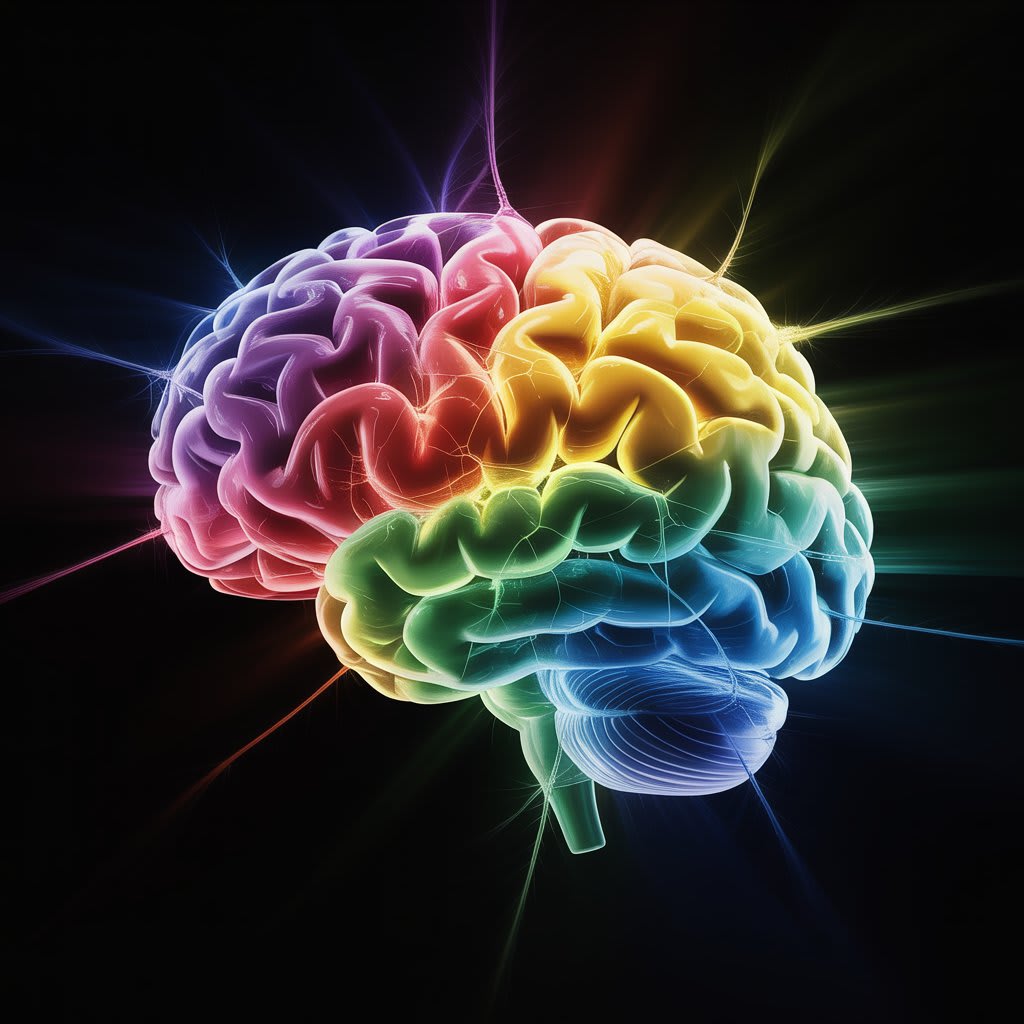
The human brain is the most complex biological structure in the known universe. It is responsible for everything from regulating the heartbeat to composing symphonies, from dreaming to deciphering the mysteries of the cosmos. While much has been written about the brain, some of its most astonishing features remain less well-known but deeply compelling. Let’s explore the power of the brain through a unique lens—focusing on its complexity, adaptability, hidden potential, and the frontiers of our understanding.
1. Complexity Beyond Imagination
The human brain consists of about 86 billion neurons, each forming thousands of synaptic connections with other neurons. This results in an estimated 100 trillion synapses—a network so intricate that it dwarfs even the most advanced supercomputers in terms of processing capability and parallelism.
Every second, your brain processes an immense amount of information—auditory, visual, tactile, emotional, and interoceptive (internal body signals). Despite consuming only about 20 watts of power (about the same as a light bulb), the brain performs computations far beyond anything silicon-based machines can achieve at the same energy cost.
Unique Insight: If each neuron were a musician in an orchestra, playing notes simultaneously, your brain would be performing a continuous symphony more complex than any ever composed—without rest, for your entire life.
2. The Brain's Holographic Nature
Unlike a hard drive that stores data in specific locations, the brain appears to store memories and knowledge in a distributed fashion, much like a hologram. This means that if part of the brain is damaged, the rest can often compensate, particularly in young individuals. This distribution contributes to the phenomenon of neuroplasticity.
Unique Insight: The holographic nature of memory storage is so profound that individuals with half their brain removed (hemispherectomy) due to epilepsy can still live normal lives and retain most of their cognitive functions, especially if the surgery is done at a young age.
3. Neuroplasticity: The Brain’s Shape-Shifting Ability
Neuroplasticity refers to the brain’s ability to rewire itself in response to learning, experience, or injury. This allows the brain not only to recover functions after trauma but also to adapt and evolve throughout a person's lifetime. Even in old age, the brain can grow new connections and in some cases, even new neurons (a process known as neurogenesis).
Unique Insight: London taxi drivers develop a significantly larger hippocampus (the brain region involved in spatial memory) as they learn and internalize the complex layout of London streets—demonstrating how the brain reshapes itself based on environmental demands.
4. The Brain's Time Travel Abilities
One of the most uniquely human brain functions is mental time travel—the ability to project oneself backward and forward in time. This means we can re-experience past events, imagine alternative futures, and simulate decisions before taking action.
This is made possible by the default mode network (DMN), a set of brain regions active when we are not focused on the outside world. This network allows daydreaming, introspection, moral reasoning, and abstract thinking.
Unique Insight: The same brain network that simulates the future is also heavily involved in empathy—allowing us to imagine what someone else might feel or think. This coupling of imagination and compassion is a hallmark of human consciousness.
5. Subconscious Processing: The Hidden Brain
Although we often think of our conscious mind as in control, studies show that up to 95% of brain activity is unconscious. The subconscious governs breathing, heartbeat, muscle memory, instincts, and even complex decisions. In fact, our brains can make decisions up to seven seconds before we become aware of them, as shown in studies using functional MRI.
Unique Insight: Many geniuses, including Nikola Tesla and Salvador Dalí, claimed that their most powerful ideas came not from logic but from visions, dreams, or intuition—all products of the subconscious mind.
6. Brainwaves and Altered States of Consciousness
Your brain communicates via electrical patterns called brainwaves, which fall into categories like delta, theta, alpha, beta, and gamma. Each state corresponds to different mental activities—deep sleep, meditation, relaxation, alert thinking, and high-level cognition.
Some advanced meditators, such as Tibetan monks, can consciously enter gamma wave states, associated with heightened perception and unified consciousness. These individuals show structural differences in their brains, including increased gray matter in areas linked to attention and emotion regulation.
Unique Insight: Scientists have discovered that in deep states of meditation, the boundaries between self and world can dissolve—triggering a feeling of “oneness.” This isn’t just spiritual; it’s a measurable shift in brain activity.
7. The Gut-Brain Axis: The Second Brain
Surprisingly, the brain isn’t working alone. The human gut contains over 100 million neurons, forming what is called the enteric nervous system, or the "second brain." This system can operate independently and communicates directly with the brain via the vagus nerve.
Mood, cognition, and even decision-making are influenced by gut bacteria through the production of neurotransmitters like serotonin (90% of which is made in the gut). This bidirectional communication is known as the gut-brain axis.
Unique Insight: Altering your gut microbiome—through diet, probiotics, or fasting—can have direct effects on depression, anxiety, and cognitive clarity. Your gut literally helps shape your thoughts.
8. Quantum Brain Theories (Speculative but Fascinating)
Some physicists and neuroscientists propose that consciousness might involve quantum processes in the brain, particularly within structures called microtubules inside neurons. This is the basis of the Orch-OR theory (Orchestrated Objective Reduction), proposed by Sir Roger Penrose and Stuart Hameroff.
Though controversial and not widely accepted by mainstream neuroscience, if true, it could mean that aspects of consciousness are not fully explainable by classical physics alone.
Unique Insight: If quantum coherence occurs in the brain, consciousness may be tied to the fundamental structure of the universe itself—suggesting that the brain may be a receiver, not just a generator, of consciousness.
9. Brain Energy Efficiency and Evolution
The brain makes up only 2% of body weight but uses about 20% of total energy. Despite this, it's incredibly efficient. Compared to artificial intelligence systems, the brain's energy-to-computation ratio is millions of times more efficient.
Unique Insight: Some neuroscientists believe that dreams may be an energy optimization process—where the brain reorganizes data in a way similar to "defragmenting a hard drive."
Conclusion: A Living Universe Inside You
The brain is not just an organ; it’s a living cosmos—containing memories, fantasies, fears, hopes, and dreams. It is both fragile and resilient, logical and poetic, limited and transcendent. It can calculate a math problem and compose a love song in the same hour.
What makes the brain truly powerful is not just its ability to think but its ability to imagine. Every advancement in science, art, philosophy, and human connection begins with a single spark inside the brain. And yet, for all we know, we are still only scratching the surface of its true potential.
About the Creator
M Imad
My name is Imad. I am a student.I want to sharemore and more information and stories of interesting and motivational.
Time to change your life.
Is it even possible for you to change your life? A lot of people, more than there should be, are unhappy with their lives. But what are they doing about it? Usually nothing. People talk about how shitty their lives are and want change, but are they not taking the actions to change?
By Jen Phillips6 days ago in Humans
Your Mind Matters: Simple Steps to a Stronger, Happier You
We live in a busy world. Every day, we see messages telling us to work harder, do more, and be better. In all this noise, taking care of our own minds can feel like the last thing on the list. We might even feel guilty for taking a break. But here is the truth: caring for your mental health is not a luxury or a sign of weakness. It is the most important work you can do. It is what makes everything else in your life—your job, your relationships, your joy—possible. Think of it like building a house.
By Hazrat Umerabout 3 hours ago in Humans
The Devil's Triangle
The sails ruffled in the breeze as we cruised along. The Sea Breeze was a mid-size catamaran that sailed out of Royal Naval Dockyard in Bermuda. We had booked this trip weeks in advance and were now looking at our Captain, Spike and two boat hands. Paddy and Wilson seemed like nice guys, joking around with the passengers and telling us some stories about Bermuda that only locals would know. Their island accents sounded almost British but they were pleasant to listen to.
By Barbara Gode Wiles4 days ago in Fiction


Comments
There are no comments for this story
Be the first to respond and start the conversation.