
HOW THE INTERNET IS CHANGING YOUR BRAIN?
The effects of using internet

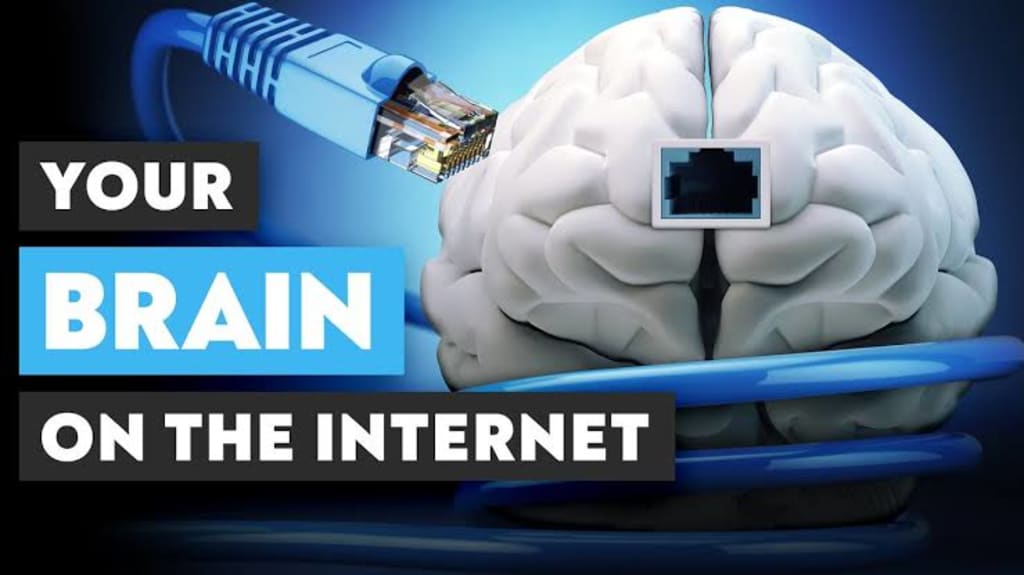
How our increasing reliance on the internet is affecting us can be seen in various ways. For example, our relationships are now sources of information for us, rather than being limited to face-to-face conversations. Additionally, search engines have become more powerful and effective, and we interact with our devices using them more frequently. In fact, there are even noticeable effects occurring within our brains as a result!
This is an estimate of 3.5 billion people living in world who have access to online services accessed in 2016. China had the most users at 721 million, followed by India and then the US. The most common language used online is English, followed by Chinese and Spanish. The reliance on using the Internet is clearly changing across generations, depending on whether those who had to adapt to the new technology or those who grew up with it being readily accessible.
People born between the mid-1960s and early 1980s, belonging to Generation X, averaged around 110 minutes of mobile internet usage per day, while Millennials, who grew up with the internet, were using 185 minutes per day. Social media and messaging apps have become an integral part of our lives, connecting us to more than one billion people regularly using apps like WhatsApp, and even more using platforms like Facebook and Twitter. With more and more services becoming available online, it is no surprise that our behavior has also changed. It is now far more common to use these platforms to communicate, leading to a drop in phone calls and text messages, as well as a sharp decrease in the use of traditional brick and mortar stores. Our towns and cities have become very different from what they were a few decades ago, due to the wealth of information now available on the internet. How is this affecting our brains?
Millennials, for example, have been found to be far more forgetful than previous generations; this is thought to be a direct result of the constant distractions brought by the prevalence of the Internet. The basic principle behind memory is that the more a piece of information is repeated within your short-term memory, the stronger its stored within your long-term memory. However, constant new information prevents this process from taking place as effectively and far less is stored permanently. Additionally, the knowledge that information is readily available online means that forming a memory of it is less of a priority; while previous generations may have memorized directions on a map, now they rely on being able to access a GPS app instead. We are also becoming more addicted to our smartphones; constant glances to check for messages or updates means that we are used to developing habits of distraction. Our brains are less used to switching into deeper modes of thinking, which makes it harder for us to do when it is necessary. Some research has even shown that the constant flow of information has diminished our cognitive control; not only is our ability to control our minds decreasing, but also our capability to decide what we focus on. The more you rely on your phone and an app to provide the information you need, the less you are able to determine what is worth your attention. We are increasingly more concerned with what is new rather than what is valuable, so what can we do? Though technology may be negatively impacting the way we think, it does not have to be a bad thing. Throughout history, inventions have always been designed to free up time to be spent elsewhere; the washing machine, for instance, increased efficiency of laundry, resulting in more time for other activities or work. The internet also allows us to find information and communicate faster, granting us extra mental capacity. To reduce this growing reliance on screens, as well as keep our brains active.
About the Creator
Azyme Mangulayon
Publisher and a writer of the science a travel books.
Keep reading
More stories from writers in Humans and other communities.
Whiskey At Dusk
Guess the whiskey was more important to you in the end, wasn’t it? It was more than the well-being of your friends; more vital than showing up to the places you promised you would and could come to; more critical of a matter than fulfilling your damn responsibilities and getting the press off your back.
By Snarky Lisa5 days ago in Humans
Subtle Signs Your Body Responds to Emotional Energy.
Emotions influence more than thoughts. They shape how your body reacts in ways you might not notice. Understanding these signals helps you recognize emotional patterns and maintain better mental and physical health.
By Wilson Igbasi4 days ago in Humans



Comments
There are no comments for this story
Be the first to respond and start the conversation.