
How Morocco changed football forever
In the heart of Morocco's football history
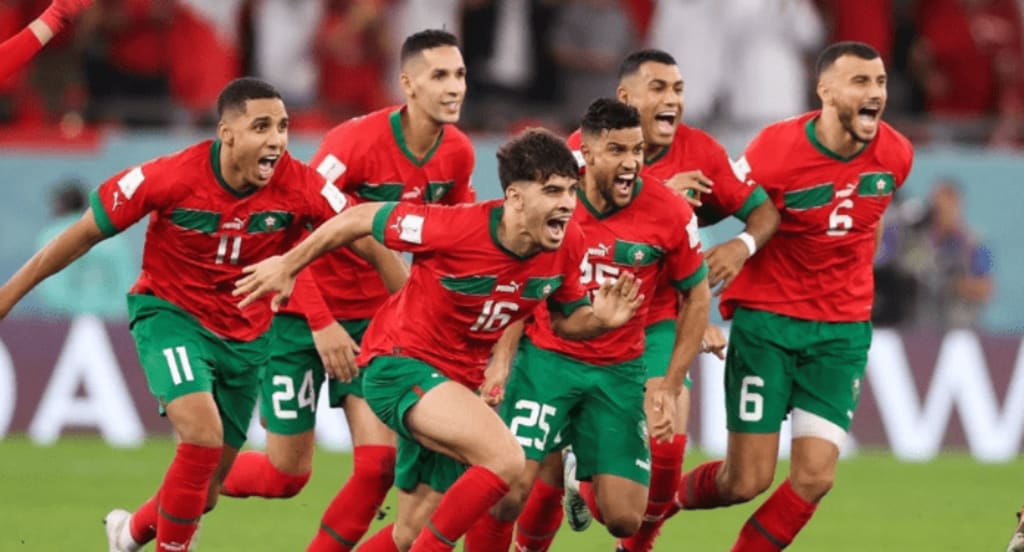
In the realm where Africa meets the Arab world, a vibrant nation stands as a testament to the unifying power of football. Nestled on the border of Europe, Morocco has ignited a blaze of passion that transcends borders and cultures, transforming its football scene into a powerhouse unlike any other.
Picture this: a nation of fervent football enthusiasts, where the love for the beautiful game pulses through the veins of every child. In Morocco, football isn't just a sport; it's a way of life, inseparable from the fabric of society. From the bustling streets to the vibrant marketplaces, football is the common thread that weaves through conversations, celebrations, and even protests. Here, football isn't merely a match; it's a cultural spectacle that evokes a sense of unity and belonging.
At the heart of Morocco's football fervor lies a city that serves as its beating center: Tangier. Known as the "Gateway between Africa and Europe," Tangier has recently witnessed a monumental triumph that echoed across the globe. In a thrilling showdown, Morocco secured a stunning 2-1 victory over football giants Brazil. The air was electric, the cheers deafening, as the nation celebrated a win that showcased their unwavering commitment to the sport they hold dear.
The catalyst behind Morocco's meteoric rise on the football stage is none other than Wali Greggy. A name etched in the annals of Moroccan football history, Greggy orchestrated an atmosphere of camaraderie and positivity that permeated every corner of the team. His genius lay in recognizing that the power of unity could mend the divides that once fractured the national team. With players hailing from diverse backgrounds, the Moroccan squad was a reflection of the nation's rich cultural tapestry. From players who spoke Moroccan Arabic to those conversing in northern Berber dialects, the team's diversity was both its strength and its identity.
An astonishing 14 out of 26 players at the 2022 World Cup were born in Europe to Moroccan parents. They embodied the essence of a multicultural melting pot, bringing with them a unique blend of experiences and traditions. This kaleidoscope of identities converged around a shared purpose: representing Morocco with unparalleled pride and tenacity. Bound by values of family, respect, and hard work, the team showcased that even in a world divided, the spirit of unity could thrive.
The passion of the Moroccan fans was the heartbeat of this football renaissance. In the mesmerizing tifos that adorned the stadiums, you could sense the fervor that burned within their souls. Chants reverberated like anthems, and drums echoed with the rhythm of a nation pulsating with anticipation. In the 2022 World Cup, the Moroccan fans won the hearts of millions, capturing the imagination of neutrals and rivals alike. Their passion was infectious, spreading like wildfire across the sands of the Sahara.
But the story doesn't end there. As Morocco basks in the glory of its men's team, it's the women who are emerging as a force to be reckoned with. In the heart of Morocco's capital, Rabat, over 50,000 fans converged for the 2022 Africa Cup of Nations final. While Morocco may have fallen short against South Africa, the significance of the moment was undeniable. It was a record-breaking turnout, an indication of the shifting tides in women's football.
Leading the charge is none other than the indomitable Hislan Chebek. A star and top goal scorer in the tournament, Chebek's prowess on the field has shattered glass ceilings and ignited dreams for young girls across the nation. As Morocco gears up to make its debut in the 2023 Women's World Cup, the momentum is palpable. Under the guidance of Reynold Pedros, a two-time Champions League-winning coach, Morocco's women's team is poised to etch its name in history.
Yet, Morocco's journey to football supremacy hasn't been without its challenges. Like any transformative tale, the narrative is punctuated with obstacles. Conservative viewpoints and societal norms once cast shadows over women's football, but winds of change are sweeping across the landscape. The empowerment of women on and off the field is a testament to Morocco's evolving identity. The strides they've made reflect a nation breaking free from shackles of the past.
Australia-based, yet with a heart that beats for Morocco, I find myself captivated by the symphony of football that resounds across this extraordinary nation. It's noisy, it's chaotic, and it's undoubtedly enthralling. From the intricate tifos to the heartfelt chants, Moroccan football culture is a canvas painted with passion and pride.
As the sun sets over the Atlas Mountains, casting a warm glow over the bustling streets of Casablanca, I can't help but marvel at the grand tapestry Morocco has woven. Football, once a sport, has evolved into a beacon of unity, a reflection of a nation's resilience and diversity. The journey to football greatness isn't just a story of wins and losses; it's a story of a people united by a shared love for the game, a tale of cultural identity that resonates far beyond the confines of the pitch.
About the Creator
Autonomy Is The Real Privilege
Good morning, freedom-seekers! Today we’re gonna be looking at autonomy. A strange word, I know; one many would probably look at blankly and run away from on sight. We’re gonna figure out what it actually means, consider how it’s achieved, and decipher just how deeply most of us are tangled up in dependence without realising it.
By That ‘Freedom’ Guyabout 17 hours ago in Humans
Two Farmers Unearth a 17th-Century Silver Treasure While Working Their Land: A Remarkable Discovery
In a discovery that feels lifted straight from the pages of a historical novel, two farmers recently unearthed a 17th-century silver treasure while working their land. The find, consisting of coins, jewelry, and small silver artifacts, provides a fascinating glimpse into the region’s past and has ignited interest among historians, archaeologists, and the local community. Beyond the monetary value, this discovery underscores the enduring stories buried beneath the soil, waiting for chance and circumstance to reveal them.
By Salaar Jamali4 days ago in Humans




Comments (1)
wow wow so amazing Join my friends and read what I have just prepared for you