
How does sleep deprivation affect your brain?
Effects of Sleep Deprivation on Your Brain

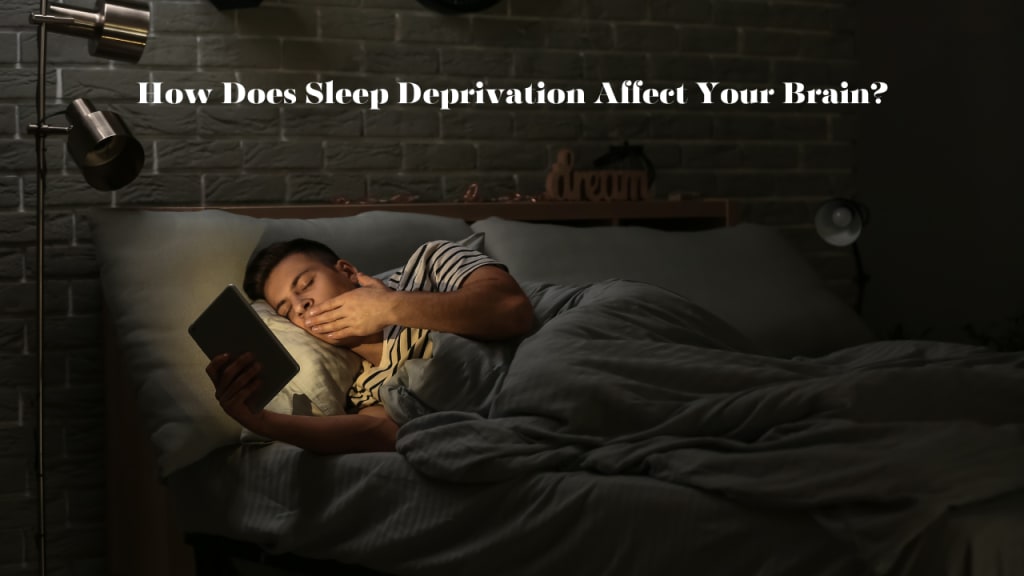
The Profound Impact of Sleep Deprivation on Body and Brain Health
Have you experienced the dreadful consequences of sleep deprivation? That groggy mind, the overwhelming fatigue, and the perpetual battle to stay awake are common occurrences in our contemporary, fast-paced society. Attaining a full night's rest has become a pervasive struggle for many individuals. While some seek solace in a cup of coffee or an occasional energy drink, recent research underscores the far-reaching and serious implications of sleep deprivation on our overall health.
But why is sleep so crucial? Why does we even sleep? Is it really necessary to sleep? Sleep isn’t merely a state of dormancy; it’s an indispensable process vital for our existence. Practically every living being on this planet engages in sleep. Contrary to its apparent state of inactivity, sleep serves as a cornerstone for two vital aspects: physical rejuvenation and mental revitalization. During sleep, our bodies embark on a profound journey of repair and restoration. Human growth hormone is released, fostering muscle growth, tissue repair, hormonal equilibrium, and cellular preparation for the forthcoming day’s activities.
Simultaneously, the brain orchestrates a complex symphony of cognitive activities. It meticulously processes and organizes the myriad of information gathered throughout the day, sieving through what's worth retaining and discarding the superfluous. Moreover, the brain conducts crucial maintenance tasks through the aid of glial cells—microglia cleanse the aging neurons via phagocytosis, while astrocytes optimize the connections between neurons to ensure their utmost efficiency.
What happens when we fall short on sleep? Is it cause some serious illness? Or it's just an exaggeration? An extensive study conducted in Italy scrutinized mammalian brains amidst sleep deprivation. Remarkably, sleep-deprived brains exhibited strikingly similar patterns. Glial cells, though functional, displayed an intensified and seemingly uncontrolled pace.
In their experiment involving four groups of mice—those with regular sleep patterns, interrupted sleep, eight hours of sleep deprivation, and five consecutive days of sleep deprivation—researchers observed intriguing synaptic activity alterations. While well-rested and spontaneously awake brains displayed synaptic activity in 5.7% and 7.3% of synapses, respectively, sleep-deprived brains exhibited astonishing changes. Astrocytes in these brains transformed their behavior, resembling the actions of microglial cells by consuming synapses rather than rewiring them. This transformation occurred in 8.4% of synapses in sleep-deprived brains and escalated to 13.5% in chronically sleep-deprived subjects.
These compelling findings suggest potential adverse effects. Short-term effects might aid in purging debris and eliminating worn-out connections, yet unbridled activity could contribute to degenerative brain conditions like Alzheimer's. This could clarify the heightened susceptibility to such ailments among individuals deprived of sleep.
Moreover, the repercussions of inadequate sleep extend far beyond cognitive functions. If we don't get enough sleep, we might encounter to experience memory problems, sore muscles, headaches and irritability, and we can have an increased risk of diabetes and depression, our blood pressure can rise, we can get sick more often and people even experience hallucinations, so sleep is not just a simple thing we could forget or ignore.
In conclusion, while sleep is an inevitable and crucial aspect of life, many facets of its intricate mechanisms remain elusive. While additional sleep might mitigate short-term effects and shield the brain from occasional sleepless nights, ongoing research consistently links sleep disorders to numerous health conditions. This underscores the critical importance of prioritizing quality sleep in today's world. Neglecting this essential aspect might lead to severe health consequences down the line.
Thank you for dedicating your time to reading this comprehensive article. If you found it informative and insightful, please consider leaving a like or sharing your thoughts in the comments section. Stay tuned for more enlightening content!
About the Creator
Tergel Otgonzorig
For me writing became more than a hobby; it was an avenue for expression and exploration. Having written poetry, essays, and various other pieces, now I see writing as a powerful tool for communication and self-expression.
Keep reading
More stories from writers in Humans and other communities.
Whiskey At Dusk
Guess the whiskey was more important to you in the end, wasn’t it? It was more than the well-being of your friends; more vital than showing up to the places you promised you would and could come to; more critical of a matter than fulfilling your damn responsibilities and getting the press off your back.
By Snarky Lisa8 days ago in Humans
A Love Forboding
The chipped stone slope caused unbearable footing. I slid, skirting on my heels. I cast my shield, relinquishing my guard to stay upright. Left with my double-edge and a prayer to the maker, I skated toward my objective. The earthly stubble gave way to solid ground. I found myself restored, a trail of dust in my wake.
By James U. Rizzia day ago in Fiction



Comments
There are no comments for this story
Be the first to respond and start the conversation.