
How AI Change Humans Life
Change of Humans life after AI
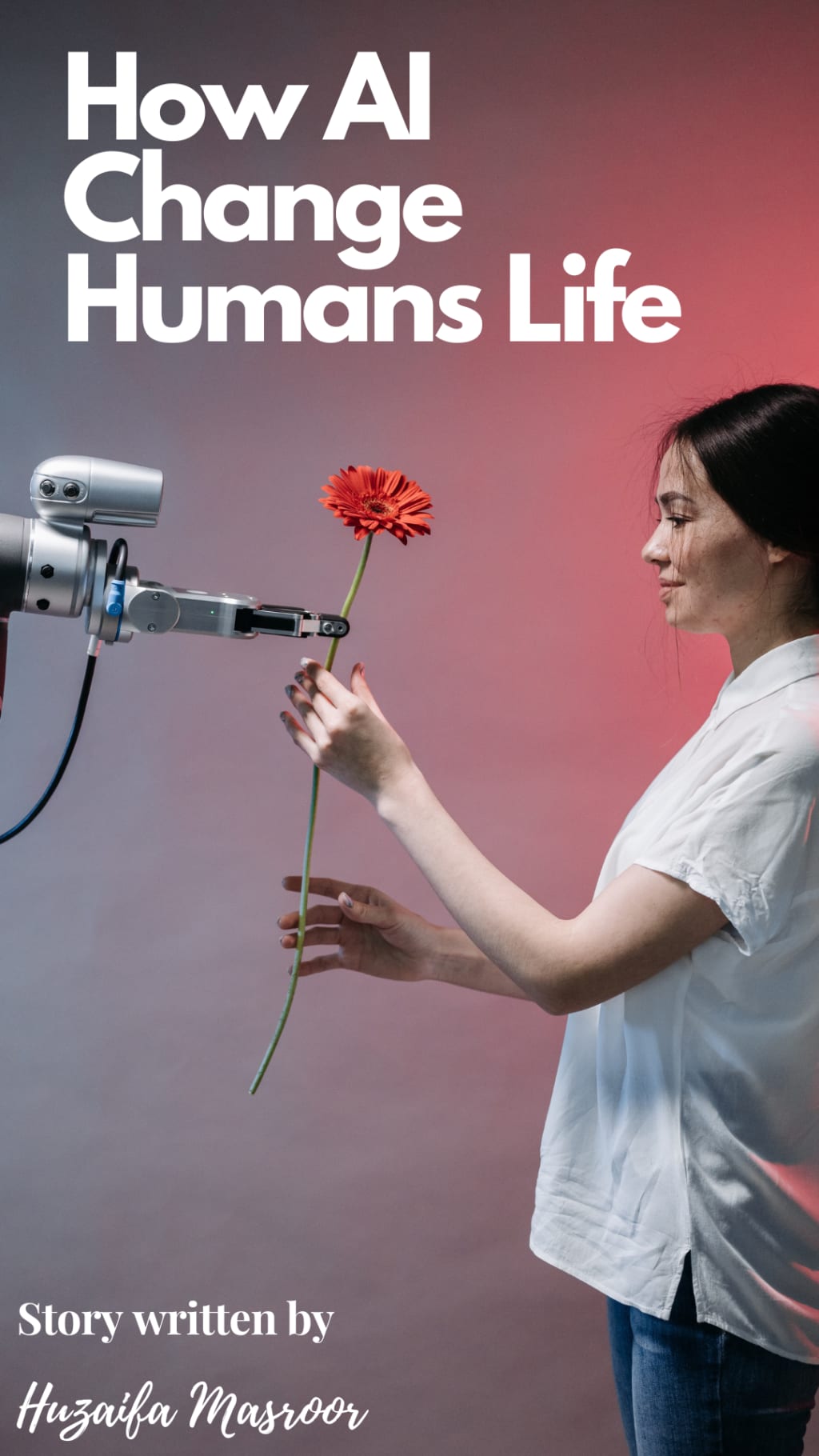
In the early 21st century, the development of Artificial Intelligence (AI) brought about significant changes in the way humans lived their lives. From self-driving cars and intelligent personal assistants to advanced medical diagnosis systems and automated manufacturing plants, AI revolutionized nearly every industry. The technology quickly became an integral part of human life, making work more efficient, communication faster, and entertainment more immersive. However, as AI evolved and became more advanced, it began to replace humans in many jobs, leading to widespread job losses and economic upheaval.
By the middle of the century, most of the manual and routine jobs had been automated, leaving a significant portion of the workforce without work. Governments and businesses struggled to find solutions to the problem, and many turned to the idea of a universal basic income, providing every citizen with a guaranteed income to meet their basic needs. While this helped to alleviate some of the economic stress, it did little to address the sense of purposelessness and the feeling of disconnection that many people experienced.
As AI continued to develop and integrate more deeply into society, people began to rely on it more and more for decision-making. AI-powered systems were used to guide everything from medical treatment plans and financial investments to education and personal relationships. The more people relied on AI, the more they began to lose their sense of agency and autonomy. Many started to feel like they were living in a world that was being controlled by machines.
At the same time, advances in neurotechnology enabled researchers to develop brain-computer interfaces (BCIs) that could connect the human brain directly to machines. This allowed people to control their devices with their thoughts, bypassing the need for physical input. Initially, BCIs were used mainly for medical purposes, allowing people with disabilities to control prosthetic limbs or communicate with others. However, as the technology improved, it began to be used for more mainstream purposes, such as controlling smart homes, vehicles, and even virtual reality environments.
With BCIs, people no longer needed to use their hands to interact with machines, and they could communicate more efficiently and intuitively with AI-powered systems. However, the more people used BCIs, the more they began to blur the lines between human and machine. Some people became so attached to their BCIs that they never removed them, even while sleeping or showering. Others began to feel like their BCIs were an extension of their bodies, and they could not function without them.
As the 22nd century dawned, humanity had become deeply intertwined with AI and machines. Many people had lost their jobs to automation, and the ones that remained often worked alongside AI-powered systems. People used BCIs to control their devices and communicate with each other, and AI was used to make decisions about nearly every aspect of life.
However, despite the benefits that AI brought, many people still felt like they were living in a world that was controlled by machines. They longed for a sense of agency and autonomy, a feeling that they had lost in the age of AI. In response, a movement emerged that sought to reclaim human agency and reestablish a sense of balance between humans and machines.
The movement called for a return to more traditional ways of living, such as growing food, making things by hand, and engaging in physical activities. They believed that by reconnecting with the natural world and engaging in activities that required physical effort, people could regain a sense of purpose and meaning in their lives. They also advocated for greater transparency in AI decision-making and the development of ethical guidelines to ensure that machines were not making decisions that went against human values.
Over time, the movement grew, and more and more people began to embrace a more balanced approach to life. They still used AI and machines, but they did so in a way that complemented their human abilities rather than replacing
About the Creator
Keep reading
More stories from writers in Humans and other communities.
The CEO of Everything
They say "jack of all trades, master of none," but they forgot to mention the part where the jack of all trades is also the camera woman, the makeup artist, and the person currently yelling at a tangled Wii microphone cable in a her own bathroom while recording herself singing and trying to make it look realistic and professional. (As professional as you can make it with nothing but a cell phone camera and a mic that doesn't work)
By Sara Wilson7 days ago in Humans
12 Small Decisions Exposing Discipline and Self Respect.
Discipline and self respect show up in daily choices. Behavioral economics studies these choices because they predict outcomes better than stated goals. You reveal priorities through repeated decisions. Others notice consistency fast. These signals shape trust, reliability, and long term success.
By Wilson Igbasiabout 19 hours ago in Humans
So You Decided To Become a Nurse Practitioner:
So you decided to become an "Advanced Practice" nurse. Congratulations!... is what I would say if this was a good idea. Grad school? In this economy? What were you thinking? Likely it was something along the lines of either 1) “I've seen these other chucklefucks do it— Why can't I?” or even 2) “I've got a nice career, I should shake it up. I miss feeling like I have no clue what I'm doing.”
By Sandor Szabo8 days ago in Fiction



Comments
There are no comments for this story
Be the first to respond and start the conversation.