
Historic Diplomatic Handshake Between India and UAE Leaders
Prime Minister Narendra Modi and President Sheikh Mohamed bin Zayed Al Nahyan Strengthen Bilateral Ties Amid Global Spotlight

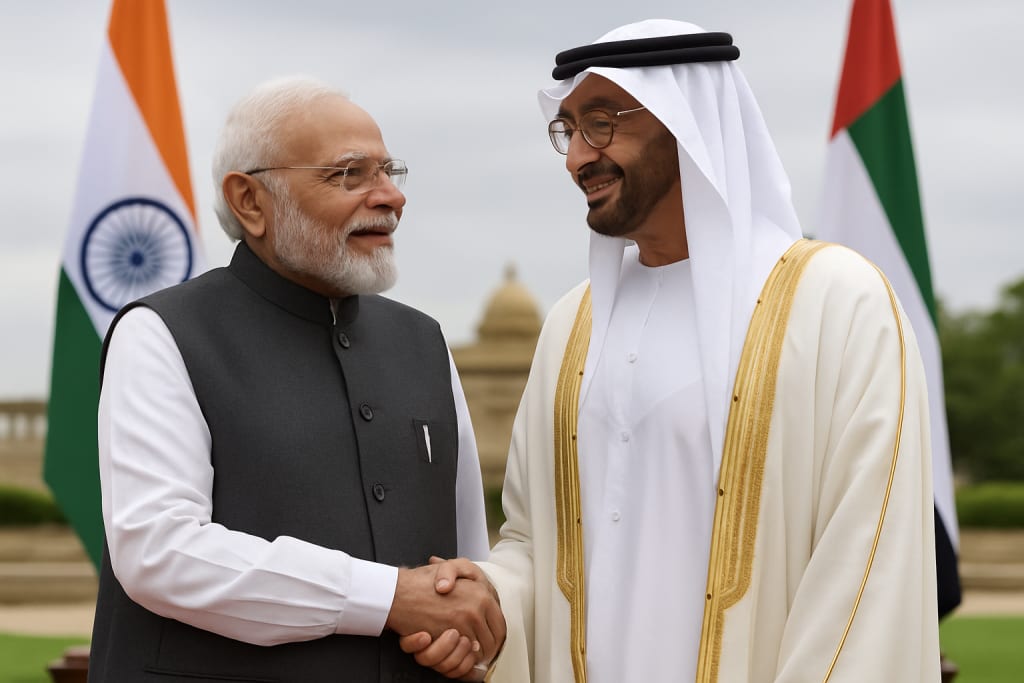
In a powerful moment that resonated across international headlines, Indian Prime Minister Narendra Modi and United Arab Emirates (UAE) President Sheikh Mohamed bin Zayed Al Nahyan were photographed sharing a warm handshake under the overcast skies, surrounded by the flags of both nations. This image, now viral across social media and news outlets, symbolizes the deepening ties between two countries that have, over the past decade, steadily expanded their strategic, economic, and cultural relations.
This historic meeting, held at an official diplomatic venue, comes at a time when the world is undergoing hial shifts. The embrace between the two leaders was not just a formality; it was a testament to years of diplomacy, mutual respect, and a shared vision for a connected and prosperous future. Both leaders, dressed in their traditional attire — Modi in his classic Indian vest and kurta, and Sheikh Mohamed in his flowing white kandura and golden-trimmed bisht — exemplified national pride and a commitment to unity.
A Strategic Partnership Evolving
India and the UAE have enjoyed a growing relationship, especially over the past decade. Trade, defense cooperation, investments in technology, renewable energy, infrastructure, and space exploration have all been key pillars of this partnership. Bilateral trade between the two nations has soared to over $85 billion annually, making the UAE India's third-largest trading partner after the United States and China.
Prime Minister Modi’s visit and his warm camaraderie with Sheikh Mohamed underscore the strategic nature of this partnership. From energy security to digital innovation, the two nations are aligning their interests more closely than ever before. Moreover, the Comprehensive Economic Partnership Agreement (CEPA), signed in 2022, has been a landmark in reducing tariffs and encouraging greater investment flows.
This handshake also highlighted India's growing influence in the Middle East — a region critical to its economic and energy security. In return, the UAE sees India as a vital partner for diversifying its economy beyond oil and becoming a global innovation hub.
Cultural and People-to-People Ties
Beyond trade and geopolitics, cultural diplomacy forms a significant aspect of India-UAE relations. The Indian diaspora in the UAE, numbering over 3.5 million, is the largest expatriate community in the Emirates. Indians have contributed immensely to the development of the UAE, and in return, the Emirates have provided a welcoming environment for Indian professionals, entrepreneurs, and workers.
The construction of the first traditional Hindu temple in Abu Dhabi — the BAPS Hindu Mandir — stands as a symbol of this cultural bond. The temple project, supported actively by the UAE government, represents a commitment to tolerance and multiculturalism, values deeply cherished by both nations.
At the meeting, both leaders reiterated their commitment to fostering cultural exchanges, promoting tourism, and deepening educational cooperation. Initiatives to boost student exchanges, joint research projects, and digital innovation collaborations were also discussed during the diplomatic engagement.
Geopolitical Implications
This handshake carries significant implications not just for India and the UAE but for the broader region. The Middle East is undergoing a historic realignment, with countries exploring new partnerships and diversifying their international relations amidst shifting global power centers.
India's close ties with the UAE provide it with an important strategic foothold in West Asia, supporting its broader ambitions for greater global influence, including at forums like the G20, BRICS, and the United Nations. The UAE, on the other hand, gains a vital partner in Asia's fastest-growing major economy.
Furthermore, the two leaders discussed joint efforts on combating climate change — a shared priority. With COP28 recently hosted by the UAE, and India’s ambitious renewable energy targets under its National Solar Mission, the two countries are poised to lead on sustainable development initiatives.
Security cooperation also remains critical. Maritime security in the Indian Ocean Region (IOR), counterterrorism collaboration, and joint defense exercises are all areas of mutual interest. As tensions persist in parts of West Asia and with the rise of non-traditional security threats such as cyber attacks, this handshake also symbolizes a pledge towards safeguarding mutual interests.
A Message to the World
Photographs have the power to convey complex narratives simply and effectively. The image of Prime Minister Modi and President Sheikh Mohamed bin Zayed smiling and shaking hands sends a message of solidarity, hope, and a commitment to global cooperation.
In an era marked by wars, protectionism, and diplomatic standoffs, moments like this stand out. They reflect the possibilities of dialogue over discord, partnerships over rivalries, and unity over division.
For India, this meeting reaffirms its commitment to being a trusted partner in the Middle East and a responsible global actor. For the UAE, it underscores its emergence as a hub of modern diplomacy, innovation, and multiculturalism.
As the world watches, the growing bond between India and the UAE stands as a reminder that in diplomacy, as in life, strong relationships built on trust, respect, and shared goals can move mountains.
The handshake between Modi and Sheikh Mohamed may have lasted only a few seconds, but the impact of that moment — captured in a single iconic photograph — will likely resonate for decades to come.
About the Creator
Muhammad Nadeem Ahmad
I'm a versatile writer with a passion for crafting engaging, research-driven articles across topics like lifestyle, tech, health, business, and culture. I bring fresh perspectives through clear, compelling and storytelling etcetera.
Keep reading
More stories from Muhammad Nadeem Ahmad and writers in Humans and other communities.
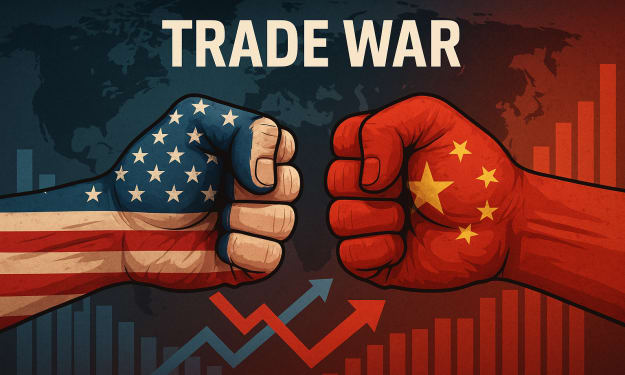
Trade War: America and China’s Battle for Global Supremacy
In the modern geopolitical landscape, few rivalries have defined the global stage as significantly as the escalating trade war between the United States and China. What initially began as disputes over trade imbalances and intellectual property rights has since evolved into a complex and multifaceted struggle for global dominance. This rivalry is no longer confined to tariffs and trade deficits—it spans technology, military influence, global alliances, and ideological leadership. As the world's two largest economies, the decisions and confrontations between the U.S. and China reverberate far beyond their borders, affecting markets, politics, and lives worldwide.
By Muhammad Nadeem Ahmad9 months ago in Trader
Kindred Spirits vs Soulmates: Key Emotional Differences.
The terms “kindred spirit” and “soulmate” are often used interchangeably, but they describe fundamentally different kinds of connections. Both are meaningful, but the emotional dynamics, depth, and purpose of each connection vary. Understanding these distinctions helps you recognize the nature of your relationships and navigate them with clarity, emotional balance, and intention.
By Wilson Igbasi5 days ago in Humans



Comments
There are no comments for this story
Be the first to respond and start the conversation.